
Answer in brief
AI earns its place in support on repeat questions answered from your own knowledge base, and on triage, drafted replies, thread summaries, translation and order lookups. It costs you customers when it invents policy or traps people in loops. Disclose the bot, keep a fast route to a person, test it on real past messages before launch and read a weekly sample of its answers.
Where AI customer service earns its keep in a small team
Most of what reaches a support inbox has been asked before: where is my order, how do I return this, why did my payment fail. That repetition is where AI customer service pays for itself. A language model reads your own help articles and policies, finds the passage that fits and answers in seconds, at night as well as at noon. The value comes from a complete knowledge base and a bot allowed to say only what is in it.
The same technology can also sort messages by topic and urgency and route them, draft replies that an agent edits, summarise long threads, and translate between customer and agent. Connected to your order system through an API, it can look up one specific order. Drafts and summaries keep a person between the model and the customer; automatic answers do not, so they need the strictest limits. For AI customer service for small business, start where a human still presses send and widen the bot's freedom only when the numbers allow it, because the AI vs human customer service question is really about which messages each side should own.
The Air Canada chatbot ruling and what it means for your bot
In November 2022, after a death in the family, Jake Moffatt used the chatbot on the Air Canada website while booking flights between Vancouver and Toronto. The bot said a ticket could be submitted for the reduced bereavement rate within 90 days of being issued. The airline's bereavement travel page, linked from that very answer, said the policy did not cover requests after travel. Air Canada refused the partial refund, and a representative later admitted in an email that the chatbot had used misleading words.
The Civil Resolution Tribunal of British Columbia decided the case, Moffatt v. Air Canada, 2024 BCCRT 149, on 14 February 2024. The airline argued it could not be held liable for information provided by its agents or representatives, including a chatbot. Tribunal member Christopher C. Rivers called this a remarkable submission: the chatbot is just a part of the website, and the company answers for all of it. He found negligent misrepresentation and ordered the airline to pay $812.02 (Canadian) in damages, interest and fees.
The sum was small; the reasoning travels. The tribunal saw no reason why customers should check one part of a website against another. Whatever the bot says counts as your own statement, and a correct page elsewhere does not cancel a wrong answer in the chat. This is one tribunal in one Canadian province, so treat it as a warning rather than a universal rule and ask a lawyer about your own exposure.
Telling customers they are talking to a machine
In the European Union, Article 50 of the AI Act says providers must design AI systems that interact directly with people so that those people are informed they are dealing with an AI system, unless that is obvious to a reasonably well-informed, observant and circumspect person. Paragraph 5 asks for this to be clear and distinguishable, at the latest at the first interaction. According to the consolidated text on the European Commission's AI Act Service Desk, the regulation applies from 2 August 2026, with some chapters on other dates.
That duty falls on the provider, the company that builds the system, but a business running a bot on its site should treat the opening message as its own job too. Outside the EU the rules differ by country and sector. One line at the start of every chat, saying that this is an automated assistant and a person can take over, matches the EU text and costs nothing elsewhere. Whether your setup is covered is a question for a specialist in your jurisdiction.
Personal data in support chats and the right to reach a person
Support chats are full of personal data: names, addresses, order numbers, sometimes card details. The UK regulator, the Information Commissioner's Office, lists seven data protection principles, among them purpose limitation, data minimisation and storage limitation. For a chatbot they become settings: what the bot may ask for, where transcripts live, who reads them, whether they go to an outside model provider and when they are deleted. EU and other national rules differ in detail, so check yours with a data protection adviser.
Some decisions carry an extra layer. The ICO's draft guidance on automated decision-making, updated on 31 March 2026 after the Data (Use and Access) Act 2025, says that for solely automated decisions with significant effects people must be able to get information, make representations, obtain human intervention and contest the decision. A bot that gives opening hours is far from that line. A bot that refuses a refund or closes an account may be much closer, and the cautious design keeps a person in those decisions.
A June 2023 report by the US Consumer Financial Protection Bureau estimated that about 37% of the US population had interacted with a bank's chatbot in 2022. It described doom loops, in which a customer whose problem falls outside the bot's abilities circles with no exit to a human. The bureau's position is that chatbots, like the processes they replace, must comply with all applicable federal consumer financial laws.
Designing the handoff from the bot to a human agent
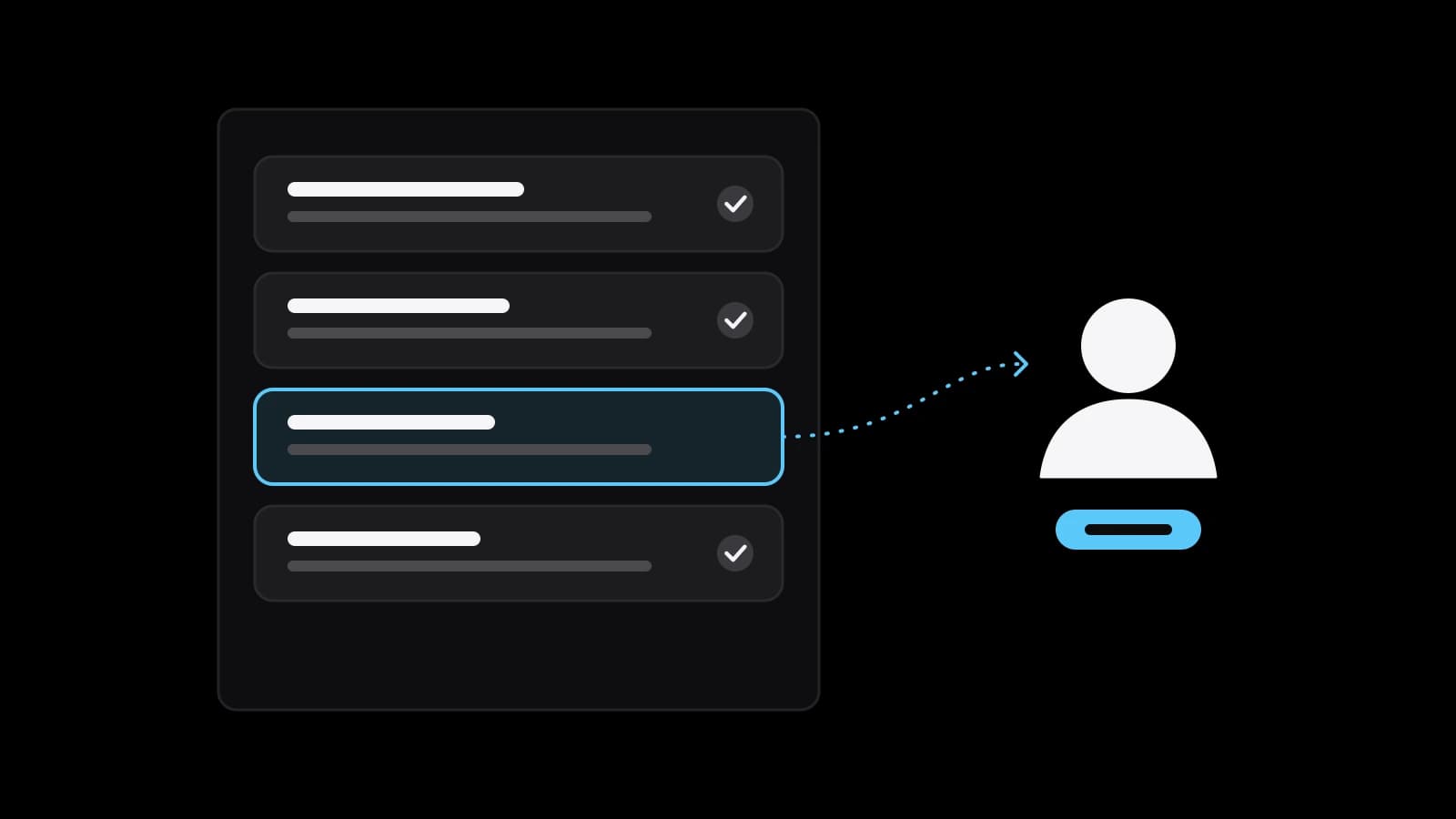
A handoff is not a button labelled contact us. It is a set of triggers written down before launch: the customer asks for a person, the bot finds no answer, the same question returns twice, or the message mentions a complaint, a legal threat, a safety problem, a payment dispute or plain anger. Any one of these should move the chat to a human queue without a fight. A good test is to type human, agent or person and count the messages it takes to reach one.
What arrives with the conversation matters as much. The agent should see the full transcript, the verified identity of the customer, the order in question and the bot's guess at the topic, so nobody asks the customer to start again. After hours the bot must say honestly when a person will reply. An AI customer service agent that knows its limits and passes work on cleanly is worth more than one that tries to finish every chat.
Building the knowledge base and a test set before launch
The bot is only as accurate as what it reads. Gather the answers your team really gives: returns as they are applied, delivery times by destination, warranty terms, payment methods and the workarounds nobody wrote down. Remove contradictions, because a model given two versions of a policy will sometimes pick the wrong one, roughly the gap between the Air Canada chatbot and its bereavement page. Give every article an owner and a review date.
Then build a test set from two or three hundred recent messages: strip personal details and write the correct answer or action next to each, including the cases where the right move is to hand over. Run the bot against the set and mark every reply right, wrong, incomplete or unsafe. Fix the knowledge base and instructions and repeat until you would sign the answers yourself, then keep the set for every later change.
Measuring a support bot and a 30-day rollout plan
Four numbers show whether the bot helps. Resolution rate is the share of chats closed without a person and without the customer returning on the same issue within a few days. Handoff rate is the share passed to a human, and extremes either way deserve a look. Satisfaction after bot chats means something only next to satisfaction after human ones. The fourth number matters most and no dashboard computes it: the wrong-answer rate, from a person reading a random sample of about fifty bot conversations each week.
A rollout built on those numbers takes about a month. In week one the bot only drafts replies inside the help desk, so its mistakes show without any customer seeing them. In week two it answers a narrow set of topics on one channel, such as order status and returns in the website chat, and hands over the rest. In week three you read the sample, fix the knowledge base and widen the topics if errors stay rare. In week four you add after-hours cover or a second channel, such as email, and name the owner of the bot.
Off-the-shelf help-desk AI or a custom bot, and what to prepare
If your help desk already offers an AI add-on, that is usually the shortest path: knowledge base, inbox and handoff sit in one place, and the vendor maintains the model. A custom bot makes sense when the answers live in your own systems, when the website and a messenger need the same rules, or when you want control over what it says and where transcripts are stored. Either way the work that decides quality is yours: the knowledge base, the test set, the triggers and the weekly sample.
Before asking for a quote, list the topics the bot may answer, the topics it must hand over, the documents it will read and the person who receives its handoffs. VITON13 Studio offers an AI chatbot with human handoff as a new, fixed-scope service, in which the bot always says it is a bot and passes the chat to a person when it cannot help or when the visitor asks. The service page lists it at $73 with AI assistance or $93 human-led, in 5–8 working days with 2 revision rounds. The guides linked below break down what website and WhatsApp chatbots cost.
Practical checklist
- Collect the answers your team really gives, remove contradictions and give every help article an owner and a review date.
- Build a test set of a few hundred past messages with the correct answer or action written next to each one.
- Write the handoff triggers down and check how many messages it takes to reach a person by typing the word human.
- Open every chat with a line saying it is an automated assistant and that a person can take over at any time.
- Each week, have someone read a random sample of bot conversations and log every wrong or unsafe answer found.
Questions and answers
How can customers tell whether a support chat is run by AI?
The simplest way is that the business says so in its first message, and in the EU the AI Act turns telling people into a legal duty unless it is obvious from the context. If a chat says nothing, asking it directly usually works. A well-built support bot answers that question honestly and offers to bring in a person.
Should an AI customer service agent be allowed to issue refunds?
Let it look up the order and explain the policy, but leave decisions about money with a person, at least at the start. A refused refund is exactly the kind of outcome customers dispute, and the UK regulator's guidance on solely automated decisions with significant effects includes a route to human intervention and a way to contest the result. Check your own case with a specialist.
Is AI vs human customer service a choice between the two?
Rarely. In most small teams the bot takes repeat questions and lookups while people handle complaints, exceptions and anything that involves judgement or money. The split moves over time, as the weekly review shows which topics the bot answers reliably and which it keeps getting wrong.
What should a customer service chatbot never answer on its own?
Anything it cannot find in the knowledge base, promises that are not written in your policies, legal, medical or financial advice, complaints and safety issues. For these the right reply is a short note that a person will take over, followed by a real handoff with the transcript attached.
How long does it take to launch AI in customer service carefully?
Once the knowledge base exists, about four weeks: a week of drafts that agents edit, a week on a narrow set of topics, a week of fixes from the review sample, then longer hours or more channels. Gathering and cleaning the knowledge base often takes longer than setting up the bot itself.