
Answer in brief
The official Paris Fashion Week calendar starts on 28 September. Before the shows, we offer a method for comparing collections and keeping future trends separate from observed work.
A calendar before a collection
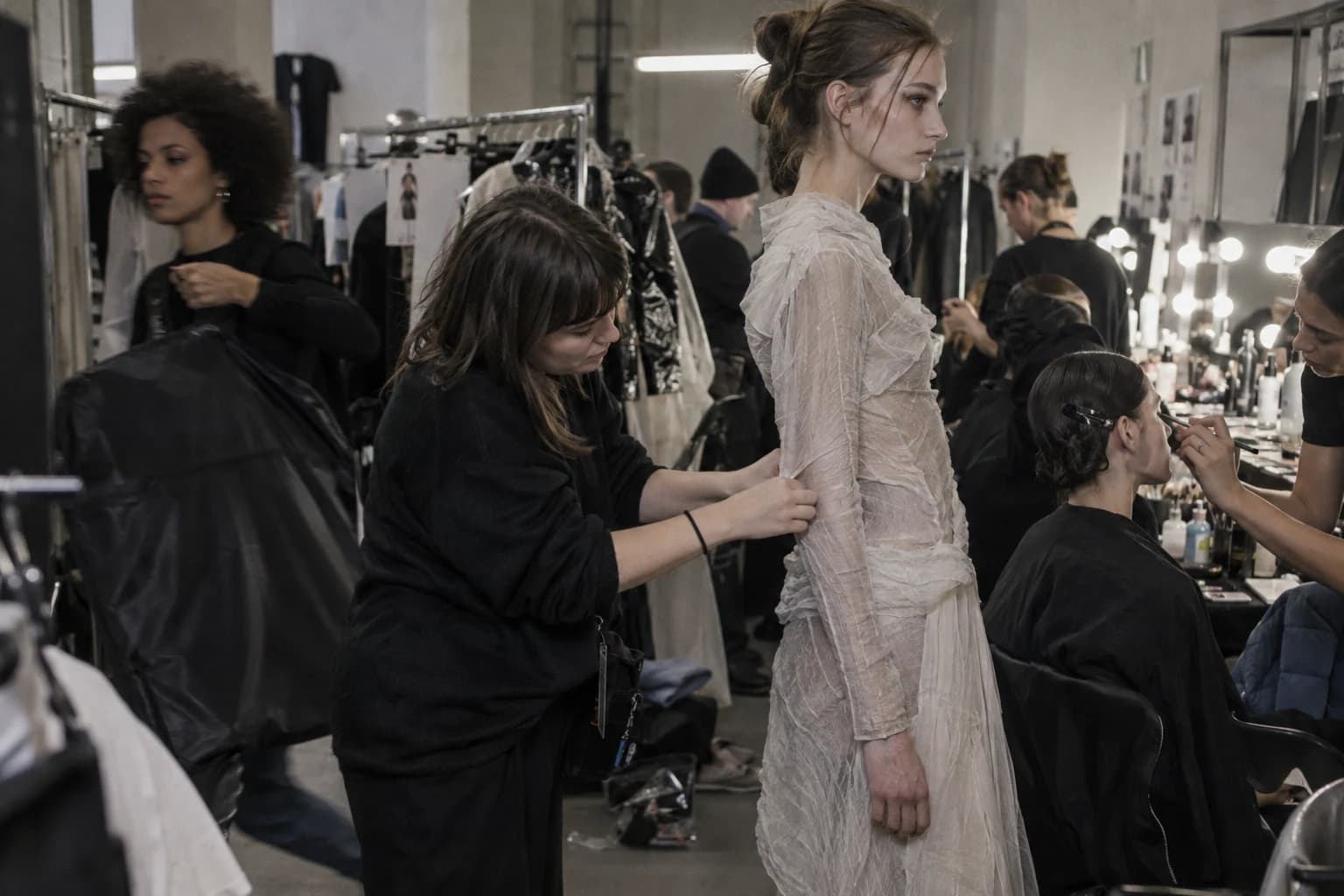
The Fédération de la Haute Couture et de la Mode lists women's ready-to-wear Paris Fashion Week from 28 September to 6 October 2026. On 25 September, this is a forthcoming programme, not a completed season with observed trends. Readers should use the official calendar to know what is scheduled and when, while allowing for updates. A schedule cannot reveal what a house will show, let alone how buyers and customers will respond. That is why a responsible preview explains a method of observation instead of dressing guesses as runway reporting. Our image is an invented behind-the-scenes preparation scene, credited as an editorial illustration rather than a photograph of any scheduled show.
How to read a single presentation: When a collection becomes public, start with the…
When a collection becomes public, start with the complete sequence rather than one image shared widely online. Ask whether a shape repeats, changes scale or appears only once; note how the styling affects the underlying garments. Materials, movement and construction may be difficult to judge from photography alone, so use the house's show notes for its stated intent and keep that separate from your own interpretation. A visual idea can be compelling without establishing a market trend. The most useful early report gives examples that a reader can inspect and names counterexamples that complicate an easy conclusion. It should also date its observations so a pre-show article is not confused with a post-show review.
What comparison can reveal
One house's presentation is a coherent statement, not a representative sample of the entire industry. A week-level pattern needs several independent collections showing a sufficiently specific common choice. Even then, similar colour or silhouette can carry different meanings in different brands. Compare the cut, material and use of a motif, not only the headline label applied to it. Fashion writing becomes clearer when it can explain how two seemingly similar looks diverge and why one apparent exception matters. A popular photograph is evidence of attention to an image, not of retail orders. Commercial outcomes require later information and cannot be inferred from a runway moment on opening day.
The bridge to a wardrobe or store
Readers may want to know whether a runway direction has any practical consequence. A useful answer separates the idea from its most theatrical expression. A brand might communicate a proportion or colour relationship that can be adapted to a wearable product, but whether that adaptation is desirable depends on material, price and audience. Personal style has a similar filter: the point is not to reproduce a complete look but to decide whether a detail fits the person's own use. This translation should never be treated as automatic. Production constraints and customer needs can change the result, and a beautiful show can remain artistically valuable even when it offers no immediate purchase instruction.
What to update after the week
As shows happen, a preview should either be updated with sourced observations and a clear date or remain labelled as a preview. Do not quietly replace a prediction with an apparently timeless statement that hides the original uncertainty. FHCM's schedule supplies the timeline; the public collection material supplies what was shown; later retail information may speak to adoption. Each source answers a different question. This structure allows VJOURNAL to follow the season without pretending to know September's outcome before 28 September. The reader gets a reliable calendar now and a framework for interpreting actual work later, rather than an invented list of trends in advance.
A field notebook for the September shows
Before the first Paris show, create a short record of what you expect to learn rather than a list of predicted winners. Note which houses are presenting, the type of collection, and whether the official schedule changes. FHCM's dates set the window; they do not reveal future runway looks. When images and notes are released, identify the source of each item and the time it became public. That chronology prevents an early moodboard from being mistaken for an observed trend and makes later comparisons more useful to readers who are not attending in person.
For each collection, examine the balance between silhouette, material and styling. A dramatic outer layer may work as a runway statement while the underlying cut points toward a more wearable product. A fabric can photograph as luxurious without surviving a close look at movement or construction. Record the details that repeat within a single show before claiming repetition across the whole week. One outfit is rarely enough evidence for a season-level conclusion, and a brand's own show note is a valuable account of intent rather than an independent measure of consumer demand.
The commercial question arrives later. A runway idea must be translated into production, merchandising, store presentation and an explanation a customer can use. A buyer may take only one element from a show, while a smaller designer may have already explored a related shape independently. This is why an honest early review should resist declaring a single universal Paris trend on opening day. If several houses converge, describe the concrete shared detail and the counterexamples. The more precise the observation, the less the reader needs an exaggerated headline to understand its relevance.
Our image depicts an imagined preparation scene, not a 2026 Paris Fashion Week backstage photograph. That distinction matters because realistic imagery can accidentally lend false evidence to a story about events that have not yet happened. Once the 28 September–6 October window begins, future coverage should replace forecasts with cited observations and update the evidence date. Until then, the useful service is a method for reading the season: verify the calendar, watch complete looks, compare within and across shows, and keep the boundary between a designer's intention and a market response visible.
The difference between a show image and a buying signal
Runway photography compresses a complex collection into a few memorable frames. A look that circulates widely may be the most visually unusual rather than the most commercially important. To evaluate a season, compare full collections, show notes and later product information, not only the images that receive attention on the day. Even a motif that appears in several shows can have different meanings depending on fabric, fit and context. The week ahead has not yet yielded evidence of which products customers will buy, so a pre-show guide should explain how to observe without borrowing the authority of results that do not exist.
A small brand can still learn from the process without trying to copy a luxury runway. Watch how a collection establishes a visual argument: repetition, variation, a change of scale, a controlled colour range or a tension between formal and casual pieces. Then ask which principle, if any, serves your own customers and production constraints. The answer may be none. That is a useful conclusion too. Fashion-week coverage should give a reader language for making distinctions, not pressure them to declare every new look a compulsory trend. When the shows begin, this framework can be tested against actual evidence rather than the expectation created by advance publicity.
A preview should stay a preview
This piece is dated before the first show in the listed September schedule. If a reader returns during the week, its framework can help them organise observations, but the calendar section should not be mistaken for a report from the runway. Later reporting should identify the actual presentation and link to the house's material where possible. A pattern across collections may become clearer with time, and an early guess may prove wrong. That is normal; hiding the difference would be the error. The useful service now is to give readers a way to see the work for themselves and reserve strong claims about trends and sales for evidence that arrives afterward.