
Answer in brief
With separate self-transfer tickets, plan to collect and recheck baggage unless the actual arrangement is confirmed otherwise. Check the bag tag and required airport route. One payment does not prove airline connection protection; rebooking, care and cash compensation have separate conditions.
What does self-transfer mean in the booking?
A self-transfer may require you to collect your suitcase and check it in again, but first establish what tickets the seller is combining. Two flights in one checkout do not necessarily form a protected connection. Ask whether they are a through journey or separate tickets and who helps if the first flight makes the second impossible. Keep the written conditions: one itinerary, payment or email does not settle the contract or baggage route.
A through journey can involve different operating airlines, while separate journeys can involve the same airline. Branding alone is therefore a poor test. Inspect the ticket information, booking references, connection description and any explicit protection terms. If the seller calls an arrangement protected, establish who provides that protection: the airline, the seller or another service. A seller's commercial guarantee is not automatically the same undertaking as the carrier's through-journey arrangements. Resolve ambiguity before booking, because it determines whom you contact if the first flight makes the second impossible.
Use the airport names and terminal details from the actual booking when checking the route. Two flights described as connecting in one city can use different airports, which creates another transport task. Establish who supplies any transfer and whether its cost and time are included. Also read the second carrier's rules on failing to take a booked flight, especially if further segments or a return journey share that ticket. Do not treat the missed segment as isolated without checking those conditions.
Do I need to collect and recheck my baggage?
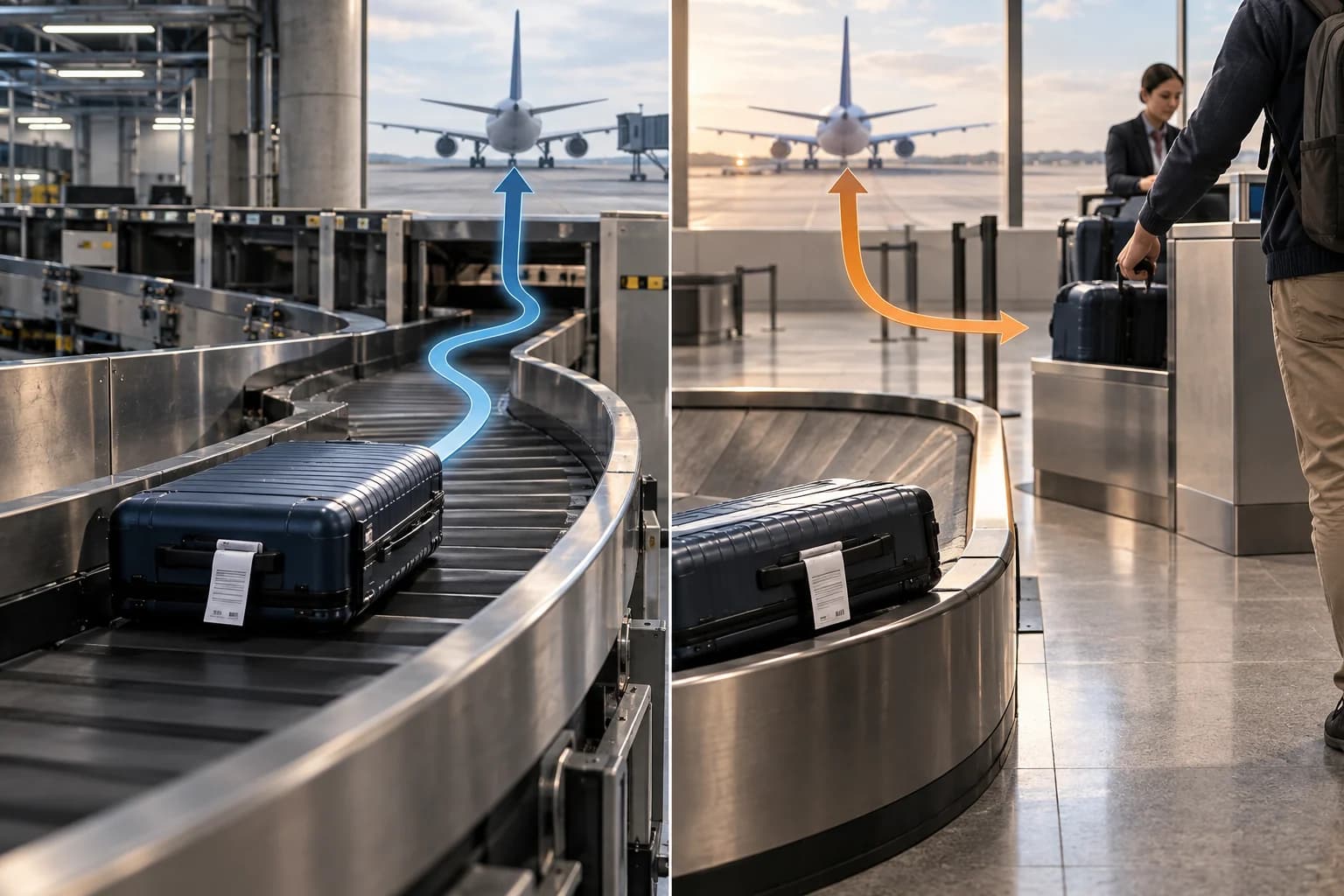
Schiphol's transfer guidance says baggage is normally sent to the connecting flight, but travellers on separate tickets collect it and check it in again. That is a verified airport example, rather than a universal promise for every airline and airport. Check the destination printed on the bag tag at departure and ask staff whether reclaim is required. A boarding pass for the second flight does not by itself prove that the suitcase will be transferred.
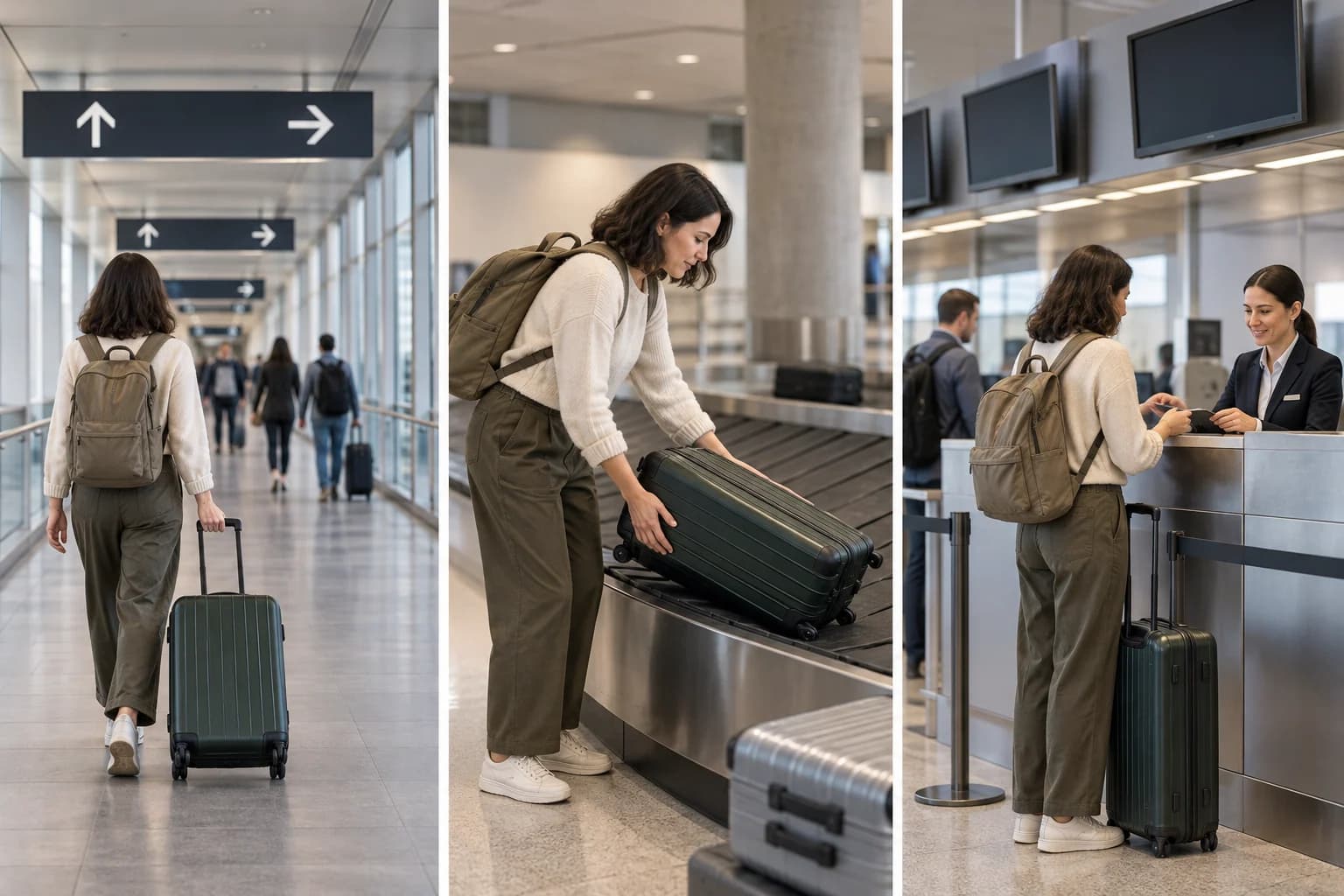
Passengers and bags can take different routes even within a through journey. Local customs requirements or the specific itinerary may require a passenger to collect baggage. Conversely, some separate-ticket arrangements may have particular airline agreements, so verify rather than assume an exception. If you must reclaim, identify the next bag-drop location and deadline as well as the route to the gate. The practical comparison follows the whole chain: landing, getting off the aircraft, reaching reclaim, collecting the bag, passing required controls, checking it again and reaching the next boarding point.
Will I need permission to enter the country?
A self-transfer may require leaving the transit area to reclaim baggage or reach a check-in desk. That can introduce entry-document requirements, border control and a new security check. The exact steps depend on the airport, terminals, route and nationality. A right to remain airside in transit should not be treated as permission to enter the country. Check official requirements for the route you would actually follow, including any terminal or airport change.
Cabin-baggage-only travel can remove the reclaim step, but it does not automatically remove border controls, document checks or a required landside transfer. Confirm whether the second carrier can issue the boarding pass you need in advance and whether the airport supports the intended route. Also inspect cabin baggage conditions for both flights: a bag accepted on the first may need checking on the second. Plan for the actual restrictions rather than assuming that not checking a bag turns separate tickets into a through connection.
Who helps if the first flight makes me miss the second?
The table treats a through journey and self-transfer as different planning arrangements. It does not promise that every through ticket has automatic baggage transfer or that every separate ticket has no additional support. Those details come from the airline, airport and seller terms. British Airways' published disruption guidance provides a concrete example: it describes rebooking for qualifying connections booked together and distinguishes an onward flight booked separately with another airline.
Before buying, identify the responsible contact for each column. If the first flight is delayed, a carrier may owe duties relating to that flight without being responsible for an independently purchased second journey. Likewise, a seller guarantee may require you to contact its support team before buying replacement transport. Save the support route, operating hours and terms where you can retrieve them without relying on an airport connection. The contract is useful only if you understand how to invoke the relevant assistance when the planned itinerary stops working.
| Stage | Through journey | Separate-ticket self-transfer |
|---|---|---|
| Contract | Confirm the relevant through booking | Confirm separate journeys and any seller support |
| Bag destination | Read tag and confirm transfer or local reclaim | Plan reclaim and recheck unless confirmed otherwise |
| Passenger route | Check required transit and border steps | Check landside entry, terminals and security |
| Deadlines | Follow the booked connection arrangements | Meet new check-in, bag-drop and boarding deadlines |
| First-flight delay | Contact responsible airline for connection help | Contact onward carrier and any guarantee provider |
| Cash compensation | Depends on applicable rules and conditions | First-flight rights do not protect a separate second ticket |
| Extra protection | Read airline and booking terms | Read guarantee and insurance terms separately |
Does a missed connection mean compensation is due?
Getting another flight, receiving care while waiting and obtaining cash compensation are distinct questions. A protected connection does not automatically promise an immediate seat on the next departure or a cash payment in every disruption. Availability, the airline's arrangements and the applicable rules matter. For separate tickets, any passenger rights on the disrupted first flight do not by themselves turn the unrelated second ticket into a protected connection.
Your Europe sets out conditions for EU air passenger rights and for compensation after a missed connection. The single-reservation condition, whether the rules apply, the arrival delay and extraordinary circumstances all matter. It also warns that missing a connection because of security delays or failure to respect boarding time does not establish the described compensation entitlement. Check the current official guidance for the exact journey, not only the location of the connecting airport. This article does not give a universal legal verdict, a compensation amount or an assurance that every international itinerary falls within EU rules.
What do the seller guarantee and insurance cover?
If a self-transfer comes with a commercial guarantee, inspect its trigger, exclusions, claim deadline and permitted response. Ask whether it covers replacement travel, accommodation, meals or only specified assistance. Check whether the seller must authorise spending first and what happens if you change the itinerary yourself. A prominent guarantee badge does not reveal these details. Keep the full terms that applied when you bought the journey.
Travel insurance is another contract. Read the relevant missed-departure or connection provisions and do not assume every delay cause or separate-ticket combination is covered. When comparing costs, include any required baggage fees, possible terminal transport and an overnight stay you deliberately choose to create a larger buffer. We provide no probability of missing a flight and no financial ranking of these options. The useful calculation starts with a realistic complete itinerary and a clear answer about who bears the extra cost if the plan fails.
How should I plan time for a self-transfer?
There is no universal safe connection time for self-transfer. Work backwards from the second flight's check-in, bag-drop and boarding deadlines, then account for the actual transfer steps and your travel circumstances. Published minimum connection times for airline connections should not be borrowed as a guarantee for a separate-ticket arrangement with reclaim and recheck. A longer gap offers more room, but it cannot eliminate every disruption or entry-document problem.
For a through journey, keep airline contacts and booking information ready and follow the instructions when a connection is at risk. For self-transfer, monitor the first flight and contact the onward carrier and any guarantee provider promptly if their terms call for it. Preserve delay notices, boarding documents, bag tags and receipts needed for a claim. Avoid buying alternatives on the assumption that someone will certainly refund them. The decision is about accepting a defined arrangement: which journey is protected, which bag is checked where, which border steps apply and which organisation will handle the next move.
Keep the itinerary and disruption contacts available offline. A person handling a missed connection needs the first flight's status, the second flight's deadlines, the booking arrangement and any guarantee terms quickly. If you travel with someone else, agree who contacts which provider while the other checks the baggage instructions. Record the assistance offered and the options you accepted. This can make a later claim easier to describe, but it is not a promise of reimbursement. At the airport, use current airline and airport information because gates, counters and operational instructions can change during the disruption.
Questions and answers
Does one payment mean my connection is protected?
No. A seller can take one payment for separate tickets. Ask whether the flights form a through journey and who handles a missed connection. Read any commercial guarantee separately from the airline’s arrangements. Keep the answer and conditions before paying, especially when the website displays both flights together without explaining self-transfer.
Do separate tickets always require baggage reclaim?
Plan for reclaim and recheck unless the actual arrangement is confirmed otherwise. Schiphol gives that instruction for separate tickets; airline agreements or other conditions can differ. Ask the airline and read the bag tag. Check customs requirements too, since they can require reclaim even on a through journey.
Does a missed connection automatically qualify for EU compensation?
No. Your Europe lists conditions including a single reservation, the application of EU passenger rules, arrival delay and the absence of relevant extraordinary circumstances. It also distinguishes missed boarding caused by security delays or not respecting boarding time. Rebooking, care and compensation are different questions; check the official rules for the exact itinerary.
Can I make a short self-transfer with cabin baggage only?
It removes one possible task but does not guarantee the transfer. You may still need document checks, entry clearance, terminal travel or another security check. The second carrier can also have different cabin-bag rules. Work backwards from its deadlines and verify the airport route; no fixed time in this guide is presented as safe.