
Answer in brief
Targeted advertising is an ad shown to people selected by traits and behaviour: where they live, how old they are, what interests them, whether they already bought from you. On social networks it builds demand instead of catching a search query. A campaign needs an offer, several creatives, a page or form and tracking, and is judged by what a request costs, not by reach.
Targeted advertising chooses the person, not the search phrase
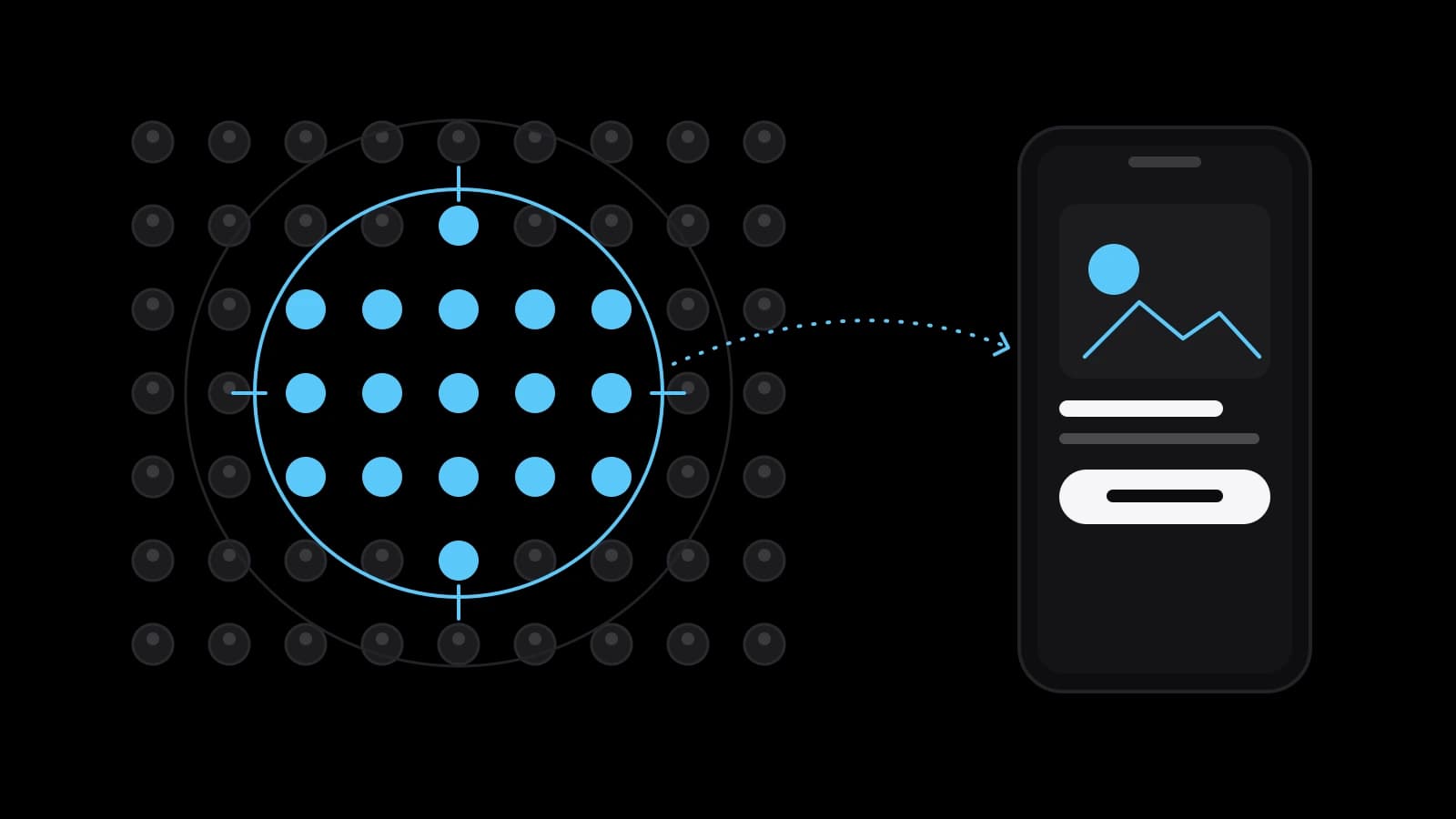
People who ask what is targeted advertising usually mean the ads that sit in a social feed between a friend's photo and a news post. Wikipedia defines it as advertising directed towards an audience with certain traits: demographic, such as age and income, psychographic, such as interests and lifestyle, or behavioural, such as purchase history. The ad goes to people chosen by who they are and what they do, not by what they have just typed into a search box.
Take a children's swimming school in one city district. Nobody there searches for it every morning, yet many parents of young children live a short drive away. The school describes them to the platform: the area, the age range, an interest in children's activities. The platform finds the accounts that fit and puts the ad in their feed.
How it differs from contextual ads: created demand and existing demand
Contextual and search advertising answer a request. A person types "winter tyres with fitting" and sees an offer of exactly that. The demand already exists, and advertisers compete to meet it. A targeted ad works the other way round: it interrupts someone scrolling for pleasure, so it has to create the interest before it can sell.
Search is limited by how many people look for the thing, and a product nobody searches for cannot be sold there. Social targeting suits what must be seen before it is wanted: clothes, food, courses, events. The border is not sharp: the help centre of VK Реклама, the ad platform of VK, has a setting for people who entered certain search queries on VK's services. Many small businesses end up using both channels.
Where it runs in 2026: VK Ads, Telegram Ads, Meta and TikTok
The VK Реклама help lists where its ads appear: VKontakte, which it calls the largest social network in Russia and the CIS, Odnoklassniki, VK projects such as Dzen, and channels in the MAX messenger. It also explains ad marking in Russia: since 1 September 2022 amendments to the law on advertising have made marking of all online ads mandatory, and each ad receives a token through an advertising data operator.
Telegram Ads says on its own site that anyone can post ads through the platform, that sponsored messages appear in public channels with 1,000 or more subscribers, and that an ad is up to 160 characters of text with a link. The advertiser chooses the channels, so the audience is picked by what people read, not by a personal profile. Telegram states that it does not use the contents of private chats or contact lists for ad targeting. For advertisers in Russia there is a legal side as well: the regulator's position on advertising in particular services, and the transition period it set, are laid out in the studio guide linked at the end; check the current rules before launching.
Meta Ads covers Facebook and Instagram. The Meta Business Help Center page on taxes, as read on 11 October 2026, says ads targeting in Russia are paused and advertisers within Russia cannot create or run ads anywhere in the world; separately, in March 2022 a Moscow court declared Meta an extremist organisation in Russia. The TikTok Business Help Center lists countries where an ad account can be opened without a representative; the page, updated in November 2025, includes Russia, Spain, France and Mexico. A second page, updated in June 2025, adds that the markets an account can reach depend on the country of registration, and that a missing market may mean TikTok cannot deliver ads there.
Targeting settings: geography, age, interests, customer lists and lookalikes
The basic settings are the same everywhere: place, age and sex. VK's help says a country, region or city is determined by IP address, while local geography is a point on the map with a radius from 500 metres to 50 kilometres, determined by GPS data. The next layer is interests and behaviour: Meta's detailed targeting relies on factors such as the ads people click and the pages they engage with. TikTok's help, updated in October 2026, explains the logic: choices inside one group of settings are joined by "or", choices across groups by "and", so every added condition narrows the audience.
The last layer is your own data. VK accepts user lists of at least 100 unique customer contacts and builds lookalike audiences from a source of at least 1,000 people. Meta matches hashed emails and phone numbers to profiles, and consent is the advertiser's duty: its customer list terms, effective 3 December 2025, make the advertiser confirm it holds all necessary rights, permissions and a lawful basis for the data. How your country's personal data law applies is a question for a lawyer.
What an ad is made of: the creative, the text and the page or form
An ad has three parts, and each does one job. The creative, a picture or a short video, stops the scroll. The text says what is offered, to whom and on what terms. The button leads to the place where the person acts. Telegram's ad guidelines show the minimum: an ad consists of a text of up to 160 characters and a button that opens a link to the advertised product.
The click leads either to a page of your site or to a lead form inside the platform. VK's help describes the lead form as a way to collect contacts of interested users: name and phone are selected by default, and the consent text for processing personal data is generated from the company details. Telegram requires that the destination match the ad text, a rule worth following everywhere.
How a campaign is judged: reach, clicks, leads and the cost of each
The platforms define the numbers themselves. Meta's help says reach is the number of accounts that saw your ads at least once, and that the figure is estimated; impressions are the number of times the ads were on screen, so one person can account for several. VK's help defines CTR as clicks divided by impressions, multiplied by 100 per cent.
These figures show attention, not whether the campaign pays. In VK's statistics leads are the number of requests received from the ad, and the cost of a lead is the amount spent divided by the number of requests. Meta calls the same idea cost per result: amount spent divided by results. The last step is yours, because the platform does not see who actually paid. A cheap click that never turns into a customer is the expensive one.
Four mistakes of a first campaign, from one creative to a verdict on day two
The first mistake is a single creative: with one picture and one text there is nothing to compare. Dozens are no better: Meta's help advises against high ad volumes, because the delivery system then learns less about each ad. The second mistake is the size of the audience. Too narrow, and the same few people see the ad again and again; too broad, and the budget is spread over people who will never buy.
The third mistake is launching without tracking: no counter on the site, no record of where a request came from, so neither you nor the system knows which ad worked. The fourth is a verdict on the second day. Meta's help on the learning phase says an ad set usually starts to deliver stably after about 50 results in the week following its last significant edit, and that each such edit starts the learning again. Fix the test period and the budget in advance, and judge at the end.
What to prepare before launch and when to hand targeting to a specialist
Before any money is spent, put four things on one sheet. The offer: what you sell, to whom, at what price and why now. The buyer: where they live, how old they are, what they care about. The materials: several photos or short videos and a page or form that repeats the offer. And the back office: who answers a request and how fast.
You can run it yourself when there is one product, one city and time to open the account every couple of days; the help centres quoted above are free and detailed. It makes sense to order the work when there are several products or regions, when tracking has to be tied to a CRM, or when nobody on the team has those hours. VITON13 Studio does this as part of its marketing service, and its guides linked below carry the prices and platform details. By then the question of what is targeted advertising has turned into a more useful one: whom exactly do you want to reach.
Practical checklist
- Write the offer in one sentence: what you sell, to whom, at what price and why now.
- Describe the buyer in platform terms: area, age range, interests, and whether a consented customer list exists.
- Prepare several creatives and one page or lead form that opens with the same promise as the ad.
- Set up tracking before launch: a counter or pixel on the site and a note of where each request came from.
- Fix the test period and the budget in advance and judge by the cost of a request when the period ends.
Questions and answers
Is targeted advertising the same as contextual advertising?
No. Contextual and search ads respond to a query or to the content of a page, so they meet demand that is already there. Targeted ads on social networks go to people selected by traits and behaviour and have to raise interest first. Many businesses run the two side by side.
Can a business in Russia run ads on Facebook and Instagram?
Meta's own help page on taxes, checked on 11 October 2026, states that ads aimed at Russia are paused and that advertisers located there cannot create or run ads in any country. That page describes Meta's rule, not national law; for the legal side, ask a lawyer.
How does a lookalike audience work in social media advertising?
The platform assembles it from people who resemble a source group, usually your customers. Meta says a smaller percentage gives a closer match and a larger one a broader audience. VK's help asks for a source of 1,000 people or more when it is built from a user list.
Do I need consent to upload a customer list to an ad platform?
The platforms place that duty on the advertiser. Meta's customer list terms require you to have the necessary rights, permissions and a lawful basis for the data, and to leave out people who opted out. What the personal data law demands in your case is something to check with a lawyer.
How long should a first targeted campaign run before I judge it?
Long enough for the system to collect results. Meta's help says an ad set usually stabilises after roughly 50 results within a week of the last major change, and that earlier figures are not a reliable guide. Set the period and the budget beforehand and do not change the ads every day.