
Answer in brief
You earn with AI by selling a finished, checked result to a client: design, product photos, short video, copy and translation with human editing, automation or teaching. The tool makes the work cheaper for everyone, so judgement is what you are paid for. Passive-income packages are what regulators pursue, and platforms and copyright law limit mass-produced AI output.
Earning with AI means selling a finished result, not the tool
Anyone who types how to make money with ai into a search box meets two kinds of answers. One kind sells a system that earns while you sleep. The other describes ordinary work: a client has a problem, you solve it faster with a new tool, and the client pays for the result. This article follows the second kind.
The International Monetary Fund wrote in January 2024 that almost 40 percent of global employment is exposed to AI, and about 60 percent of jobs in advanced economies. Its staff expect roughly half of the exposed jobs to benefit, while in the other half AI may take over key tasks, which could lower wages. The tool that helps you also helps your competitor, so what keeps its value is judgement: knowing what the client needs, checking the result and answering for it.
Six kinds of work that clients actually pay for
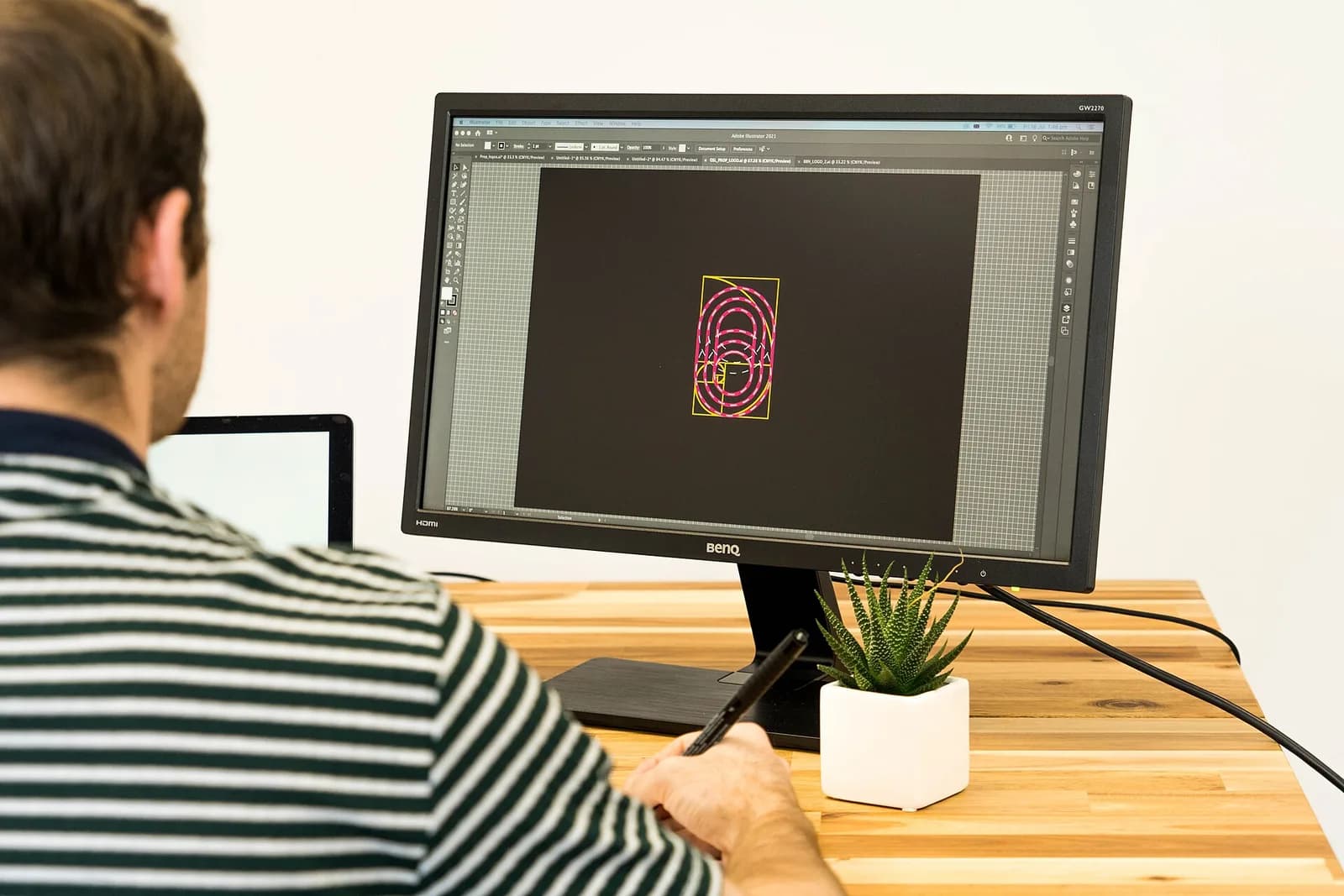
The first group is visual. A designer who uses image and layout tools delivers logos, social posts and presentations faster, and a short-form editor turns interviews and clips into vertical videos with subtitles. A seller with fifty items and no studio needs consistent product photos. All of these need a handful of real samples, which a client can judge in a minute.
The second group is words and teaching. Copy and translation sell when a person edits the machine draft against the client’s facts, tone and terminology; pasting text into a tool sells nothing the client cannot do alone. Teaching is the same idea turned around: people want someone to show them how to use these tools on their own tasks.
The third group is automation and chatbots for small businesses. A shop owner who answers the same twenty questions daily can pay a person who connects the tools, tests them on real messages and stays reachable when something breaks. It is the most technical of the six and has the longest road to a first client, because the client hands you access to customers and records. Across all six the main risk is the same: if the client can make the same thing in an afternoon with the same tool, your price has nothing to stand on.
What official wage data shows and what it cannot show

The US Bureau of Labor Statistics publishes median pay for employees by occupation. Its figures for May 2025 are $62,960 a year for graphic designers, $60,170 for interpreters and translators and $75,420 for film and video editors. These are salaries paid by employers, not project prices, and the Bureau notes that its wage data do not include pay for self-employed workers.
For 2025 to 2035 the Bureau projects employment of graphic designers to change by minus 2 percent and that of interpreters and translators to grow by 2 percent, against 3 percent for film and video editors with camera operators. Its graphic design page says automated tools, AI among them, are projected to make designers more productive. Its translator page says many jobs cannot be entirely automated. These are one agency’s projections, not promises.
Self-employment is common in these trades: the same pages list 20 percent of graphic designers, 28 percent of interpreters and translators and 35 percent of film and video editors as self-employed. That is the group a reader of this article would join, and the group whose pay the wage tables leave out. For a price there is no shortcut: write the scope down, check what comparable finished work costs on the marketplace where you plan to sell, and test one price with a first client.
What happened to freelancers after ChatGPT arrived
Researchers at Washington University in St. Louis studied freelancers on one large online platform, and the Brookings Institution summarised the work in July 2025. After ChatGPT launched in late 2022, freelancers doing text-heavy work such as copyediting and proofreading saw about 2 percent fewer new monthly contracts and about 5 percent lower monthly earnings. Graphic design, exposed to image models such as DALL-E 2 and Midjourney, showed an effect of similar size.
The surprising part is who lost the most: Brookings reports that the declines were steepest for experienced, higher-rated freelancers. One plausible reading, which is an interpretation and not the study’s claim, is that routine skilled work became cheaper to produce and a reputation built the old way did not protect the price.
How long a first client takes, no honest source can say, and a figure quoted in an advertisement is not evidence. What shortens the road is known: one narrow offer instead of a list of services, three or four finished samples for real small businesses, a written scope that states what the client receives and how many revisions are included, and a habit of checking facts before delivery.
Passive income promises and what the FTC has pursued
The loudest answers sell a package: an automated online store or a bot that makes videos. On 25 September 2024 the US Federal Trade Commission announced a sweep called Operation AI Comply. It alleged that Ascend Ecom sold storefront services with AI-powered tools and that consumers lost more than $25 million, and that FBA Machine used AI-powered tools to promise guaranteed income, with alleged losses above $15.9 million. The chair said there was "no AI exemption from the laws on the books".
In August 2025 the FTC sued Air AI, alleging claims that customers would earn back tens of thousands of dollars within days or months, and losses of up to $250,000 for some small business owners. In March 2026 the company and its owners settled, accepting a ban on marketing business opportunities. These are one regulator’s allegations and a settlement, not a verdict on every seller of AI tools. The red flags are easy to list: promised income, a refund conditional on earnings, and a fee due before you have seen a single customer result.
Content farms, prompt packs and AI books meet platform rules
In July 2025 YouTube renamed its repetitious content policy to inauthentic content. Its monetization page lists AI-generated content made with generic or unoriginal templates among the ineligible kinds, while AI tools themselves are allowed when the video still shows the creator’s creative vision. The Partner Program page sets the entry bar at 1,000 subscribers plus either 4,000 qualified watch hours in twelve months or 10 million qualified Shorts views in 90 days.
A site fed by AI articles meets a similar rule. Google’s guidance on generative AI says that using such tools to generate many pages without adding value for users may violate its spam policy on scaled content abuse. Google does not call AI forbidden; it treats volume without value as the problem.
Marketplaces are more specific. Etsy’s help centre says sellers may use AI tools for certain items if they add their own creative input and disclose AI use in the listing description, and it lists AI prompt bundles as not allowed, so prompt packs are not a product there. Amazon KDP separates AI-generated text, images or translations, which you must report when publishing, from AI-assisted work that you wrote yourself and need not report. Such rules change, so read the current page first.
Who owns a picture or text that an AI made for a client
A client who pays for a logo expects to own it, and ownership starts with copyright. The US Copyright Office published the second part of its report on AI on 29 January 2025, on outputs made with generative AI. As the Office describes it, providing prompts alone does not earn protection. Protection is possible where a human author has determined sufficient expressive elements, or where a person makes creative arrangements or modifications. Using AI as an assistant does not by itself bar copyright in the finished work.
In practice a logo generated from one sentence may be something nobody can exclusively own, while a layout you drew, edited and combined with your own elements has more human authorship to point to. That is an inference from the Office’s description, not legal advice, and the report concerns United States law. Keep your working files and your edits, state in the contract which parts were made with AI, and ask a lawyer who knows your client’s country before you promise exclusive rights.
Learn it yourself first, or order the result from a studio
If you want to earn, pick one kind of work from the list above and spend this week on a real job rather than on tools. Choose a small business you can name, write on one page what you would deliver, make the work and edit it by hand. A structured course adds order and feedback. VITON13 SCHOOL has an Artificial Intelligence course and a free Generative AI course. The first costs 1,300 RUB, and the course pages carry the programme and current terms.
If you are on the other side, a business owner who wants the result and not a new hobby, the choice is simpler. VITON13 Studio sells design, websites, video, marketing and AI work to small businesses. Scope and price are written down before work starts, from $13 for AI-assisted work and from $33 for human-led work, and the linked guide explains where each fits. Bring the brief on one sheet: what you sell, to whom, and what the finished piece must do.
Practical checklist
- Pick one kind of work and one type of client, and write the offer in a single paragraph.
- Make three real samples for named small businesses and keep the files from before and after your edits.
- Check every fact, price and name in AI output by hand before you deliver it.
- Read the current policy page of each platform you sell on before you publish anything.
- Put in the contract which parts were made with AI and who owns the final files.
Questions and answers
Can a complete beginner earn money with AI in 2026?
Yes, as ordinary services, but no honest source publishes how fast or how much. Start with one narrow offer, a few real samples and a written scope, and expect the first months to go on learning to deliver.
Is there an AI side hustle that needs no skills at all?
Offers that promise it are the kind the FTC has pursued. Real work needs knowledge of a subject or a craft, because a client pays for a result somebody has checked and is willing to answer for.
Can I sell AI art or prompt packs on Etsy?
AI-made items can be sold when you add your own creative input and disclose the AI use in the listing. Etsy’s help centre says AI prompt bundles are not allowed, so prompts alone cannot be the product.
Do I own the copyright to images I generate with AI?
Under the US Copyright Office’s report of January 2025, prompts alone do not earn protection, while human creative arrangements or modifications can. Other countries differ, so ask a lawyer about your client’s case.
Can a YouTube channel of AI videos earn money?
It can if the videos show real creative input and value. YouTube’s inauthentic content policy makes mass-produced, templated AI content ineligible, and the channel still has to reach the Partner Program thresholds.