
Answer in brief
Netflix’s two-part LEGO ONE PIECE special arrived on September 29. Its retelling format raises a useful question: what does a familiar adventure gain when the narrator and visual language change?
A new release revisits an existing voyage
LEGO ONE PIECE appears in Netflix’s September 25 release guide with a September 29 arrival. The two-part animated special is now the current development in a franchise with several screen projects running on different clocks. For viewers deciding where to enter the story, its defining feature is the announced retelling of the first two live-action seasons, rather than an advance into the next season’s events.
A retelling changes the task an adaptation sets itself. It can assume that some viewers recognise the journey while others need an introduction to the relationships and stakes. That creates a demanding balance: familiarity must offer something beyond repetition, and compression must leave enough cause and consequence for a newcomer to follow. Those are useful criteria for watching the special, without turning the launch announcement into an unearned review.
Keep the three screen projects separate
Netflix’s April announcement places the brick animation, the next live-action season and the separate THE ONE PIECE anime project in distinct categories. That earlier announcement supplies context; the September guide establishes the fresh release. The difference matters because a familiar franchise name on a screen tile can otherwise suggest that every new title continues the same timeline in the same form.
The table is a viewing map, not a prediction about which version will be most successful. A completed retelling, a future season and an anime in production answer different viewer needs. Putting them into one release countdown would erase those distinctions. Audiences can instead choose whether they want a compressed revisit, later live-action developments or a different animated interpretation when its own release information becomes available.
| Project | Announced role | Status at cutoff |
|---|---|---|
| LEGO ONE PIECE | Two-part animated retelling | Released 29 September 2026 |
| Live-action season 3 | The Battle of Alabasta | Scheduled for 2027 |
| THE ONE PIECE | Separate anime interpretation | In production; no date asserted here |
Usopp makes the act of telling visible
The current Tudum guide describes Usopp recounting the Straw Hats’ earlier journey for Chopper. That framing is worth noticing because a story told by a character has an identifiable point of view. An audience can ask who is speaking, what the listener already knows and why a particular episode receives emphasis. It turns remembering into part of the premise rather than treating a recap as a neutral list of events.
This creates an interpretive opportunity rather than proof of how every scene works. A boast, omission or exaggeration can change a familiar event’s tone without replacing its basic place in the journey. For returning viewers, comparing the telling with their memory may become part of the pleasure. New viewers can follow the relationship between speaker and listener even before they understand every reference to the broader fictional world.
A construction system becomes a visual vocabulary
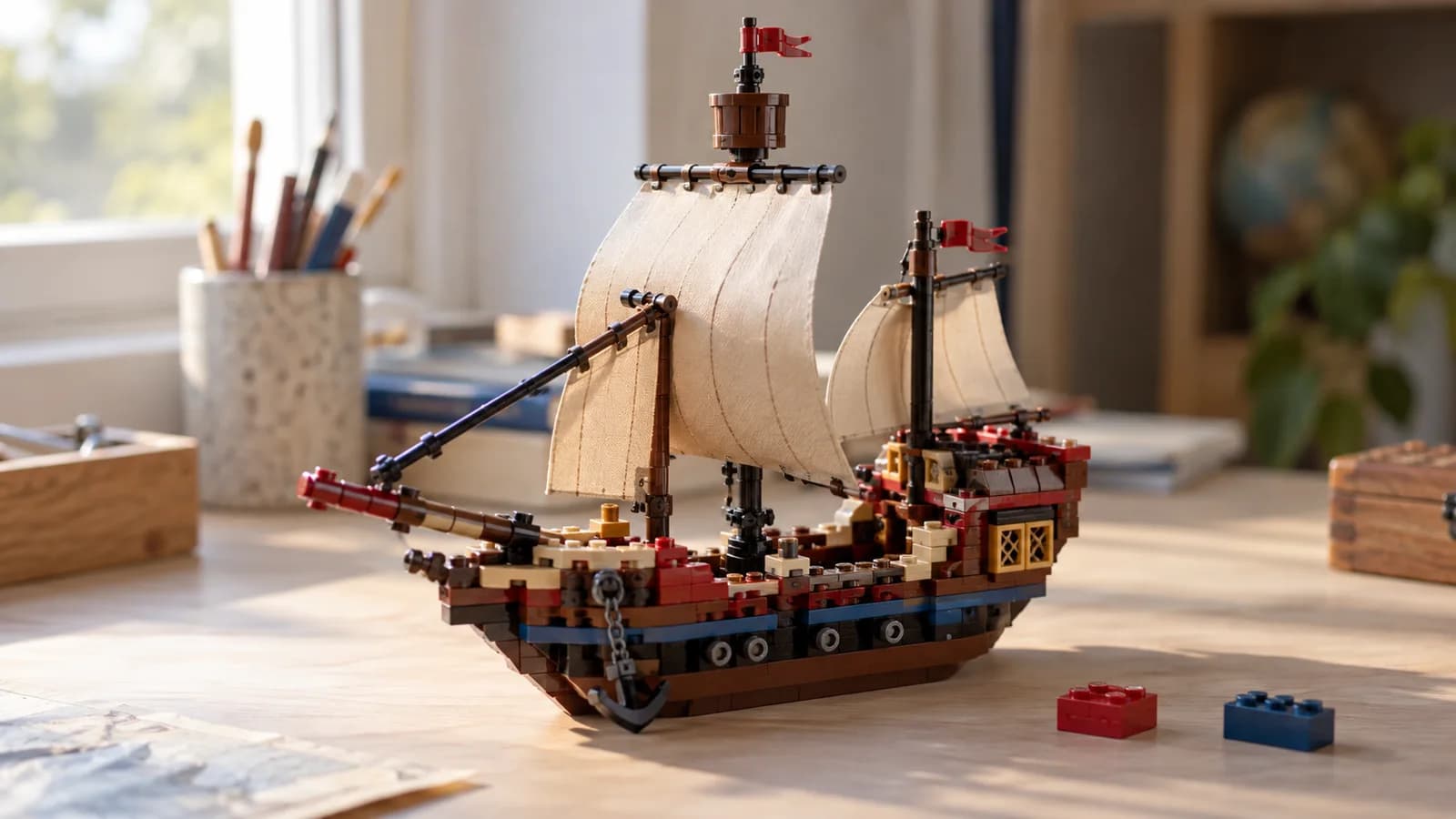
LEGO’s April partnership announcement confirms the animated project alongside physical products and identifies Atomic Cartoons as a production partner. The relevant design question is how a world associated with assembled pieces can communicate motion, danger and character. A recognisable construction system offers an immediate visual rule: viewers understand that complicated objects are made from smaller repeatable parts, even without studying how a specific scene was produced.
As an analytical possibility, that rule can support jokes about scale, assembly or breakage. It does not establish the special’s exact animation method, which cannot be inferred from the appearance of bricks alone. Nor does it prove that a physical set reproduces every screen object. Watching for consistent material behaviour is a more precise way to discuss the design than simply calling any toy-based animation realistic or technically innovative.
Two audiences need different entry advice
For someone who has already followed the live-action story, the special can be approached as a change of voice and visual form. For a newcomer, the more consequential choice concerns spoilers. A work designed to retell earlier events can reveal outcomes that the longer series originally withheld. Starting with the special may be convenient, but that convenience changes the order in which discoveries arrive.
Families also need to distinguish a toy’s recommended building age from a screen classification. The former describes a physical product; it cannot substitute for checking the title’s local rating, available audio and subtitles, and account settings. Those details belong to the service in the viewer’s territory. The launch sources establish the project and its premise without supporting a claim that every household will encounter identical language options or age guidance.
The test is what the new form contributes
The partners present the release as a way to welcome new viewers and offer existing fans another perspective. That is a stated intention, not evidence that either audience has responded as hoped. The sources used here do not establish viewing figures, completion rates or changes in toy sales for the special. A release date alone cannot answer those commercial questions.
The cultural question is available immediately: does revisiting an adventure through another narrator and another material vocabulary make something newly legible? Viewers can judge that by tracking what is emphasised, what is compressed and whether relationships remain clear. This gives the September release a specific place in the franchise: a new act of storytelling about familiar material, with its own strengths to assess when watching.
Questions and answers
Is this the third live-action season?
No. The special is an animated retelling of the first two live-action seasons. Netflix’s April announcement separately scheduled the third live-action season for 2027.
Does the special contain story spoilers?
Its announced purpose is to revisit earlier events. Viewers who want to discover those events through the live-action series should expect that a retelling can disclose their outcomes.
Do the related toy sets establish an age rating?
No. A construction set’s recommended age concerns that product. Families should check the screen title’s local classification, language options and description in their Netflix account.