
Answer in brief
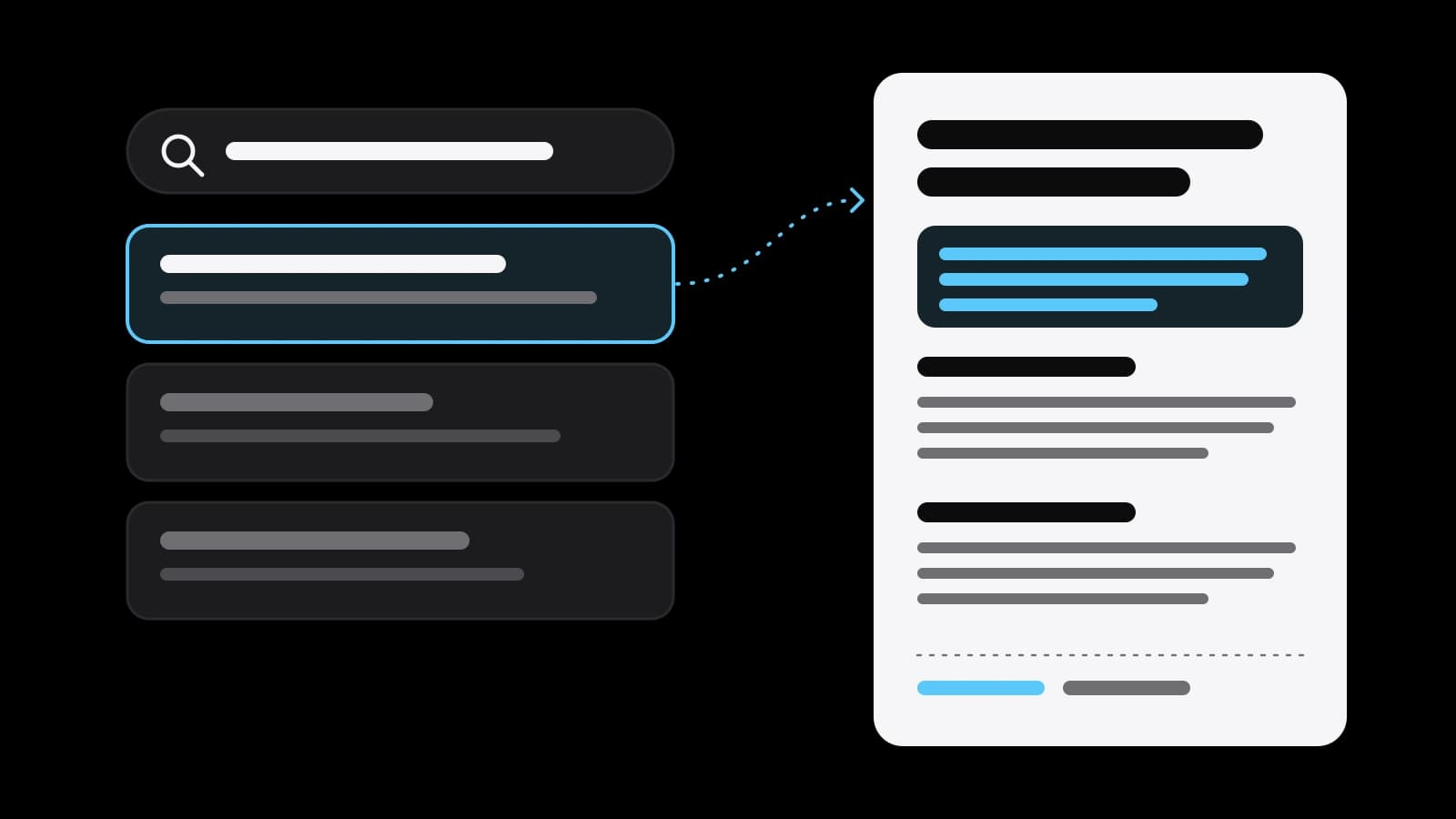
SEO content is the text of a page written around a question people type into search and laid out so a search engine can tell what the page answers. Google and Yandex both say in their documentation that they want text made for people, and both treat keyword-packed text written for robots as spam. Length alone does not matter; the answer, the headings, the title and the description do.
SEO content is a page built around a search question
People ask what is seo content as if it were a genre with rules of its own. In practice it is the text of an ordinary page, written around a question people type into search and laid out so a search engine can tell what the page answers. A dental price list becomes SEO content when it is built on the words its patients actually use. The label describes the purpose of the text, not its style.
The older meaning was different, and many buyers still remember it. For years an SEO text was a block at the bottom of a category page, packed with phrases like “buy cheap with delivery” and read only by a robot. Google and Yandex now describe that practice in their own documentation as something they work against. Today the term means a useful page that is easy to find, not a trick played on a ranking.
What Google and Yandex write about useful page text
Google Search Central has a guide called “Creating helpful, reliable, people-first content”. It defines people-first content as content created primarily for people, and not to manipulate search engine rankings. The guide offers questions for checking your own work. They ask whether the text gives original information or analysis, whether someone would bookmark it or recommend it, and whether a person who clearly knows the subject wrote or reviewed it.
The guide also lists warning signs of text made for search engines first. Among them are content made mainly to attract visits from search, extensive automation across many topics, summaries of others without added value, and dates changed to look fresh when the text has not changed. Google frames it all with three questions about a page: who made it, how and why. It calls the last one perhaps the most important.
Yandex says the same in its own words. Its page “Yandex and search optimisation” separates honest work on content and usability from manipulation, which it calls pseudo-optimisation and treats as a kind of search spam. The page argues that pseudo-optimisation always loses in the end to a real improvement in quality. Neither search engine asks for a special type of text; both ask for a page that does its job for the reader.
Keyword stuffing and texts written only for robots
Google’s spam policies define keyword stuffing as filling a page with keywords or numbers in an attempt to manipulate rankings, often in a list, unnaturally or out of context. The examples are familiar from weak service pages: lists of phone numbers without added value, blocks of cities a page wants to rank for, one phrase repeated until it sounds strange. The page showed a last update in August 2026. Such rules change.
Yandex is even more direct. Its webmaster help page “Differences between a quality site and a low-quality one” lists the use of SEO texts as a violation: texts that are useless to the visitor and are created to manipulate search engines. Such texts can sit in text blocks, navigation elements or tag clouds. The page warns that restrictions can affect the ranking of the whole site or its sections.
The border is easy to test. Read the paragraph aloud as if a customer were sitting next to you. If the repetition would embarrass you, or the paragraph could vanish without the customer losing anything, it is there for a robot. Google’s SEO Starter Guide adds a human reason: repeating the same words over and over, even in variations, is tiring for users.
What a good search page is made of: answer, headings, title
A good page starts with the answer. Yandex’s guidance on presenting information says the main point of a document should be clear on the first screen of the browser, and that text should be written correctly and laid out neatly. On a service page, the first lines say what you do, for whom and where. In an article, the question in the heading is answered before the text goes deeper.
Headings are the map of the page. Yandex recommends marking them with H1 to H6 tags according to the hierarchy of the document, because they help a visitor find their way. Google’s SEO Starter Guide is more relaxed: there is no magical ideal number of headings, and for Google Search it does not matter if they are out of order. Both guides write headings for the same reason, the reader.
Two lines outside the visible text matter as much. The title element is one of the sources of the title link in results, and Google asks for one that is unique to the page, clear, concise and accurate. The meta description may feed the snippet; a good one is short, unique and holds the page’s main points. Anchor text in internal links tells users and Google about the linked page. The keywords meta tag is not used by Google Search at all.
Word counts, length and the long wall of SEO text
Ordering text by length is a habit from the old market: two thousand characters for a category, five thousand for an article. Google’s helpful content guide asks whether you write to a word count because you heard Google prefers one, and answers in brackets that it does not. The SEO Starter Guide agrees that length alone does not matter for ranking. A text should be as long as the question needs.
Long is fine when it is organised. Google advises breaking long content into paragraphs and sections with headings. Yandex suggests splitting a very large text across pages only by large logical units, such as chapters, and warns against scroll boxes and drop-down blocks that hide text. A wall of words under a “read more” link at the bottom of a catalogue fails both pieces of advice.
AI-written text and what search engines say about it
Neural networks write fast, so people worry that search will punish their text. Google’s guidance on generative AI content does not ban the tool. It asks for accuracy, quality and relevance, and calls it critical to fact-check and review AI-generated content manually before publishing. The review covers the title element and meta description too, which are easy to forget when a model writes them.
The real limit is scale without value. Google’s spam policies describe scaled content abuse as many pages generated mainly to manipulate rankings rather than help users, no matter how they are created; generating many pages with AI without added value is a listed example. The helpful content guide says large amounts of AI text without manual oversight represent little to no effort. Google also suggests telling readers how content was made.
Yandex’s list of low-quality content points the same way. It names automatically generated content that is useless to the user, sites that copy or rewrite information from other resources, and low-quality machine translation. A model can help with a draft, a structure or a list of customer questions. The facts, the examples from your own work and the final word on every sentence still belong to a person who knows the business.
How to write, check and brief SEO content yourself
Start with the question, not the keywords. Google’s starter guide suggests thinking about the words a user might search for, and the best place to hear them is your own sales channel: calls, chats, emails. Choose one main question per page. Write the answer first, then the details, then the proof. Put the search phrase where it reads naturally, in the heading and the first paragraph.
Check the draft against the search engines’ standards, not a density counter. The text should add something of your own, a customer should want to forward it, and a specialist in your company should be willing to sign it. The title and description should promise exactly what the page delivers. Read it on a phone, then delete every sentence that exists only to hold a phrase.
When the work goes to a copywriter, the brief decides the result. Give the main question and two or three related ones, the reader and the action you expect, facts only you can supply, figures with sources, pages to link to and words you never use about your product. Ask for the title and description too. A brief made of a keyword frequency and a character count produces exactly the text both search engines call a problem.
What to prepare before you order SEO content
A writer can make a page clear, but cannot know your prices, guarantees or the questions customers ask on the third call. Before ordering, collect them: the services the page covers, cases and figures you may publish, the objections you hear most, and the person who will check the facts. List the pages you already have on the topic. The new text should link to them, not compete for the same query.
Writing it yourself suits one or two pages and an owner who knows the subject. Ordering suits many pages, a wider search plan, or a team with no time to edit. A studio such as VITON13 can take the writing, while the facts stay yours. Either way, the standard is the one Google and Yandex publish, and with it the question of what is seo content answers itself.
Practical checklist
- Pick one main search question for the page and write the direct answer in its first two lines.
- Collect the phrases customers use in calls and messages, and use them where they read naturally.
- Write a unique title and a short meta description that promise exactly what the page delivers.
- Remove every sentence that repeats a keyword without telling the reader anything new.
- Have a person who knows the business fact-check any text drafted with AI before it goes live.
Questions and answers
Is SEO content the same as SEO copywriting?
The terms overlap. SEO copywriting usually names the job of writing, while SEO content names the result: a page whose text answers a search question and is easy for a search engine to understand. Both should follow what Google and Yandex publish about useful, people-first text.
How many times should a keyword appear in SEO content?
Neither Google nor Yandex gives a number. Google’s starter guide warns that repeating the same words over and over tires readers, and both engines list keyword-packed text as spam. Use the phrase where it fits naturally, usually in the heading and early in the text.
How long should an SEO text be to rank?
Google states that it has no preferred word count and that length alone does not matter for ranking. A short answer that settles the question can beat a long page that circles around it. Long texts are fine when they are split into sections with clear headings.
Can I publish SEO content written by ChatGPT or another model?
Google’s guidance does not forbid AI-written text, but asks you to fact-check and review it manually before publishing. Mass-produced pages without value fall under its scaled content abuse policy, and Yandex lists useless auto-generated content as low quality.
Do old SEO text blocks at the bottom of a page still help?
Yandex’s webmaster help lists useless texts created to manipulate search engines as a violation, and says restrictions can affect a whole site or its sections. If such a block tells the visitor nothing, rewriting or removing it is the safer choice.