

Answer in brief
There is no single best country to live in. In the figures gathered here Spain leads on life expectancy, China on feeling safe at night, the USA on income and Russia on low unemployment, and each country’s own statistics also show its limits. The table in this story compares ten indicators with their years, so a reader can weigh what matters most to them.
What a best country to live in can honestly mean
People type best country to live in as if a ranking could settle it. Rankings exist, but each rests on weights its authors chose. Someone who values a mild winter, someone who values a high salary and someone who values a quiet street at night will not agree on a winner. This story therefore names none. It sets Russia, the USA, China and Spain side by side on the same everyday things.
Every figure comes from a named source and carries its year. The World Bank supplies the comparable series, Gallup supplies how safe people say they feel, and bodies such as the Bank of Russia, the US Bureau of Labor Statistics, Spain’s INE and Tencent supply local detail. The table in section six gathers ten indicators in one place.
Life in Russia: fast delivery, night safety and a phone for everything

Two strengths are easy to check: speed and the phone. Samokat’s App Store page describes an online store with delivery from 15 minutes and lists many cities, Moscow among them. Retail.ru reported on 29 May 2025 that Yandex Lavka had started in Yaroslavl with delivery from 15 minutes, while Lavka’s own site says its zone and delivery time are limited. These are big-city services. On the phone, Maksut Shadaev of the Ministry of Digital Development said in July 2025 that over 117 million citizens were registered on Gosuslugi, as ComNews reported. The Bank of Russia counted 18.3 billion Faster Payments System operations in 2025.
Safety adds nuance. Gallup’s 2025 Global Safety Report, using 2024 data, finds that 69% of adults in Russia feel safe walking alone at night, against 71% in the USA, 81% in Spain and 94% in China. The World Bank series, built on UNODC data, shows intentional homicides falling from 10.9 per 100,000 people in 2016 to 6.8 in 2021, the last year available for Russia. Most Russians feel safe after dark, but the figures do not put the country ahead of the other three.
The sources describe the limits as plainly. PBS NewsHour quoted Mastercard on 5 March 2022: any card issued outside the country would not work at Russian stores or ATMs. Human Rights Watch wrote on 31 March 2026 that mobile internet was blocked in parts of Moscow and Saint Petersburg for almost three weeks, and that users could not reach messengers or maps, use ATMs or taxi apps, or pay by card unless they had landline internet. Authorities cite drone attacks and say the measures protect citizens. Life expectancy was 73.4 years in 2024, the lowest of the four.
Life in the USA: earnings, universities and a very large job market

The strongest US figure is income. The Bureau of Labor Statistics reports median usual weekly earnings of $1,232 for 122.2 million full-time wage and salary workers in the third quarter of 2026, 1.5% more than a year earlier, and unemployment of 4.2% in September 2026. GDP per person at PPP reached $86,170 in 2024, the highest of the four.
Universities are the second strength. In the QS World University Rankings 2027, as listed on Wikipedia, the Massachusetts Institute of Technology is first, and four of the ten highest places go to American universities: MIT, Stanford, Harvard and Caltech.
The limits concern cost and risk. The Centers for Medicare & Medicaid Services reports health spending of $5.3 trillion in 2024, or $15,474 per person and 18.0% of GDP, with 91.8% of residents insured. KFF’s 2026 survey puts the average annual employer family premium at $28,303, of which workers pay $7,471. Houses sold at a median $393,300 in the third quarter of 2026, per Census Bureau and HUD data on FRED. The World Bank shows 5.8 homicides per 100,000 people in 2023, and 71% feel safe at night.
Life in China: super-apps, high-speed rail and fast delivery
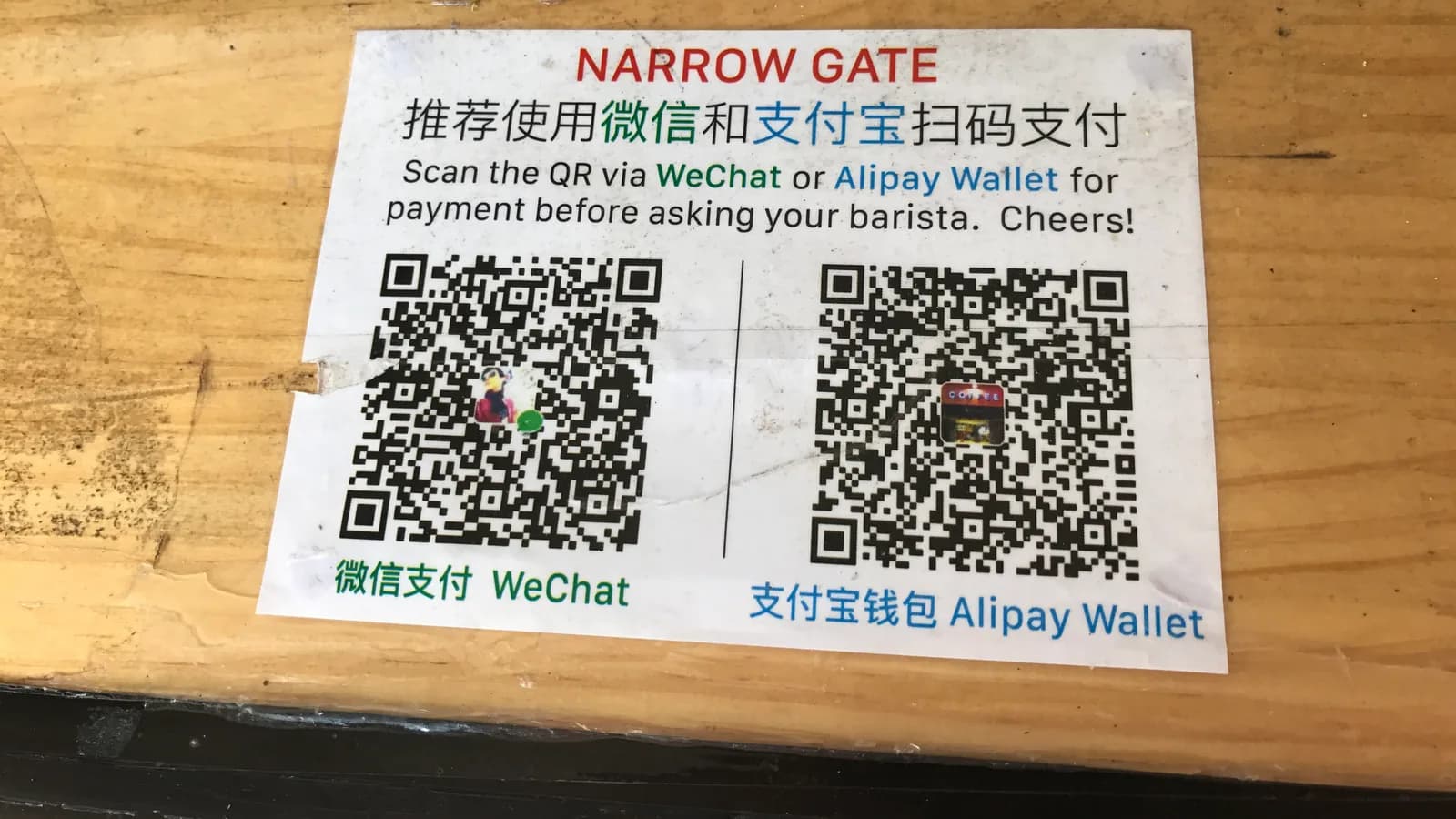
Daily life in China runs through a few very large apps. Tencent reported in August 2026 that Weixin and WeChat had 1,439 million combined monthly active users at 30 June 2026, up from 1,411 million a year earlier. The China Internet Network Information Center counted 1.022 billion online payment users in June 2025, 91.0% of all internet users.
Travel and errands run at a very large scale. Xinhua, publishing on gov.cn in January 2026, quoted the head of the National Railway Administration saying that high-speed lines exceed 50,000 km within a network of about 165,000 km. Sixth Tone reported in April 2025 that Meituan promoted 30-minute delivery across thousands of cities and counties.
On safety China scores highest here: 94% of adults feel safe walking alone at night in Gallup’s 2025 report, and the World Bank shows 0.5 homicides per 100,000 people in 2020, the latest year available. The limits are documented as well. Wikipedia says popular foreign websites and apps are blocked, all language versions of Wikipedia since May 2019, and VPNs are heavily restricted. Fine-particle exposure was 32.0 micrograms per cubic metre in 2023, against 7.0 in the USA.
Life in Spain: health, climate and Bizum payments

Spain’s clearest advantage is health. Eurostat gives life expectancy at birth of 84.0 years in 2024 for Spain against a provisional 81.5 for the EU. Wikipedia describes a universal health care system and says a 2018 reform restored public healthcare access to all residents, including undocumented migrants.
Climate is the other draw. Wikipedia, citing the weather agency AEMET, says a Mediterranean climate covers about 60.2% of the territory. Normal sunshine runs from about 3,095 hours a year at Almería airport to about 1,640 at Bilbao airport. Bizum reported 3.4 million operations a day in 2025, and an agency report carried by Infobae cites 30.6 million users. Gallup finds that 81% feel safe at night.
The limits sit in work and housing. INE’s labour force survey put unemployment at 10.18% in the third quarter of 2026, with 2,591,200 people looking for work. Eurostat’s net annual earnings of a single person on an average wage were €26,351 in Spain and €28,777 across the EU in 2024, a year in which the series has a break. INE’s housing price index rose 12.2% year on year in the second quarter of 2026.
The comparison table and how to read it
Read the table row by row, not column by column, because each country wins different rows. Years sit beside the figures: the newest data do not always fall in the same year, and the World Bank homicide series has no recent values for Russia or China. Gallup measures what people say about their feelings, not crime counts, and GDP per person is a national average, not what a newcomer will earn.
Spain is highest on life expectancy, China on feeling safe, the USA on income and health spending, while Russia has the lowest unemployment and China the highest air pollution. There is no row for delivery speed, because 15 and 30 minutes are operators’ promises for particular cities, not national statistics.
| Indicator | Russia | USA | China | Spain | Source and year |
|---|---|---|---|---|---|
| Life expectancy at birth, years | 73.4 | 78.9 | 78.0 | 83.9 | World Bank, 2024 |
| Intentional homicides per 100,000 people | 6.8 (2021) | 5.8 (2023) | 0.5 (2020) | 0.7 (2023) | World Bank, from UNODC data; year in each cell |
| Adults who feel safe walking alone at night, % | 69 | 71 | 94 | 81 | Gallup Global Safety Report 2025, 2024 data |
| Gallup Law and Order Index, 0–100 | 79 | 84 | 93 | 86 | Gallup Global Safety Report 2025, 2024 data |
| GDP per person at PPP, international dollars | 47,686 | 86,170 | 27,140 | 58,064 | World Bank, 2024 |
| Unemployment, % of labour force (ILO modelled) | 2.1 | 4.2 | 4.6 | 10.4 | World Bank, 2025 |
| Health spending per person at PPP, international dollars | 3,204 | 13,473 | 1,487 | 4,935 | World Bank, 2023 |
| Individuals using the internet, % of population | 94.4 | 94.7 | 92.0 | 95.8 | World Bank, 2024 |
| Fine particles PM2.5, mean annual exposure, µg/m³ | 11.6 | 7.0 | 32.0 | 10.1 | World Bank, 2023 |
| Instant payments or payment scale | SBP: 18.3 billion operations (2025) | Zelle in over 2,400 apps; FedNow live since July 2023 | 1.022 billion online payment users, 91.0% of internet users (June 2025) | Bizum: 1,237 million operations, 30.6 million users (2025) | Bank of Russia; Zelle; Federal Reserve; CNNIC; Bizum |
Moving abroad: what to check before leaving
Official pages beat summaries, because rules change. For the USA, USCIS says the steps to apply for a green card vary with an individual’s situation. The Spanish consulate’s page for the non-lucrative residence visa says it is valid for one year, allows no work of any kind, including remote work, and asks for proof of means and health insurance without copayments; remote workers are pointed to a separate telework visa. China’s National Immigration Administration lists visa-free entry and transit policies and a notice on online accommodation registration for foreigners.
Taxes, healthcare cover and banking depend on a person’s status, so they are a matter for the official agency and a qualified adviser, not for a comparison article. Ask them in writing which visa fits the plan, how health costs are covered in the first year and which cards and apps will work on arrival. For Russia, remember that cards issued abroad stopped working there in 2022 according to Mastercard, so plan how you will pay before the trip.
Which country suits which priorities
Russia suits a person who values quick errands, state services on the phone and low unemployment of 2.1%, and who accepts mobile internet shutdowns and the absence of foreign cards. The USA suits someone after the highest income, research universities and a very large job market, who can plan for health insurance and housing costs.
China suits a person who wants one app for payments and messages, a high-speed train for a weekend trip and a strong sense of safety, and who can live without foreign websites. Spain suits a person for whom long life, public healthcare, sunshine and a calm street come first, and who can cope with a tight job market and rising housing prices.
The final choice is the reader’s. Rank your own five priorities, mark which rows of the table decide them, and see whether the winner changes when you move one priority up or down. Whatever the best country to live in turns out to be for you, read the official pages of the two that remain and ask a specialist about your own case.
Practical checklist
- Write down your five priorities and mark which table rows decide each one.
- Check the year next to every figure before you compare two countries.
- Read the official visa and residence pages of each country you shortlist.
- Ask a specialist what tax, health cover and banking will mean in your own case.
- Test the daily apps you rely on: cards, messengers, maps and payments.
Questions and answers
Which of the four countries is the safest to walk at night?
In Gallup’s 2025 report, based on 2024 data, 94% of adults in China, 81% in Spain, 71% in the USA and 69% in Russia say they feel safe walking alone at night. Gallup measures feelings, not crime counts.
Is life expectancy really higher in Spain than in the USA, China and Russia?
Yes in the World Bank series for 2024: 83.9 years in Spain, 78.9 in the USA, 78.0 in China and 73.4 in Russia. Eurostat gives Spain 84.0 against 81.5 for the EU in the same year.
Can foreign bank cards be used in Russia?
Mastercard said in March 2022 that foreign-issued cards would stop working in Russian shops and cash machines. Rules and workarounds change, so ask your own bank for the current position before you travel.
Why is there no row for delivery speed in the table?
Promises such as 15 minutes in Russian cities or 30 minutes in Chinese cities come from operators and apply to selected areas. They are not national statistics, so they are discussed in the text and not ranked.
Where do I check visa rules for moving to the USA, Spain or China?
Use the official pages: USCIS for green cards, the Spanish consulate or ministry pages for residence visas and China’s National Immigration Administration. Requirements change, so rely on the date shown on each page.