
Answer in brief
Some slower runners may benefit from a particular carbon-plated shoe, but pace and plate alone cannot guarantee the result. The 2026 study measured oxygen cost in fourteen runners wearing complete models; it did not establish a universal race-time gain.
Can a slower runner benefit from a carbon shoe?
Some slower runners may benefit from a particular carbon-plated shoe, but pace and plate alone cannot guarantee the result. The 2026 study measured oxygen cost in fourteen runners wearing complete models; it did not establish a universal race-time gain. The plate is part of a system that also includes foam, geometry, weight and fit. A model that reduces oxygen cost in the laboratory may still feel unsuitable for your regular routes or sessions. Treat running pace as context for interpreting the evidence, then assess the particular shoe against the job you need it to do.
Evidence checked through 8 October 2026 includes a randomised crossover investigation published on 17 February 2026. Fourteen moderately trained runners tested three complete shoe conditions at 7.5, 9.0, 10.5 and 12.0 km/h. The advanced racing model reduced oxygen cost compared with the traditional model across the tested speeds. That challenges a blanket claim that such footwear only works at elite pace; it does not rank every racing shoe against every everyday trainer.
Those speeds correspond to approximately 8:00, 6:40, 5:43 and 5:00 minutes per kilometre, calculated from the reported speeds. They describe this experiment's range, not qualifying pace thresholds. A runner outside that range should not treat the result as a personalised estimate.
The carbon plate arrives inside a complete system
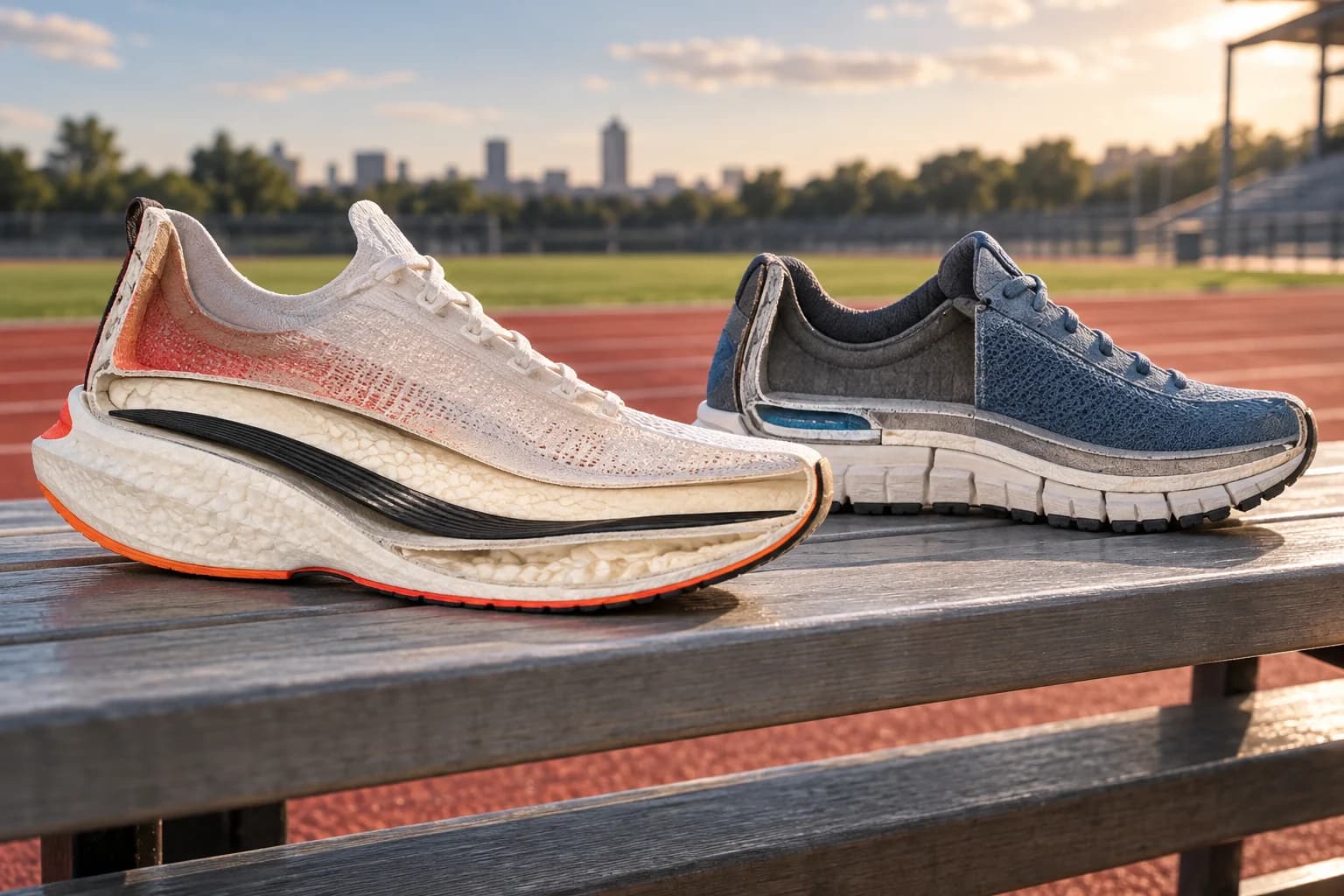
The 2026 comparison used On Cloudrunner 2, On Cloudboom Echo 3 and an On prototype combining features of traditional and advanced footwear. The racing model differed from the traditional shoe in more than its plate. All shoes were provided by On. Naming those conditions matters because the result is evidence about these combinations, rather than a clean experiment in which an otherwise identical shoe merely gains a carbon insert.
A plate changes how the sole bends; resilient foam and sole geometry contribute other mechanical properties. For a shopper, that means a label saying carbon cannot establish equivalence between models. Two shoes can both contain carbon while feeling different under the same runner. Likewise, a daily trainer can have qualities that suit long easy sessions even when it was not designed around a racing objective. Compare the finished shoe rather than buying one material as if it were a separate engine.
Use cutaways as explanations, not performance measurements. The proposed illustration separates the visible plate, foam and shape in generic shoes, but it is not a scan of the study models. It cannot show how much energy a particular runner saves. That distinction prevents a technical-looking picture from becoming another unsupported product promise.
Oxygen economy, comfort and race time are separate outcomes
Running economy describes the energetic demand of maintaining a given running speed. In the 2026 study, oxygen cost was measured while participants ran controlled treadmill trials. This answers a question about physiological demand under those conditions. It does not reproduce a whole road race with hills, weather, fatigue, fuelling and tactical choices. Turning the laboratory finding directly into minutes saved would require assumptions the shoe comparison did not test.
Comfort deserves its own column. The study did not detect a difference in perceived comfort between the shoe conditions. That does not mean all participants experienced all shoes identically, or that a new customer will find the racing model comfortable. Group-level outcomes and personal preference answer different questions. A shoe can be metabolically promising in a study yet fail your heel fit, forefoot space or confidence on a corner.
A home trial can reveal those practical problems, but it cannot measure oxygen economy from a watch alone. Heart rate fluctuates with conditions, and a familiar route is not a metabolic laboratory. Use your observations to decide whether the shoe suits the intended session. Describe a favourable run as a favourable run, without assigning an efficiency percentage you have not measured.
Compare the jobs you need the shoes to perform
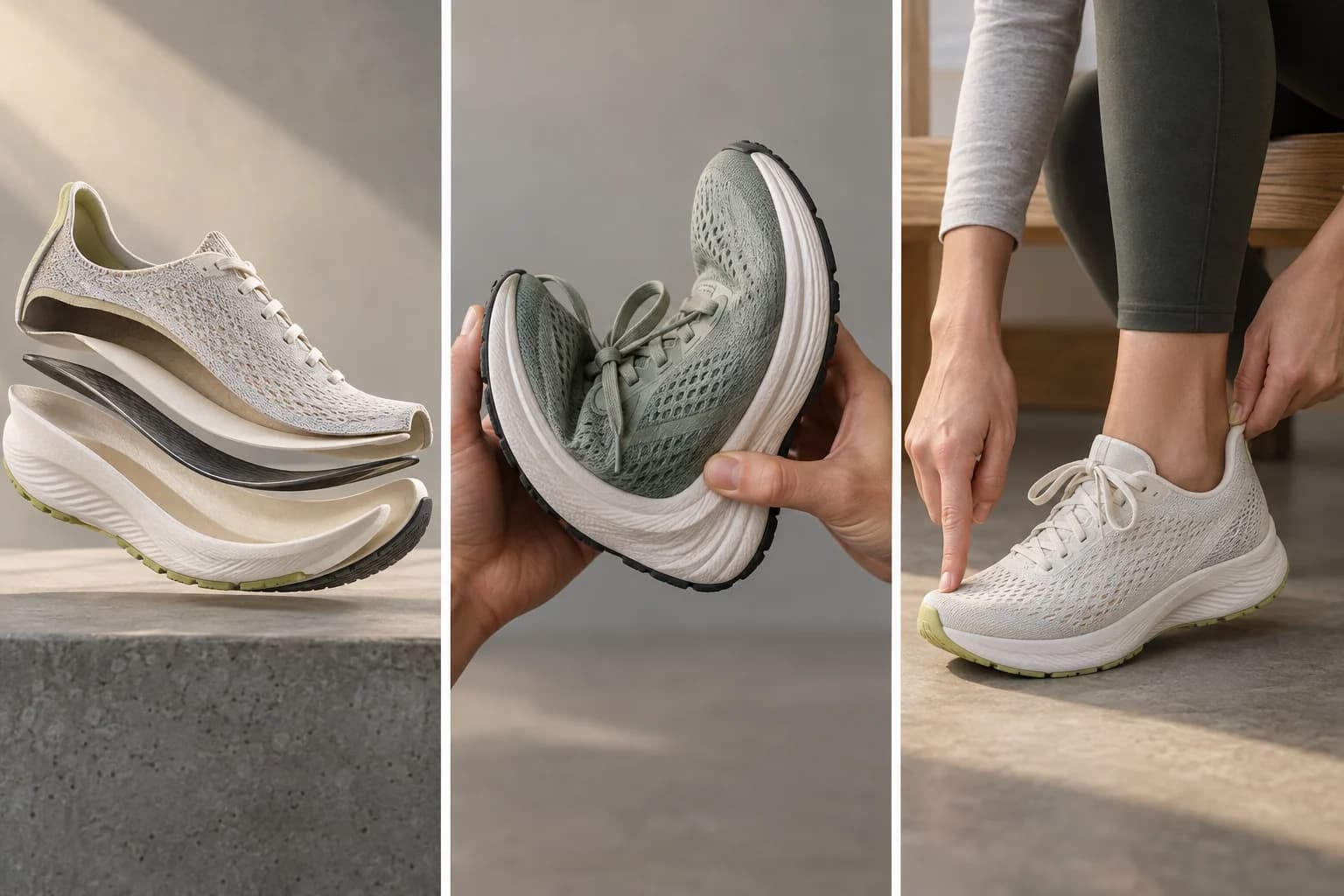
An everyday trainer and a racing shoe are usually bought for different parts of a running week. The table below compares decision questions rather than declaring universal properties of either category. Actual stability, durability, grip and price depend on the model. Check the manufacturer's specifications and try the shoe; the word racing does not answer every practical question.
Suppose your main objective is to keep an enjoyable routine of easy runs on mixed surfaces. A comfortable trainer that you use consistently may meet that job completely. Suppose instead that you already have a reliable trainer and want to explore a shoe for a planned road race. A plated model becomes a possible second purchase, provided you can test its fit and handling before committing. These examples are buying scenarios, not experimental results.
The same runner may sensibly use both. That does not require believing the trainer is inferior, nor does it establish that rotation prevents injury. It simply recognises that a shoe selected for a race and one selected for everyday convenience need not satisfy identical priorities. Start with the session you want to improve and evaluate the relevant compromises.
| Decision | Everyday trainer | Plated racing shoe |
|---|---|---|
| Main use | Regular runs if the model suits you | Race-focused use after a practical trial |
| Evidence | No universal economy baseline | Benefits depend on complete shoe and runner |
| Fit | Check space and hold throughout a run | Use the same checks; racing status is no exemption |
| Handling | Evaluate route and surface | Evaluate turns and expected race surface |
| Budget | Can meet the one-pair replacement need | Potential additional purchase, not compulsory |
| Outcome claim | Comfort does not measure economy | Laboratory economy does not guarantee race time |
A second study shows why individual comparisons matter
A study published on 11 December 2024 examined 21 trained amateur triathletes and runners, including 12 men and 9 women. It compared four carbon-plated models with participants' own preferred non-plated shoes at individually determined training and race intensities. Results supported possible economy benefits among these amateurs, with variation between people, models and speeds. This broadens the context beyond a single manufacturer's three conditions while remaining a small laboratory investigation.
Its participants were trained amateurs, which is a useful distinction from beginners who have just started jogging. Their usual footwear also varied, so the control condition was not the same standardised shoe for everyone. That design reflects a realistic purchase question but complicates attribution: a difference against your existing shoe can include several changes at once. Do not turn its findings into a fixed benefit for every person described as an amateur.
Read both studies as evidence that the slower-runner question deserves testing rather than dismissal. Read neither as proof that your preferred brand is best. Personal fit, the model used as a comparator and the intended running intensity remain important. A headline percentage detached from those details can sound more decisive than the experiment actually was.
Try the shoe without confusing a test run with a trial
If a retailer offers an appropriate trial or return policy, compare shoes in the size and width that actually fit, rather than insisting on the same number on every box. Wear your normal running socks and check heel hold, toe space and pressure points before running. Begin with a familiar, manageable session rather than using a major race as the first opportunity to discover whether the shoe works for you.
Keep the route, pace intention and conditions as similar as practical when comparing feelings. Alternate the order across separate outings if possible, because familiarity and expectations can influence your impressions. Note comfort early and later, handling on turns, traction on the expected surface and whether the shoe suits your natural pace. These observations are a consumer checklist; they do not establish a causal performance improvement.
Do not increase training simply to make an expensive purchase feel justified. If pain appears, stop treating it as an expected price of advanced footwear and reconsider the choice. A clinician or qualified professional can help assess persistent symptoms. The cited shoe studies do not establish an injury advantage or prescribe how a particular runner should manage an existing condition.
When is another pair worth buying?
Separate three decisions: whether you need another shoe, whether the particular model fits, and whether its potential racing benefit is worth the cost to you. The evidence can inform the third question only after the first two are answered. If your current pair is worn out and your budget covers one replacement, everyday comfort and suitability may take precedence over exploring a laboratory benefit. Local prices and return policies must be checked when buying.
For someone preparing a race with reliable training already in place, a successful trial of a plated model may justify including it in race preparation. Keep expectations conditional: the published oxygen-cost findings do not supply an individual finishing-time guarantee. Familiarise yourself with the shoe in the type of session where you intend to use it, and retain a comfortable alternative if the fit does not hold up.
The useful conclusion is permission to evaluate, not pressure to upgrade. Slower pace alone is insufficient reason to dismiss advanced footwear, but neither a carbon plate nor an elite-looking shape settles your purchase. A clear intended use, a documented fit check and an honest understanding of the studies produce a better decision than converting someone else's laboratory average into a promised personal result.
Questions and answers
Am I too slow to benefit from carbon-plated running shoes?
The available evidence does not support an elite-only pace rule. The 2026 crossover study tested speeds down to 7.5 km/h and found economy benefits for its advanced model. However, fourteen participants and three complete shoe conditions cannot establish what every model will do for you. Treat pace as context, then check fit, handling and intended use.
Does better running economy mean an equal gain in race speed?
No direct conversion is established by these comparisons. Running economy describes the energetic cost of maintaining a speed, whereas race time depends on sustained effort, course, weather, fatigue and other conditions. A laboratory reduction in oxygen cost may be relevant to performance, but it is not a tested promise that you will finish a race a particular percentage sooner.
Did the 2026 study isolate the carbon plate’s effect?
No. It compared complete traditional, advanced and prototype shoe conditions with differences in several properties. The advanced model included a carbon plate, but also different foam and other characteristics. All shoes were supplied by On. Without an otherwise matched comparison isolating the plate, the findings belong to the shoe systems rather than to carbon alone.
Should carbon-plated shoes replace my daily trainers?
Only if that particular shoe meets your everyday needs and you prefer it after a sensible trial. The studies do not require using racing footwear for every run. If one pair must cover your routine, fit, comfort and surface suitability are substantial priorities. A separate race shoe is an optional purchase whose potential benefit must be weighed against cost and practical use.