
Answer in brief
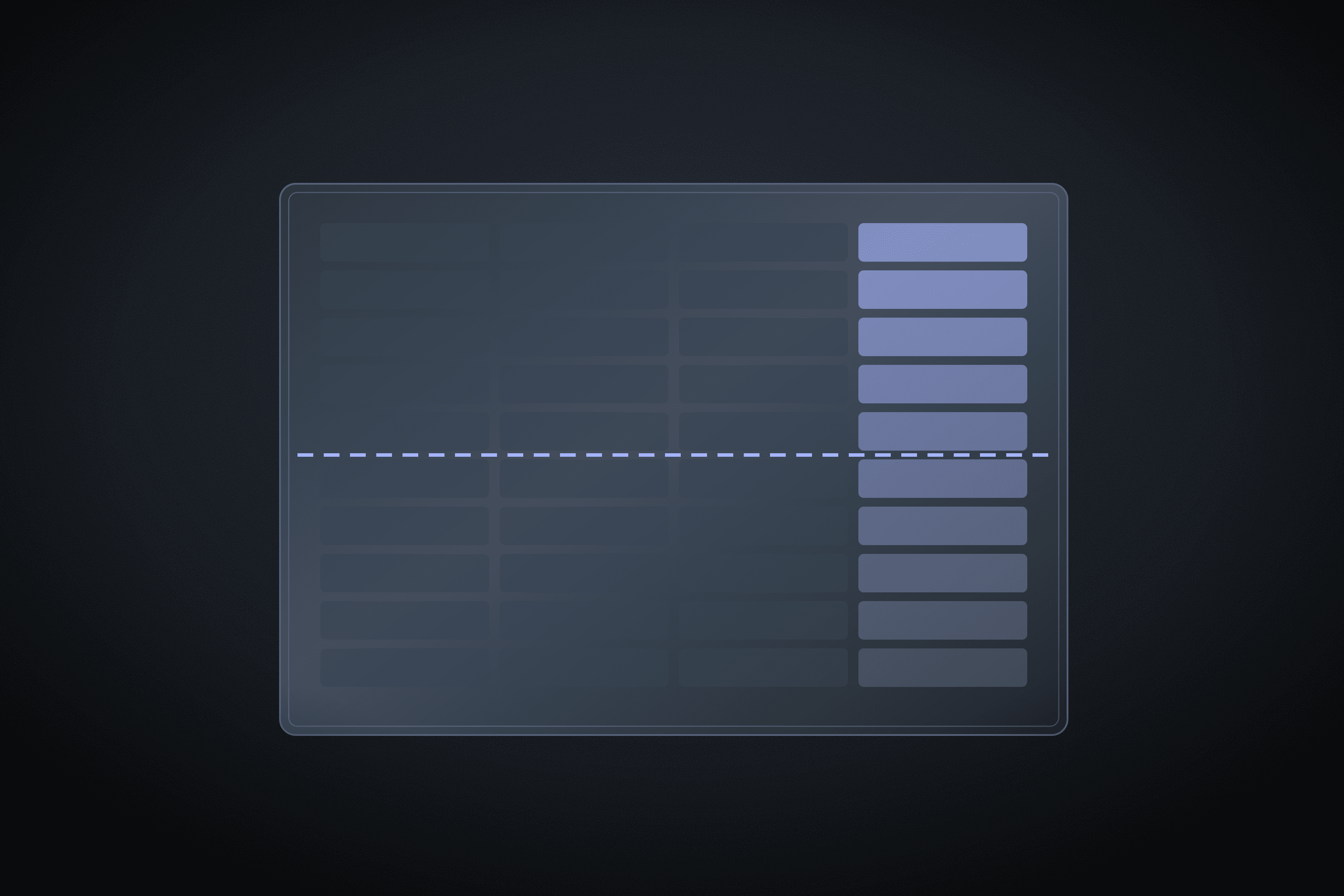
36 clubs play eight matches each in the 2026/27 Champions League league phase; places 1-8 go straight to the round of 16, 9-24 enter a knockout play-off, and 25-36 are eliminated from Europe without transfer to the Europa League.
Thirty-six clubs play eight matches in one shared table
In the 2026/27 season, UEFA's Champions League league phase is contested by 36 clubs, and each plays exactly eight matches — four at home and four away — against eight different opponents. That adds up to 144 matches over eight matchdays, running from September 8-10, 2026 to January 27, 2027. This is not a trimmed version of the old group stage: since the 2024/25 season UEFA has replaced groups of four with a single table ranking all 36 clubs at once — UEFA itself calls this model the “so-called Swiss system.” The 2026/27 season runs on the same model for a third straight year: the draw rules, match system and tie-breakers fixed in the current regulations have not changed in substance since the format launched.
In practice, the eight matches work like this: a club's opponents are drawn from four pots of nine teams each, and it meets every pot twice — once at home, once away. Four pots times two matches equals eight games per club. But the number eight itself, like the total of 36 participants, was fixed in advance by a separate UEFA decision, not derived from how the draw works. The next section covers that decision.
Where the numbers 36 and eight came from
On April 19, 2021, the UEFA Executive Committee approved switching club competitions to the ‘so-called Swiss system’ instead of groups of four and announced expanding the Champions League league phase from 32 to 36 clubs; at that point the plan was for each club to play at least ten league-phase matches against ten different opponents — five at home and five away. UEFA approved the final format later, on May 10, 2022: that day's press release describes the decision as a ‘reduction from 10 to 8’ league-phase matches and refers directly back to the April 19, 2021 decision. The draw — two opponents from each of four pots — was built around that final number, not the other way around.
In that same May 10, 2022 decision, the UEFA Executive Committee fixed the final access list for the four extra places created by growing from 32 to 36 clubs, and changed how two of those places are allocated, dropping access via club coefficient. One place went to the club finishing third in the domestic league of the association ranked fifth in the UEFA ranking from the previous season. Another was added to the ‘Champions Path’: previously four national champions entered it, now five. The remaining two places go each year to the two associations with the best combined European results from the previous season.
The draw sorted 36 clubs into four pots
The 2026/27 league-phase draw was scheduled for August 27, 2026, at 18:00 CET, at the Grimaldi Forum in Monaco — and, as UEFA itself reported that same day, it went ahead: all 36 clubs learned their opponents. The 36 clubs were split into four pots of nine by UEFA club coefficient, with the defending champion placed at the top of Pot 1 under the regulations — a direct rule, not just tradition. A computer draw then assigns each club two opponents from each pot: one played at home, one away; under the general rule, clubs from the same association cannot meet, and a club can play a maximum of two matches against clubs from any single other association. The full list of all 36 participants and their pot allocation for 2026/27 is set out officially in the draw procedure document.
League position leads to one of three outcomes
All 36 clubs are ranked in one table by points: three for a win, one for a draw, none for a defeat. The final position in that table has three possible consequences. Clubs finishing 1st to 8th go straight to the round of 16, skipping the extra round. Clubs finishing 9th to 24th play a knockout play-off round for the remaining eight round-of-16 places. And clubs finishing 25th to 36th are eliminated from Europe entirely: unlike the old group system, there is no transfer into the Europa League for clubs outside the top 24.
Ten criteria decide ties on points
If, after all eight matchdays, several clubs finish level on points, the 2026/27 regulations apply ten criteria to the final table in order. First, overall goal difference across the league phase is compared, then goals scored, then goals scored away, then wins, and finally away wins — those are the first five criteria.
If clubs are still level after those, five more come into play: the combined points earned by those clubs' opponents in the league phase, the opponents' goal difference, the opponents' goals scored, a disciplinary rating (one point for a yellow card, three for a red, three also for a sending-off for two yellows in one match), and finally the UEFA club coefficient. The regulations state explicitly that these criteria apply once the league-phase matches are complete — that is, to the finished final table, not to a provisional standing during the matchdays; the regulations contain no separate rule for ranking clubs while the phase is still underway.
Away goals: two different rules with a similar name
It is easy to confuse these. The third tie-break criterion inside the league-phase table — the number of goals a club scored away from home — still applies in the 2026/27 season as part of the equal-points regulation. But a different rule, under which away goals in two-legged knockout ties only counted, and decided the outcome, when the aggregate score was level, was abolished back in 2021 by a decision of the UEFA Executive Committee.
Since that season, if a two-legged tie is level on aggregate, extra time is played — two 15-minute periods — and, if that fails to separate the sides, a penalty shoot-out follows. In other words, ‘away goals’ in the league-phase table and the former ‘away-goals rule’ in two-legged knockout ties are not the same thing, and the second one no longer applies under the current regulations.
The knockout play-off pairs places 9 to 24 on a fixed scheme
Clubs finishing 9th to 16th are seeded, and those finishing 17th to 24th are unseeded. Pairs are set by a fixed scheme: 9-10 meet 23-24, 11-12 meet 21-22, 13-14 meet 19-20, and 15-16 meet 17-18. Ties are two-legged, and under the regulations' general rule the seeded club hosts the decisive second leg. The actual 2025/26 knockout play-off draw, held on January 30, 2026, was arranged the same way, with eight pairs formed on the same scheme.
The 2026/27 knockout play-off draw will take place shortly after the last, eighth league-phase matchday on January 27, 2027; UEFA had not yet named the exact date of the draw itself in its published event calendar at the time this piece was prepared. The play-off matches themselves are already scheduled for February 16-17 and 23-24, 2027.
Seeding inside the top eight decides who hosts second legs
Position matters within the top eight too — it just shows up later. Clubs finishing 1st to 8th form four seeded pairs for the round-of-16 draw: 1-2, 3-4, 5-6 and 7-8. From there the advantage grows: clubs finishing 1st to 4th in the league phase host the second leg at home in the quarter-finals, and those finishing 1st and 2nd do so in the semi-finals as well.
If a seeded club like this is eliminated earlier than expected, the club that eliminated it takes over its position in the bracket — meaning the right to future home second legs; the bracket is not recalculated afterward by final league-phase position.
The route to the final after the play-off round takes just over three months
After the knockout play-off round, the tournament follows a standard knockout bracket: the round of 16 on March 9-10 and 16-17, 2027; the quarter-finals on April 6-7 and 13-14; the semi-finals on April 27-28 and May 4-5; and, finally, a single-match final on June 5, 2027, at the Metropolitano stadium in Madrid. From the end of the knockout play-off round (February 24) to the final, about 101 days pass — just over three months.
The match dates after the league phase are based on UEFA's official calendar; the regulations call them final and binding, and only UEFA's administration can change them, for a limited set of reasons — stadium problems or force majeure, for example, rather than broadcast requirements, as is sometimes assumed.
The top-eight cut-off has matched in both seasons of the new format
The exact threshold for direct qualification to the round of 16 is not a fixed number of points set by the regulations — it is a table position, and it depends on the results of all 36 clubs in that particular season. But in the two seasons the format has been played so far, the threshold has happened to match. In 2024/25, the first season of the ‘Swiss system,’ Liverpool topped the league phase with 21 points, while Aston Villa took the eighth and last direct-qualification place with 16 points; ninth place, already in the play-off zone, went to Atalanta on 15 points.
In 2025/26, eighth place again went to a club on 16 points — Manchester City — and ninth, on 15 points, to Real Madrid. A specific points total cannot be treated as a rule — this is only two seasons of observation, not a regulation — but the threshold has held at the same level so far.
Four hypothetical clubs go through the three league-phase outcomes
What follows is an illustrative example with invented club names and invented results: it shows how the table works, not a forecast for the 2026/27 season, and is not tied to any real club.
Hypothetical 'Club Nord' qualifies directly for the round of 16
'Club Nord' collects 17 points from eight league-phase matches: five wins, two draws and one defeat. In both completed seasons of the current format, the threshold for direct top-eight qualification has sat at 16 points, and 17 points in this illustrative example clears that benchmark. 'Club Nord' goes straight to the round of 16, skipping the knockout play-off round; the example does not specify the exact position within the top eight, and the right to home second legs later in the bracket goes only to clubs finishing 1st to 4th — in the quarter-finals — and 1st and 2nd — in the semi-finals as well.
'Club Ost' and 'Club West' settle it at the 24th/25th boundary
This illustrative example sits on the table's most sensitive boundary — between 24th place, the last knockout play-off spot, and 25th, elimination with no transfer to the Europa League. Both clubs, like every league-phase participant, played eight matches — two against each of the four pots, one at home and one away. Both finish with 9 points from three wins and five defeats each — simply with different scorelines in individual matches. The first of the regulations' ten criteria at this kind of tie is overall goal difference across the phase: say 'Club Ost' sits at -2 and 'Club West' at -3. Then 'Club Ost' finishes 24th and 'Club West' 25th, despite both clubs having the same number of points.
From there the paths split completely. As an unseeded knockout play-off entrant, 'Club Ost' faces the club that finished 9th or 10th: under the pairing scheme it hosts the first leg, and plays the decisive second leg away, because its seeded opponent hosts at home. 'Club West' has no continuation — places 25th to 36th are eliminated from this edition's European competitions entirely.
A similar gap at the same boundary decided the fate of real clubs in both seasons the format has been played. In 2024/25, 24th and 25th place, level on 11 points, were split between Belgium's Club Brugge and Zagreb's Dinamo: Club Brugge finished higher on a better goal difference. In 2025/26 a similar situation played out between Benfica and Marseille — both had 9 points, and again goal difference decided it. The 'Club Ost' and 'Club West' example repeats that same mechanism with invented figures rather than predicting the outcome of the 2026/27 season.
Hypothetical 'Club Sud' is eliminated from Europe
'Club Sud,' in this illustrative example, collects just 4 points from eight matches — one win, one draw and six defeats. With a result like that, a club would very likely sit in the lower part of the unified table, among places 25th to 36th, and under the current regulations would be eliminated from this edition's European competitions entirely, with no transfer to the Europa League — that transfer was abolished when the format launched in 2024/25.
Practical checklist
- Watch goal difference as well as points — it is the first of the ten criteria used at a tie.
- Places 1-8 mean direct qualification to the round of 16 without the play-off round; places 1-4, and especially 1-2, add the further advantage of hosting second legs later in the bracket.
- Do not confuse the league-table 'away goals scored' criterion with the away-goals rule abolished in two-legged ties in 2021 — these are different rules.
- The ten tie-break criteria for equal points apply to the completed final table, once all eight matchdays are played, not during the phase itself.
- Check before the play-off draw who is seeded (places 9-16) and who is not (17-24) — that decides the pairings and who hosts the decisive leg.
Questions and answers
Can two clubs from the same country meet in the league phase?
Generally no: under the regulations' general rule, clubs from the same association do not meet each other in the league-phase draw, and a club can play a maximum of two matches against clubs from any single other association.
Why are all matches on the eighth and final league-phase matchday played at the same time?
The regulations require it directly (Article 25.04): last-matchday matches are played simultaneously, on a Wednesday at 21:00 CET, and only UEFA's administration can make exceptions to this rule. The regulations do not state a reason; in practice, a simultaneous kick-off for the last round is common in domestic leagues too, for the same reason — so that clubs in one match cannot know the results of other, still-unfinished matches from the same round.
What happens to a bracket seed if the seeded club is eliminated earlier than expected?
Its position — meaning the right to home second legs later in the bracket — passes to the club that eliminated it; the bracket is not recalculated afterward by final league-phase position.