
Answer in brief
The 2026 Formula 1 framework changes several connected parts of the car. We explain how to read energy use and active aerodynamics without pretending the rules alone predict a winner.
What changed in the rulebook
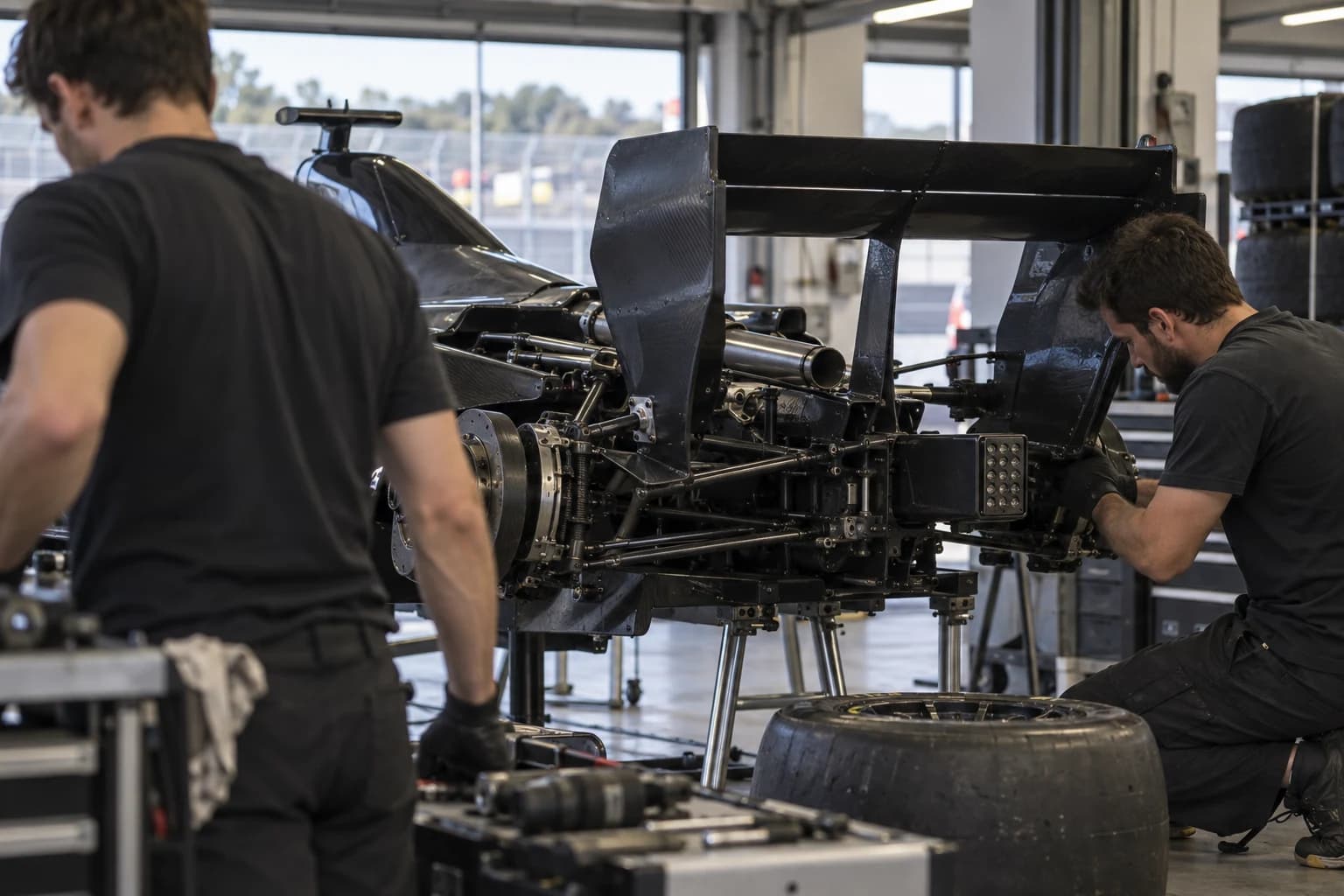
The FIA's explanation of Formula 1's 2026 era describes a connected reset involving power units, aerodynamics, car dimensions and safety. Formula 1's own terminology update helps readers navigate the words used for the new systems. Taken together, these sources explain the framework under which teams race; they do not establish which team will execute it best. A rules article should avoid claiming that a technical objective has already produced a sporting outcome. More competitive racing is an aim that can be observed only through actual races and comparable situations. Our cover shows a generic unbranded racing scene, not an official 2026 technical drawing or a photograph of a named team.
Energy becomes a race decision
A driver and team now need to think carefully about where electrical energy is recovered and deployed. The rules define what is possible; the particular timing of a manoeuvre still depends on circuit layout, position and the state of a car at that moment. A viewer should watch the approach to an attempted pass and what happens after it, not only the instant a car moves ahead. Spending a resource to gain position can have consequences later in the lap or stint. This is an analytical lens rather than a claim about an exact strategy used by a team whose private data is unavailable. Official definitions should be checked before assigning a familiar but outdated label to a new feature.
Aerodynamics and the wider car
Active aerodynamic configurations change how a car manages drag and downforce within the rules. That feature should not be described as an unrestricted system that automatically reshapes itself in response to any sensor or track condition. The permitted modes and their use are defined by the regulations. Vehicle size, weight and safety requirements also affect the performance problem that engineers are solving. Explaining one wing setting without the rest of the car can make a complex regulatory package seem like a single-button spectacle. Fans do not need proprietary telemetry to understand the principle: different parts of the rulebook interact, and design choices are constrained by the need to produce a balanced car across corners, straights and race distance.
What a first race can prove
An early event can show how a particular set of cars behaved on one track in one set of conditions. It cannot demonstrate that a regulation will deliver more overtaking or closer competition across an entire season. Weather, tyres, traffic and operational mistakes can change the picture. A stronger evaluation compares similar overtaking opportunities over several races and notes when a system appears to matter, rather than attributing every position change to the most publicised new rule. Teams will also develop their cars, so an initial competitive order is not necessarily a final judgment on a concept. The useful posture for the reader is curiosity with a record of evidence, not a premature verdict.
Why official terminology matters
Technical terms are useful only when they describe the same thing to the writer and the reader. The FIA is the source for what is regulated; Formula 1's terminology guide is a companion for how the changes are explained publicly. Commentary can then connect a term to a visible race situation and state what remains hidden. An audience should be able to distinguish a permitted capability, a team's choice to use it, and the eventual result. Those three layers keep race analysis honest. They also make the sport more accessible to newcomers, who may be arriving with memories of older systems and need a clean explanation of what 2026 actually introduced.
A viewer's framework for the new racecraft
The 2026 reset is easiest to follow when the car is treated as a system rather than a list of isolated rule changes. Power delivery, energy recovery, aerodynamic configuration and vehicle dimensions all influence what a driver can attempt at a particular point on a lap. The FIA sets the regulatory framework, while Formula 1's terminology guide helps viewers understand the names used on broadcasts. Neither document can predict the outcome of a race. A driver may gain a tactical possibility without being able to use it successfully against a particular opponent, tyre state or circuit layout.
When watching an attempted pass, ask four questions in order. Where did the following car gain or conserve energy? Which aerodynamic mode was available and under what rule? Did the driver spend a resource that will be missed later in the lap? How did the car behave through the next braking zone and corner? This turns an apparently simple straight-line move into a sequence. It also guards against a common analytical error: assigning an overtake to one new mechanism when track position, traffic and execution were all involved.
Teams must solve a different problem from spectators. A concept may be fast over one lap yet harder to manage over a stint; an advantage at one circuit need not repeat at another. Public regulations reveal the constraints, not every private simulation or setup decision. Technical commentary should therefore separate a rule's stated purpose from the actual competitive distribution as the season develops. This is particularly important when a team or manufacturer speaks optimistically about a new package. A promotional claim deserves attribution and observation, not immediate adoption as a championship forecast.
For a newcomer, the best route into the season is to learn a few stable concepts and then compare repeated examples. Read the FIA's overview, keep Formula 1's official terms close at hand, and watch how two similar overtaking attempts differ in energy timing and corner exit. The aim is not to master every engineering parameter from the grandstand. It is to understand why a change in rules can alter driver choices while leaving racing contingent. Our generic racing illustration shows the subject, not a real 2026 car or an official technical drawing.
What to compare after several races
Early analysis of new sporting regulations can be distorted by a memorable first weekend. One close finish may suggest that a rule succeeded, while one processional race may suggest the opposite; either inference is fragile. Keep a record of comparable situations across circuits: where cars could follow, when energy was deployed, whether a driver attempted a pass and what happened through the next corner. Weather, tyre strategy and safety interruptions should be noted rather than treated as background noise. This is not a private engineering model. It is a reader's way to distinguish the mechanics of the 2026 cars from the many conditions that still shape a grand prix.
The sport's official terminology matters because familiar words may carry new technical meanings. Use the FIA and Formula 1 materials to label a feature before discussing it, and correct old shorthand when it describes a different rule. A team announcement or commentator's description may be useful, but the regulations are the reference for what is permitted. When the evidence is limited, a sentence such as 'the new system appeared to influence this attempt' is more accurate than 'the new system guarantees more overtaking'. That restraint allows the story to stay useful as the season produces real examples rather than forcing every race into an opening-week prediction.
The evidence to collect next
For a careful mid-season assessment, identify comparable corners or straights across several races and note when a car could follow closely, when a pass was attempted and whether position was retained. Published timing and footage may help, but they do not reveal every internal energy decision. Keep that limitation beside the observation. The 2026 framework will continue to interact with tyre strategy, weather and team development, so an isolated incident should not become a verdict on the rulebook. FIA regulations tell us what is permitted; race evidence helps show how competitors use those possibilities. Both are needed before a claim about sustained spectacle can be more than a prediction.