
Answer in brief
WHO lists a UN pandemic preparedness meeting for 25 September. We explain what to watch in financing, equitable access and follow-up, without claiming an outcome in advance.
Why the UN meeting is on the calendar
The World Health Organization lists a second United Nations General Assembly high-level meeting on pandemic prevention, preparedness and response for 25 September 2026 in New York. Its announced theme calls for a multinational and intergenerational approach built around equity and solidarity. That is an agenda and an ambition, not evidence that a new agreement has already changed health systems. The distinction matters on the day of the meeting, when summaries can quickly collapse a scheduled discussion into an accomplished outcome. WHO identifies progress since the first high-level meeting in 2023 while also saying the world remains insufficiently prepared for future emergencies. A reader should hold both parts of that assessment together: institutions have not been idle, but an improved framework is different from tested readiness everywhere.
The gaps behind the diplomatic language
WHO names inequitable access to health products, fragmented financing and governance, and weaknesses in surveillance, laboratories and health systems among persistent problems. Each gap describes a different point at which a response can fail. Early warning is less useful if laboratories cannot confirm a signal; a product can exist without reaching people who need it; a funding announcement may not translate into local capacity. The meeting is therefore more than a conversation about a future pathogen. It is a test of whether governments and institutions can connect detection, decision-making, finance and delivery across borders. This article does not predict the next emergency or assess any country's readiness from a single headline. It asks what a credible chain of preparedness would have to show.
What the documents can and cannot show
A UN agenda can establish who is expected to meet, the theme and the intended format. It cannot establish what participants eventually adopt. A political declaration can record shared priorities, but the consequences depend on later decisions, resources and implementation. Readers following this story should seek the final UN text, WHO's subsequent account and any reporting mechanism attached to a commitment. If a specific financial or technical promise is announced, its scope and responsible institution deserve separate verification. The most useful coverage will distinguish a statement of support, a negotiated plan and a funded programme. This approach avoids both reflexive cynicism and premature celebration: the meeting can matter without every aspiration becoming an immediate measurable result.
Why equity is an operational question
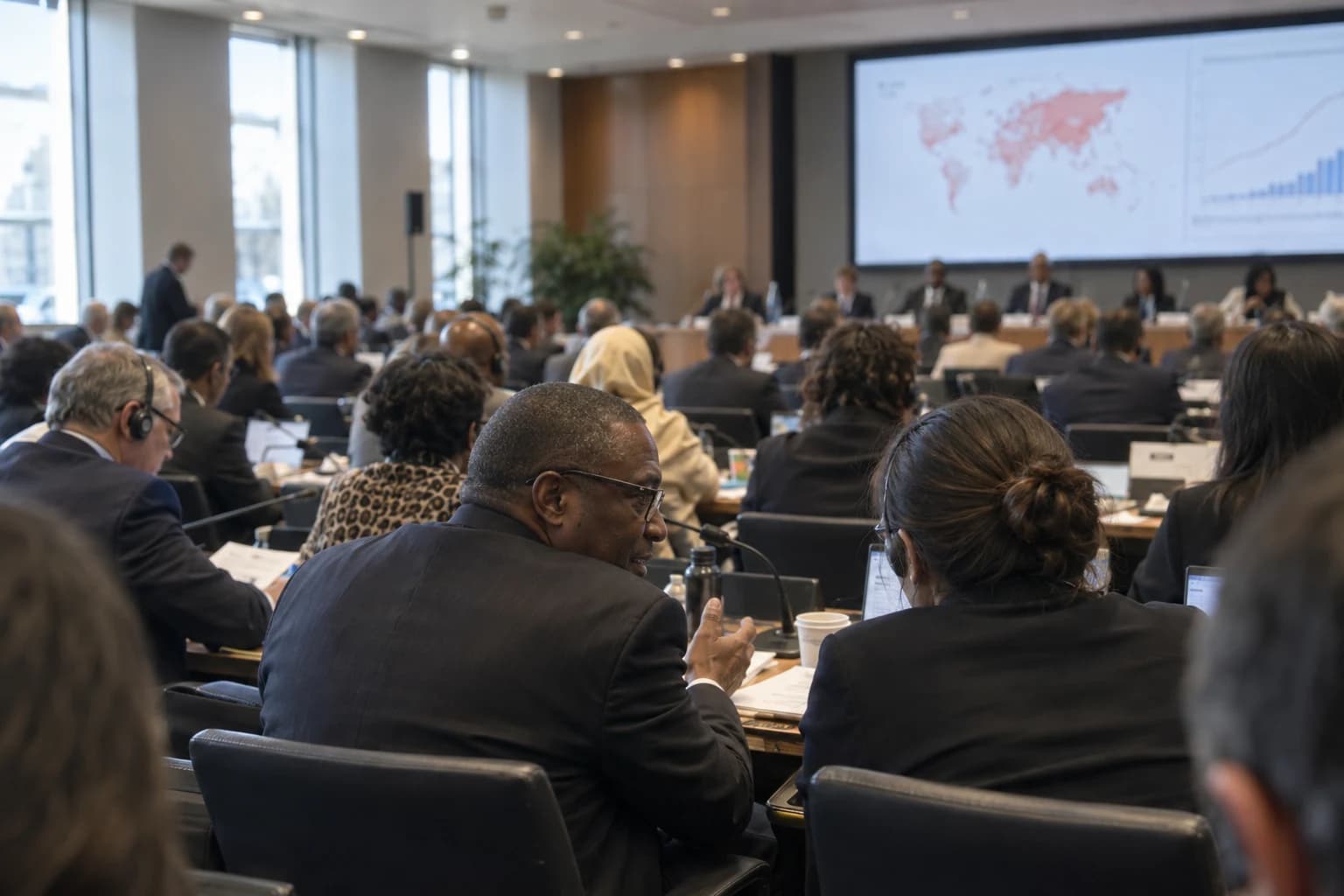
Equity can sound abstract until it is applied to the sequence of an emergency response. Who can detect an outbreak promptly? Which health workers have dependable protective supplies? Where can research be performed, and who receives the results? How are relevant products manufactured, purchased and delivered when demand rises? WHO's event note explicitly links preparedness with equitable access and stronger capacities. These are practical questions about systems, not a claim that one uniform solution will fit every country. A good follow-up article will examine whether new commitments address any identifiable bottleneck and whether affected communities have a route into decisions. It should not use a photorealistic editorial image as if it documented delegates or patients at this particular meeting.
What readers should watch next
The immediate news task is to record the meeting's actual output once the session ends, with a clear update time. The slower task is to follow whether any proposed measure receives an owner, finance, milestones and public reporting. Preparedness is tested over years and across institutions; a single day cannot prove success or failure. Organisations outside public health can still learn from the logic by mapping their own dependencies, escalation paths and fallback arrangements, while leaving medical decisions to qualified authorities. The reader's simplest filter is to ask whether a claim refers to a verified outcome, an official plan, or editorial analysis of what might make the plan work. Those three levels should never be blended into one confident sentence.
The commitment test after the meeting
A summit statement is easiest to judge after its verbs are converted into assigned work. When the meeting concludes, readers should look for the named institution responsible for each proposed action, the population that is meant to benefit, a financing route, and a date for reporting progress. A pledge to cooperate is meaningful as political direction, but it is not the same as a staffed laboratory, a functioning data-sharing agreement, or a supply chain that can deliver health products under pressure. Those differences should remain visible in the next round of coverage.
Equity also needs a more precise question than whether every participant endorsed the word. If preparedness depends on detection, research and rapid access to products, the distribution of those capabilities is itself part of the outcome. A country can support a declaration while still lacking resilient local delivery systems. Conversely, a practical regional manufacturing or surveillance partnership may matter more than a broad headline. We should follow which proposals address the gaps WHO identifies and which simply repeat ambitions without a route to implementation.
The 2023 high-level meeting offers a useful comparison point, but it must not become a substitute for observing what happens in 2026. Readers can compare the new language with previous commitments, identify what has gained a deadline or funding mechanism, and note what remains unchanged. It is too early, on 25 September, to treat the scheduled discussion as proof that an agreement has solved pandemic preparedness. The appropriate headline after the session should match its documented result: meeting held, text adopted, or measurable action funded, depending on what can actually be verified.
For an organisation planning its own resilience, the global debate can still be made concrete. Map the supplies, information flows and staffing arrangements on which your service relies; then ask what happens when any one fails. That is not a substitute for public-health expertise, and it does not predict the next emergency. It is a disciplined way to understand why sustained investment, cross-border trust and clear responsibility matter beyond a single news cycle. The test is whether institutions can show a working chain from early signal to timely response, including people who otherwise reach that chain last.
Questions for the next newsroom update
After the meeting, an editor should work from the final documents rather than an early agenda. Was a declaration adopted, or only discussed? Does it identify a reporting channel for the next year, and are any commitments new relative to 2023? If financing is mentioned, is there a stated source and delivery route? WHO's summary of the meeting's purpose is valuable background but cannot answer these outcome questions in advance. This distinction is especially important when a live event is turned into translated editions: the tense of a sentence must not change from 'will meet' to 'has agreed' merely because the article was published later in another time zone. An update should carry its own evidence timestamp.
The same discipline applies to images and charts. A photorealistic assembly-room illustration can make a story easier to recognise in a feed, but it does not show delegates at this meeting; it must remain labelled as an illustration. A chart of preparedness needs a defined measure, geography and date, not a decorative global score. When the evidence is incomplete, the article should say so plainly and direct readers to the primary documents once available. Trust is built by the ability to revise a story without quietly rewriting history, not by sounding certain on the day that an important gathering appears on the calendar.
Evidence that would change this assessment
The meeting is a moment to ask governments for specific, testable commitments. A final declaration, a financing mechanism or a published implementation timetable would be new evidence and should be reported as such, with its precise status. A speech alone would not prove that a laboratory, local health service or supply chain gained capacity. Readers can revisit the official WHO and UN records after the session and compare them with the agenda described here. That comparison matters more than a fast headline declaring success or failure before there is an implementation record. The honest publication date for any later result is the date it was verified, not the date this preview was written.