
Answer in brief
JNTO's autumn guidance supports a regional plan, while current rail rules shape booking. We show how to build a flexible Japan route with rainy-day alternatives and no false foliage promise.
Autumn is a moving season
Japan's national tourism organisation explains that autumn colour develops earlier in northern and higher places, while many lower and more southerly locations change later. That broad pattern helps with a route, but it cannot promise a peak day for a particular street in 2026. Weather, altitude and local conditions change the view. A strong itinerary therefore begins with a range of places and dates rather than a single photograph labelled 'best week'. Look for current local updates as travel approaches and keep the attraction of each stop broader than its trees. A city, landscape or cultural visit should still offer value if colour arrives sooner or later than hoped.
Choose an order that can bend
A traveller with limited time might build a north-to-south or higher-to-lower set of options, then select the segment that matches the actual travel window. The route should leave space to alter one day without losing every hotel booking. If the trip includes Tokyo and Kyoto, for example, the rail corridor can make movement straightforward in principle, but the right number of nights depends on pace and interests. Do not add remote locations simply to chase an online foliage map. Travel time has a real cost, and a crowded day with multiple transfers may deliver less time outdoors than a simpler plan.
Book trains using current operator rules
JR Central provides official information relevant to travel on the Tokaido corridor. Check its present booking window, available services, baggage conditions and change rules when making an actual purchase. A fare quoted in an older article may not be current, and a rail pass is not automatically cheaper than individual tickets. Compare the journeys the traveller really intends to take, including flexibility if the route may change. Where a reservation is essential to the plan, note the cancellation or change conditions before paying. An editorial itinerary should explain the decision rather than act as a ticket reseller or present unverified prices.
Give every outdoor day a second version
Rain, crowds or a different stage of colour should not turn a planned day into a failure. Pair a garden or hillside walk with a museum, neighbourhood, covered market or other activity that suits the location. Check opening times and transport on the actual dates, especially around holidays or special events. A flexible morning start can be useful, but there is no honest guarantee of solitude at a famous viewpoint. Think about accessibility and physical effort as well: a steep scenic route may not suit every traveller. A good backup is not merely a place indoors; it is a plan that remains enjoyable for the people taking the trip.
Treat images as inspiration, not forecasts
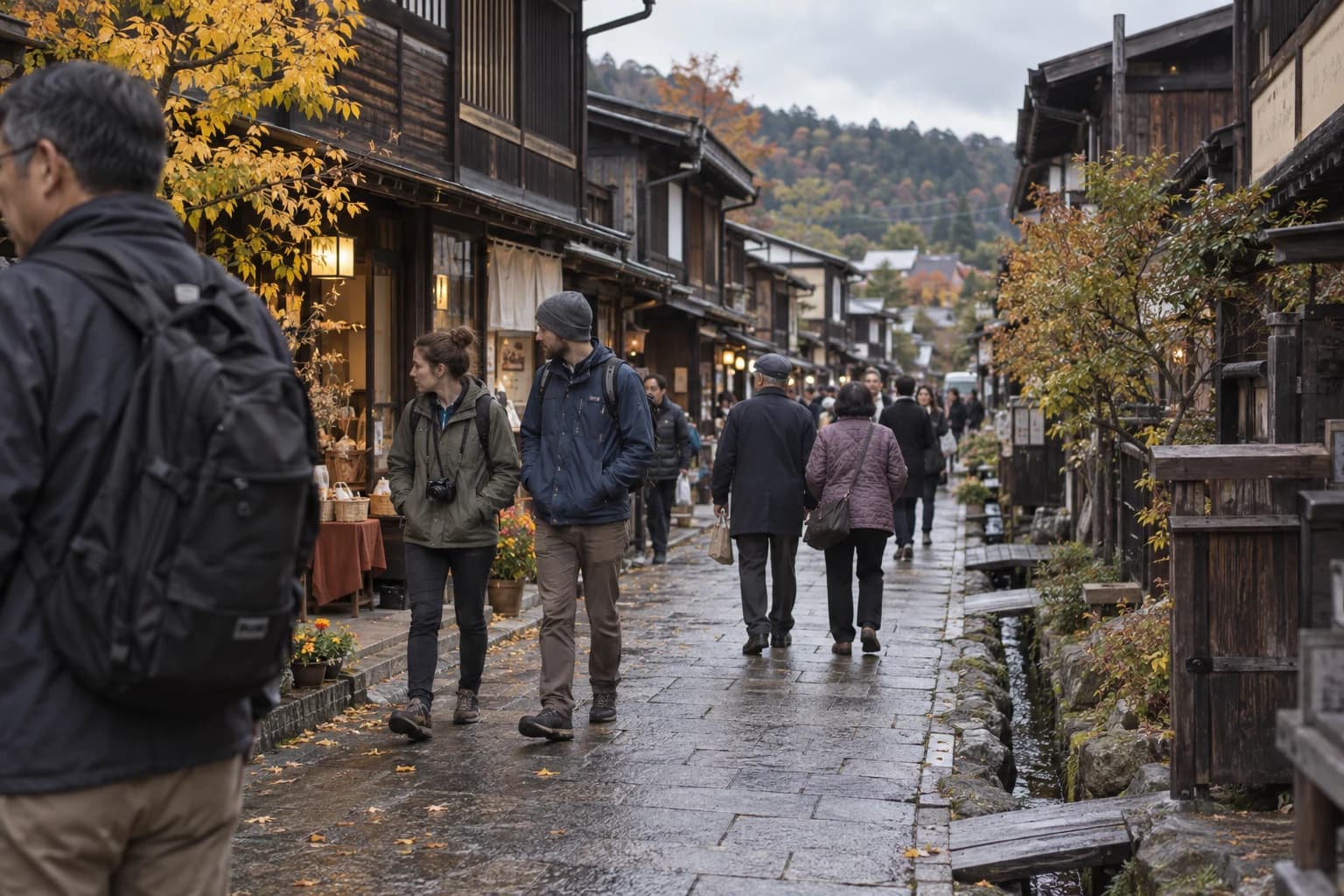
An autumn image often records one place in one year, from a carefully chosen angle. It cannot establish when leaves will turn during a future visit. Our cover is a synthetic editorial illustration and is credited as such; it depicts an imagined scene, not the condition of a named location today. For planning, use JNTO's broad seasonal guidance, the transport operator's live rules and near-term local observations. This separates what is knowable now from what must be checked later. The reader leaves with a resilient route-building method instead of a precise-looking date that nature never agreed to meet.
A flexible autumn route instead of a foliage guarantee
Plan the trip around a sequence of regions rather than a single promised day of peak colour. JNTO's guidance explains that higher and northern areas generally change earlier, while many lower and southern locations follow later. Use that pattern to order possible stops, then check current local updates as departure approaches. A visitor with only a week should decide which activities are worth the journey even if the leaves are early, late or washed out by rain. A temple, neighbourhood walk or museum can still make a day worthwhile when the weather does not match a brochure.
Separate the route from the tickets. The Tokaido corridor can connect major cities, but the best rail purchase depends on dates, flexibility, luggage and the current booking rules published by the operator. Compare the cost and restrictions of point-to-point journeys with any pass before paying. Avoid treating last year's fare or a social-media itinerary as a live offer. A slower itinerary with fewer hotel changes may give more time on the ground than a route designed to collect as many named viewpoints as possible in one day.
Build two versions of each outdoor day: the preferred walk and a rainy-day alternative with realistic travel time. Autumn conditions can shift by altitude and year, so leave room to swap stops after checking local observations. A rigid schedule can make a trip feel like a failed forecast even when the destination itself is rewarding. It is also worth allowing for crowd pressure around highly photographed sites; an early start or a less famous district may offer a calmer experience, but neither is a guaranteed way to avoid other visitors.
Our cover is a generated illustration of an autumn path, not evidence of 2026 foliage at a named location. That distinction is useful for readers planning with online images: a beautiful photograph may have been taken in a different week or year. Use official seasonal guidance for broad timing, the rail operator for current transport rules, and local information for near-term conditions. The strongest itinerary is not the one that predicts nature most confidently. It is the one that remains coherent when the season behaves differently from the image that inspired it.
A booking checklist for an uncertain season
Before paying for a trip built around foliage, list what can be changed without penalty and what cannot. A refundable hotel, a flexible rail plan or a second suitable neighbourhood may be more valuable than an itinerary tuned to a single forecast. Check how long it actually takes to change cities with luggage and whether a late arrival leaves meaningful daylight for the activity that motivated the move. Official rail information should settle booking rules, while official tourism guidance can inform broad seasonal expectations. Neither can promise the weather for your dates months ahead.
The itinerary should also state what success means without perfect colour. A good meal, a walk through a quiet district, a cultural visit or a view from a different altitude may be worth the day on its own. This is not a call to ignore seasonal planning, only to make it resilient. When local updates become available, adjust one or two outdoor days rather than rebuilding every reservation. The most useful travel article leaves a reader with a decision method and clear source links; it does not sell certainty that autumn cannot provide.
When to stop optimising
A trip can be overplanned long before it is booked. Once the broad regional sequence, essential transport and a few meaningful activities are in place, leave room for weather and curiosity. Use local information close to departure to choose which outdoor day gets priority. Do not move every reservation to chase a prediction that is itself uncertain. A traveller may remember a conversation, a meal or an unexpected street more than the exact shade of a photographed tree. The article's method keeps seasonal information useful without making natural variation feel like an itinerary failure. It lets the official sources answer what they can, while preserving freedom for what they cannot predict.