
Answer in brief
The cage dress is a wheeled stage structure: the skirt opens like a curtain, revealing a steel cage with dancers inside and a separate lift for Gaga. Only one source, W Magazine, names the dress's designers and the cage's builder, and outlets give different figures for the structure's height and the dancer count — those numbers should not be treated as final.
Ten Sources on One Cage Dress
This piece draws on ten sources about a single costume: Rolling Stone's cover-story interview, a Cannonball podcast transcript published alongside an NYT Magazine column, a Rolling Stone Australia review, pieces from W Magazine and Paste Magazine, two Variety articles — an interview with the tour choreographer and a premiere review — the Jet Sets studio's own site, a Wikipedia article and an openly licensed photo from the Melbourne show. Where the sources disagree — on the structure's height and on the number of dancers inside it — that disagreement is stated outright rather than smoothed over by picking one figure.
A Dress Wheeled Onstage and Opened in Front of the Crowd
Lady Gaga's Mayhem Ball tour opened on 16 July 2025 at T-Mobile Arena in Paradise, in the Las Vegas metro area, and closed on 13 April 2026 at Madison Square Garden in New York — 86 shows in all, across Asia, Europe, North America and Oceania. The show itself opens with an onscreen title card, “Lady Gaga Presents The Art of Personal Chaos”: that name covers the concert series as a whole, including 2025 promotional shows, while the touring production is called The Mayhem Ball in the press and on Wikipedia. Variety's premiere review describes the show as four acts; Wikipedia and Rolling Stone Australia's review of the Melbourne show describe a different structure — five acts, including the finale. The sources disagree, and neither explains which count is more accurate.
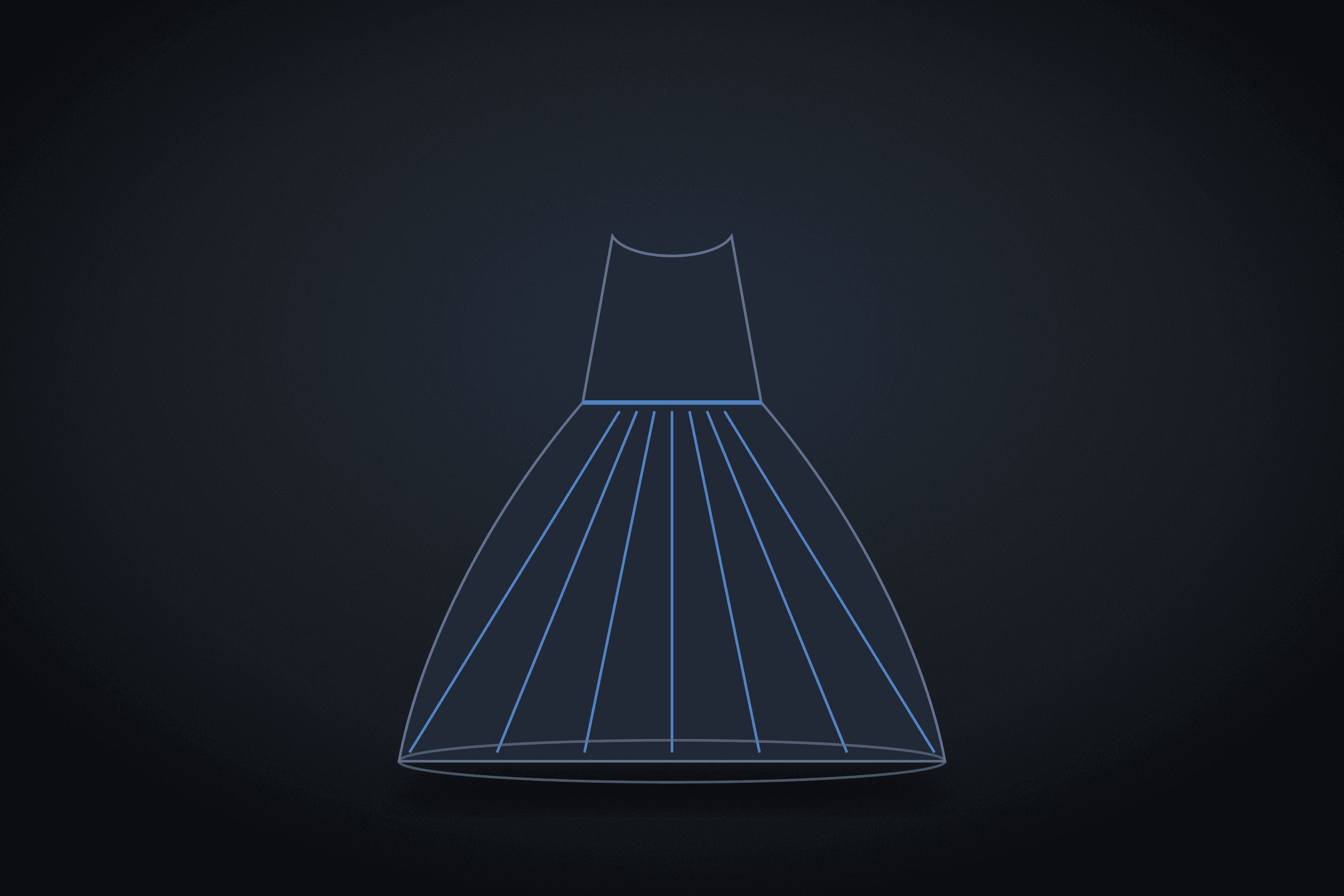
The opening number is “Bloody Mary”: a multi-tiered red dress in a Tudor silhouette is wheeled onto the stage, with Gaga appearing right at its top. Estimates of the structure's height differ between outlets: Rolling Stone's cover story puts it at 14 feet (about 4.3 m) for the tour overall, while Rolling Stone Australia puts it at 25 feet (about 7.6 m) for the Melbourne show; neither publication explains the gap. The skirt then opens like a set of curtains, exposing a multi-tiered steel cage with dancers inside: per W Magazine, this happens in the middle of the orchestral “Bloody Mary” itself, although a photo of that same moment from the Melbourne show is titled on Wikimedia Commons with a reference to the next number, “Abracadabra.” In a Cannonball podcast transcript published alongside the NYT Magazine column, critic Wesley Morris and The New York Times' pop-music editor Caryn Ganz describe the same moment in similar terms: the structure is “rolled out,” the curtain around it parts, and Gaga has her own lift inside, on which she descends before bursting back out with a cane in hand. The top of the dress is velvet: W Magazine calls it a “velvet masterpiece,” and NYT Magazine's critics also describe it as “red velvet.”
Who Gets Credit for the Cage Dress
The dress itself is credited by W Magazine to Samuel Lewis, Athena Lawton and William Ramseur, with a top that also includes an Elizabethan corset, leg-of-mutton sleeves and silver pyramidal studs, on top of the velvet. Wikipedia's article repeats the same three names but at that point cites Variety's premiere review — and that review does not actually mention any designers by name. In practice, the only source that confirms who designed the dress is W Magazine; Wikipedia merely repeats the claim rather than checking it independently.
The Workshop Called Jet Sets
The cage's engineering is credited by W Magazine, and by Wikipedia after it, to a team called “Jet Sets.” This is not an anonymous studio: the site jetsets.com represents an active company that builds scenery and metal structures for the stage, based in North Hollywood, California. Its portfolio includes past projects tied to Lady Gaga's performances and a portfolio section titled “Coachella Opera House”: one photo in that series shows a two-tier, opera-house-style facade and a similar caged structure with drapery on top, inside which dancer silhouettes are visible. The site never clarifies whether that is the same costume, an earlier version built for Gaga's Coachella performance in April 2025, or a separate structure altogether. The Mayhem Ball cage dress is not named on any open page of the site — the direct link to specifically this costume is established only by W Magazine, and the studio itself confirms it nowhere.
Inside the Dress: a Lift, a Stand-In, and a Disputed Dancer Count
Sources give different figures for how many dancers the cage hides. Paste Magazine, in a review published 31 July 2025 after a Tuesday, 29 July concert at the Kia Forum in Inglewood, California, describes the dress as “a giant red Tudor-esque number concealing a dozen backup dancers” (editorial translation) — with no caveat that this is an eyeball estimate rather than an actual count. Writing about the Madison Square Garden show in September 2025, Caryn Ganz, The New York Times' pop-music editor, who took part in the Cannonball podcast conversation, gives a different number: “Seven dancers are locked inside the dress” (editorial translation). In the photo from the 6 December 2025 Melbourne concert, roughly seven figures in red-and-black costumes with fishnet stockings, gripping the cage's metal bars, are discernible by rough estimate — that is not an exact count, just a guess based on a photograph, compatible with both figures but confirming neither. How many dancers are actually inside, and whether that number changes venue to venue, sources do not say.
Who ends up at the very top of the dress is not always straightforward either. Per Rolling Stone's cover story, eight days before the tour's opening, at a rehearsal in an empty Las Vegas arena, tour dancer Jessica Toatoa — who plays “Mistress of Mayhem” at other points in the show — stood atop the dress while Gaga herself watched her own number from the arena floor. The same article states that at the actual shows, the artist rides to the very top herself every night. Per W Magazine, in the fourth act, “Every Chessboard Has Two Queens,” the Mistress of Mayhem figure rises again on the same red cage skirt that opened the show; the outlet does not say who plays that role at a specific performance, while per Rolling Stone, when Gaga herself is not playing Mistress of Mayhem, Jessica Toatoa performs it.
Parris Goebel's Account of the Cage Under the Skirt
Per tour choreographer Parris Goebel, in an interview with Variety on 31 October 2025, the idea for the cage came to her while she was developing the show's overall opera-house theme: “It would be great if there were levels under the dress and it was a cage” (editorial translation). By her account, the dancers inside the cage were conceived as mayhem characters, an extension of the Queen Mayhem image. In the same interview, answering a question specifically about collaborating on this costume, Goebel adds that a similar device has “been done in different ways” before, but it comes out differently with Gaga (editorial translation). In other words, the choreographer herself describes the idea's emergence as part of a collaborative process and openly acknowledges the solution was not new to the industry — sources do not support a claim that the costume team had no hand in developing it.
A Nod to Thierry Mugler's 1985 Costume
W Magazine and Paste Magazine draw the same parallel: the dress, with its corset lines and metal trim, echoes a stage costume designer Thierry Mugler created in 1985 for a Lady Macbeth look. Paste's piece ran ten days after W Magazine's, so it cannot be said the two outlets arrived at the comparison independently — but the parallel is stated in both texts.
Ninety Seconds of Panic: How Gaga Describes the Dress Rolling Out
Rolling Stone's cover story from 13 November 2025 describes the artist's state as the structure rolls forward on the first chords: she feels dizzy and keenly aware of her own heartbeat — that is how the piece's author, Brian Hiatt, describes her sensations; those are not her own words. Gaga herself describes the moment differently, through her reaction to the crowd and the music rather than to the height: “I'm in this big dress, and the music is so loud” (Rolling Stone, 13 November 2025). By her own account, for the first ninety seconds of every show she talks herself out of panicking. The article gives no technical detail on exactly how the artist is secured atop the cage or what ensures her safety — that question remains one for the costume's creators.
The Tour's Stylists: Gothic and Opera Looks Across Four Acts
Per Wikipedia, the gothic and opera-inspired looks across the show's four acts were put together by a styling team: Natali Germanotta (Gaga's sister), Hunter Clem, and the duo Hardstyle — Peri Rosenzweig and Nick Royal. Whether the cage-dress moment counts among these four acts, and how these stylists' duties are divided from the dress's own designers — Lewis, Lawton and Ramseur — the source does not clarify.
The Melbourne Photo: the Same Dress From a Different Angle
The Commons file is dated 6 December 2025 and relates to the concert at Marvel Stadium in Melbourne — the venue's sponsor name, while the file's Commons category labels it with an earlier, non-commercial name, Docklands Stadium. The author is Flickr user 6meo9 (A T); the licence is CC BY 4.0, verified by the FlickreviewR bot. The frame shows the artist standing on a wide, draped red base; below it, a tiered metal cage is open, inside which several dancers in red-and-black costumes and fishnet stockings hold onto the bars. The Commons file title references the number “Abracadabra,” but per the file's page, that link was not made by the photographer — who used only the general caption “Lady Gaga in Melbourne, Australia” — but by whoever uploaded the photo; this material does not tie the frame to a specific number beyond that file title. The photo backs up the description found in the text sources, but it remains a single still frame: it cannot be used to judge the structure's weight, the metal's thickness, or how the cage is fixed to the stage.
Weight, Metal, and the Cage's Mechanism: What Remains Undisclosed
Even with more sources available, key engineering details remain unpublished anywhere. None of the open texts names the whole structure's weight or how it is distributed between the stage, the lift inside the dress and the artist's body. The exact metal and the cage's thickness are not specified, nor is the mechanism type — manual, cable-driven or motorized: all that is known is that the dress is wheeled onto the stage on casters and the skirt parts like a curtain. Safety measures for the dancers inside the moving structure are not described. The gap between Rolling Stone's estimate (14 feet) and Rolling Stone Australia's (25 feet) is likewise unexplained — it could be an inaccuracy on one outlet's part, or it could reflect different cage builds for different legs of the tour. Filling in these figures from the photograph, or by analogy with similar stage structures, would amount to guessing: until the dress's designers and the Jet Sets studio disclose these details publicly, they remain an open question for the costume's creators, not part of the verified record.
Practical checklist
- Are the real names of the creators given, not just a brand or studio name.
- Does the claim have independent support, rather than the same wording repeated in a reference article.
- Is the photo's file page open — with the author, shoot date and licence listed, not just a search-result thumbnail.
- Do the shoot's date and location match the event in question, rather than a similar outfit from a different show on the same tour.
- When outlets give different numbers — the structure's height, the number of performers — is that disagreement stated outright, instead of one figure being picked at random.
Questions and answers
How many dancers are inside the cage?
Sources disagree: Paste Magazine puts the number at “a dozen” after the July 2025 Inglewood show, while in the Cannonball podcast transcript published alongside the NYT Magazine column, The New York Times' pop-music editor Caryn Ganz speaks of seven dancers at the Madison Square Garden show that September. The Melbourne concert photo shows roughly seven figures by rough estimate. No exact count has ever been published, and the number could have varied by venue.
What is the cage dress made of?
The top is velvet with an Elizabethan corset, leg-of-mutton sleeves and silver pyramidal studs, per W Magazine's description; velvet is also named by NYT Magazine's critics. Sources describe the cage simply as “steel” — neither the alloy, the metal's thickness, nor the whole structure's weight has been published anywhere.
How does the dress get onto the stage, and where does the performer on it go?
The structure is wheeled onto the stage, the skirt opens like a curtain, and inside it the artist has her own lift: she rides down and then emerges from the cage with a cane in hand — that is how the moment is described in the Cannonball podcast transcript published alongside the NYT Magazine column. At the actual shows, Gaga herself is at the top of the dress every night, judging by Rolling Stone's cover story; at a rehearsal eight days before the tour's opening, tour dancer Jessica Toatoa stood in for her while Gaga watched the number from the arena floor. Per W Magazine, in the fourth act the Mistress of Mayhem figure rises again on the same cage skirt — a role that, per Rolling Stone, Toatoa performs when Gaga herself is not playing it; who is on the dress in that scene at a given show, W Magazine does not say.
What is the Jet Sets studio that W Magazine links to the cage?
An active Los Angeles-area company (site jetsets.com) that builds scenery and metal structures for the stage; it is based in North Hollywood, California. Its portfolio includes past projects tied to Lady Gaga, plus a “Coachella Opera House” section with a photo of a similar caged structure under drapery in front of an opera-house facade; the site gives neither a date nor an occasion for that photo. The link to the Mayhem Ball cage dress specifically is established only by W Magazine — the studio itself confirms it nowhere.
Was the same costume used at every stop on the tour?
Sources do not confirm this directly. Estimates of the dress's height differ between outlets: Rolling Stone's cover story puts it at 14 feet for the tour overall, while Rolling Stone Australia puts it at 25 feet for the Melbourne show. Neither outlet explains the gap, and whether different cage versions were built for different legs of the tour is not stated by any source; that remains an open question for the costume's creators.