World Government and the Bilderberg Group: A Secret Council or a Closed Club?
Every year about 130 politicians, bankers and editors gather in one hotel for a few days and agree not to repeat who said what. Is that a world government, or just a very private club?
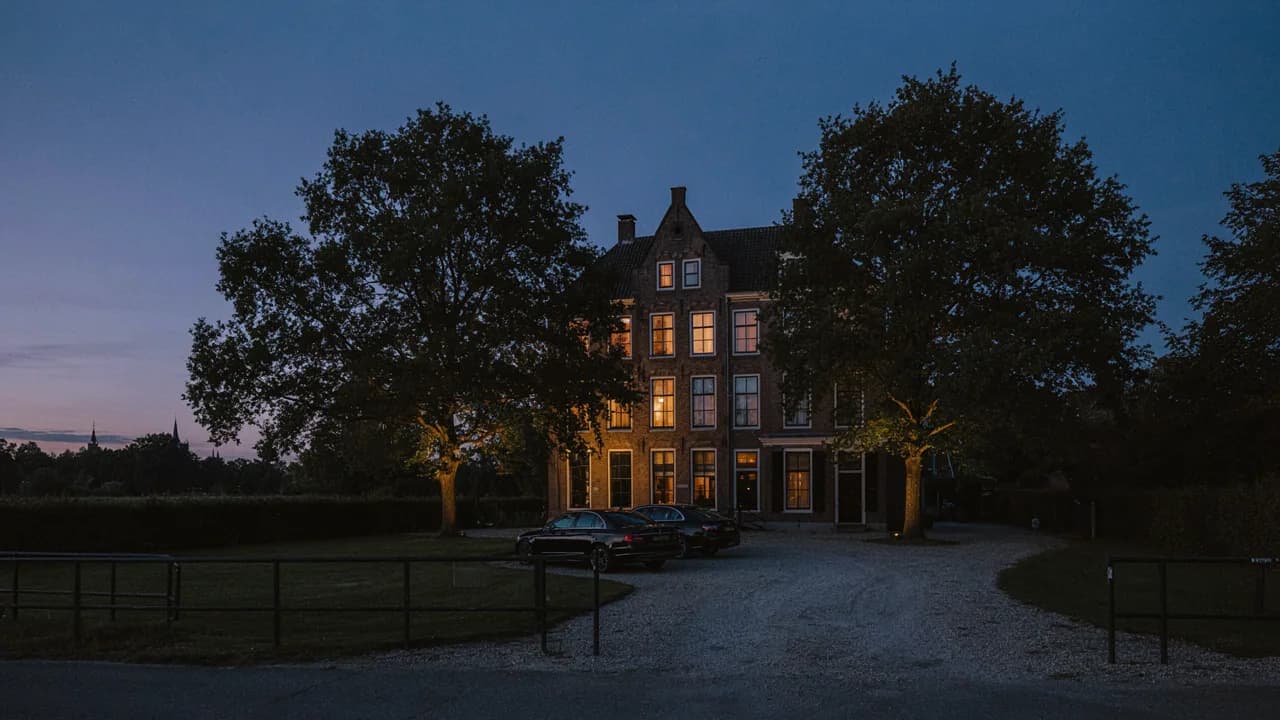
The picture is AI-generated.
First meeting
29–31 May 1954
Where
Hotel de Bilderberg, Oosterbeek, Netherlands
Latest
72nd, 9–12 April 2026, Washington, D.C.
Rule
Chatham House: no naming who said what
Outcome
by the club’s account: no resolutions, no votes
The Bilderberg Group in plain words
The Bilderberg Group, or Bilderberg Meeting, is an annual closed conference to which 120 to 140 politicians, bankers, industrialists, military men, scholars and journalists from Europe and North America are invited. For a few days they discuss world affairs in a single hotel that is booked out entirely and guarded. There is one condition: you may use what you hear, but you may not say who said it.
The organisers say it is simply a conversation: no resolutions, no votes, no closing statement. Critics say it is the very “world government” that decides behind closed doors who becomes president and what appears on television. Historians who have read the club’s archive see a third picture, and it is more interesting than either.
A hotel in the woods near Arnhem
On 29 May 1954, in a small family-run hotel called Bilderberg in the woods by the Dutch town of Oosterbeek, seven kilometres from Arnhem, a meeting opened that books would later be written about. The hotel was chosen for its quiet and because only one road led to it, which made it easy to guard. For three days guests from Western Europe and America, among them the future British Labour leader Hugh Gaitskell, argued about communism, about a united Europe, and about why Europeans liked Americans less and less.
Prince Bernhard of the Netherlands took the chair. The idea came from a Polish politician in exile, Józef Retinger. A few dozen people came in all, Europeans and Americans, from bankers to professors. The hotel gave the meeting its name, and later the whole club became known as Bilderberg.
What is known about the club today
More is known about the meetings than people tend to assume. A few days before each one, the club’s website publishes the place, the topics and the full list of participants. The 71st meeting took place on 12–15 June 2025 in Stockholm and the 72nd on 9–12 April 2026 in Washington; the published list for 2026 has 128 names, and the topics included artificial intelligence, world trade, energy, the Arctic and the defence industry.
Invitations are sent by a steering committee, the club accepts no applications, and there is no fee: guests pay their own travel and lodging. The secretariat’s records, almost thirteen metres of paper, are kept in the National Archives of the Netherlands, and part of them is open to readers. Journalists are not accredited to the meetings, which is one reason more is written about the club than is known.
Where the world-government rumours come from
When powerful people meet without journalists and announce nothing, guesses rush into the silence. Other closed bodies are easily attached to Bilderberg: the Trilateral Commission of 1973, the invented “Committee of 300”, Davos with its “Great Reset”. The fewer documents lie in plain view, the easier it is to paint any picture on the blank wall. That is how a whole mythology of “the secret rulers of the world” took shape. It contains grains of truth: connections, lobbying, dinners of very rich people. And a great deal that never happened.
The locked part of the chapter holds documents and quotations. What one of the club’s founders answered in 2001 when a journalist asked about a single world authority. What David Rockefeller wrote about a “conspiracy” in his own memoirs, and why his own club turned him down. Where the “three hundred men who rule the world” actually came from, and who said it, and in which year. Which file in the Dutch archive is closed until 1 January 2027. And the simple test that separates a legend from a document.
The open archive
The r/conspiracy archive holds 716 posts on “world government” and the Bilderberg Group, yet the topic’s share fell from about 50 per thousand posts in 2009–2011 to about 16 per thousand in 2018.
posts on r/conspiracy, 2008–2018
716
comments under those posts
46,664
the first post in the archive
21 September 2008
YouTube recommendations of 398 videos
32,991
views of those YouTube videos
199,470,874
Posts on the topic, year by year
20081
2009549.5 per 1,000 posts of the forum
20101248.4 per 1,000 posts of the forum
20113056.1 per 1,000 posts of the forum
20125143.8 per 1,000 posts of the forum
20134819.9 per 1,000 posts of the forum
20143916.6 per 1,000 posts of the forum
20157520.2 per 1,000 posts of the forum
201611320.8 per 1,000 posts of the forum
201722720.1 per 1,000 posts of the forum
201811515.6 per 1,000 posts of the forum
The busiest months
May 2017 · 31 posts
January 2017 · 25 posts
January 2018 · 23 posts
Counted from research archives: the popular text posts of one English-language forum, a study of YouTube recommendations and lists of conspiracy websites. What came of it is in the dossier.
What is inside the locked materials of this chapter:
Oosterbeek, May 1954: how it began
The Chatham House Rule: how the secrecy works
What the club actually does
The Trilateral Commission: a club the club would not let in
The “Committee of 300”: a number that moved from 1909 to the 1990s
The new world order: where the phrase comes from
Davos and the “Great Reset”: from an article to a legend
What is proven and what is invented
A secret council that publishes its own guest list
Timeline: 14 dates
Proven and invented: the verdict
What to read next
Checking your reading permission…
Questions
What is the Bilderberg Group, in plain words?
An annual closed meeting, since 1954, of 120–140 politicians, businesspeople, scholars and journalists from Europe and North America. It runs under the Chatham House Rule; by the club’s account there are no closing statements or votes. Not secret, but closed.
Who belongs to the Bilderberg Group and how do you get in?
There is no membership: each year a steering committee invites about 130 people. The club takes no applications and charges no fee. The list of participants is published a few days before the meeting; in 2026 it had 128 names.
Does the Bilderberg Group rule the world, and is there a world government?
No document shows any decision the club made for the world. There is a network of influential acquaintances, lobbying, and open projects of international organisations. A “secret world government” remains a legend; the club’s archive does not support it.