
Answer in brief
The 2026 prize recognises Francis Halzen's contributions to neutrino astronomy. IceCube looks for light from rare particle interactions inside Antarctic ice, observing the cosmos without a conventional telescope mirror.
What Francis Halzen was awarded for
On 6 October, the University of Wisconsin–Madison announced that professor Francis Halzen had received the 2026 Nobel Prize in physics for contributions to understanding astrophysical neutrinos. Fermilab also confirmed the award. Central to the story is the IceCube Neutrino Observatory, an international experiment that turns a vast volume of Antarctic ice into a sensitive instrument.
The award date is distinct from the discovery date. IceCube announced its first high-energy neutrinos from beyond the Solar System in 2013. This week's recognition concerns a research programme developed over decades. Its significance extends beyond one scientist: astronomy gained another way to investigate the universe, using particles alongside observations of light.
Why neutrinos are called ghost particles
Neutrinos have no electric charge and interact only rarely with matter. That makes collecting them difficult, but gives them value as cosmic messengers. They can bring information from environments where light is absorbed or scattered. Magnetic fields also do not bend their paths as they do the paths of charged cosmic rays.
Think of several messages about the same distant event. A photon describes radiation; a neutrino provides another clue to processes generating energetic particles. Comparing the messages builds a richer explanation. An individual detection is still not a perfectly labelled address: arrival directions have uncertainty, and possible source associations need statistical checks and other observations.
How ice takes the place of a mirror
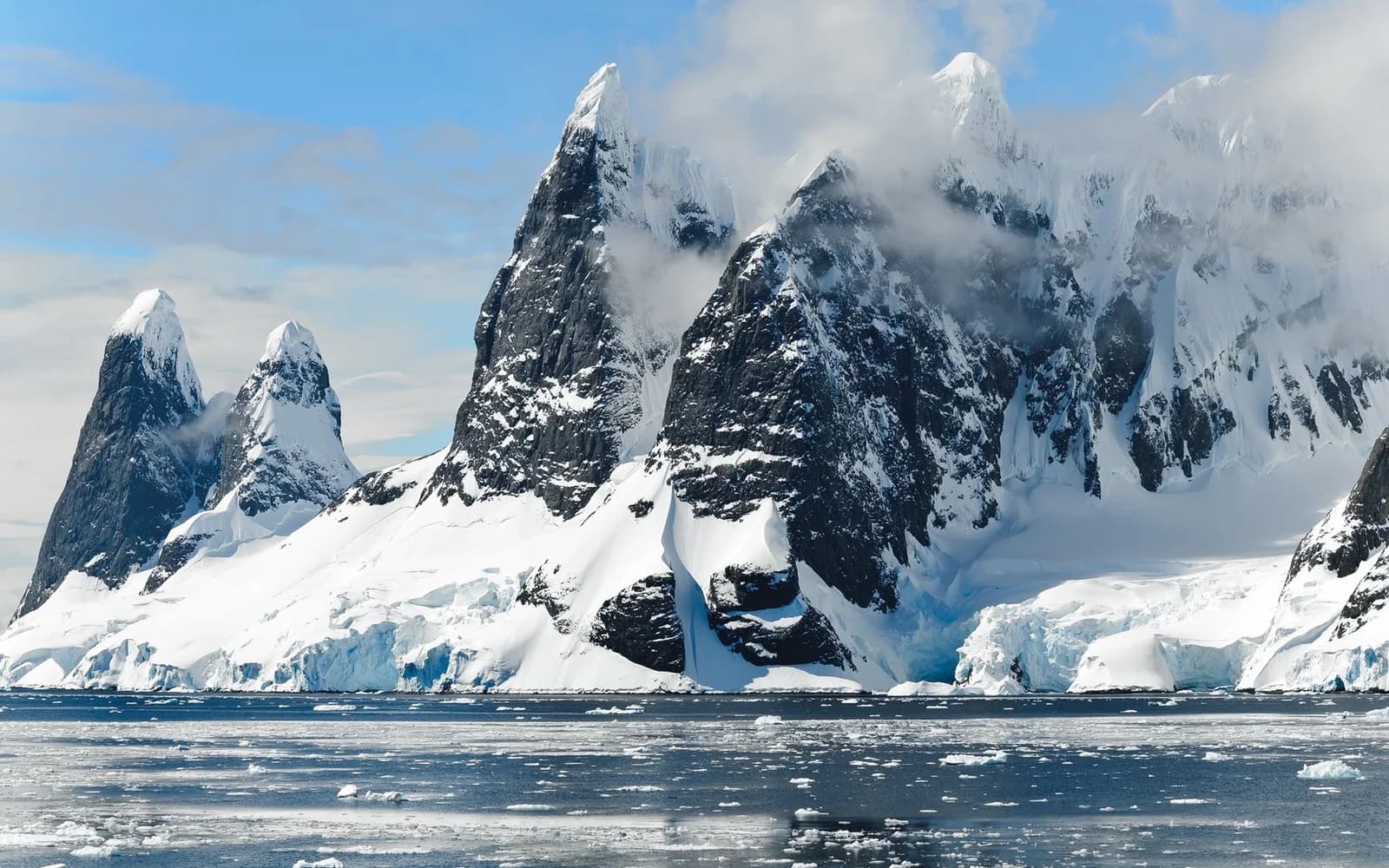
IceCube's description of its baseline array lists 5,160 optical modules on 86 strings, distributed through roughly a cubic kilometre of ice. The important features are depth, transparency, enormous volume and accurate timing. A scenic white surface is not the instrument's working view. Baseline counts should also be distinguished from the full configuration after upgrades.
The sensors do not photograph the neutrino itself. A rare interaction produces charged secondary particles, which can emit Cherenkov light when travelling faster than light travels through ice. They do not exceed the speed of light in a vacuum. The pattern and timing of the flashes let researchers reconstruct a direction and estimate the energy of an event.
What this tells us about black holes
Researchers want to identify nature's powerful particle accelerators. Cosmic rays alone make that difficult because magnetic fields alter their trajectories. Neutrinos supply an additional clue. UW–Madison describes observations associated with a distant active galaxy, followed by evidence involving other sources and the Milky Way. The interpretation grows through multiple observations, rather than a single dramatic image.
Our editorial reading is that IceCube's strength lies in comparing independent signals. Agreement between instruments makes an explanation more persuasive. This does not mean the detector looks inside an event horizon or takes an ordinary photograph of a black hole. It examines physical processes in cosmic environments through signals that can reach Earth.
Why the story matters beyond particle physics
IceCube changes what observation can mean. A telescope can be a distributed network of sensors, and its output can be measurements rather than a beautiful picture. Before accepting a scientific headline, useful questions are what was measured, how the signal was separated from background and how confidently it supports the proposed explanation.
The Nobel brings attention to the research without finishing it. Further observations and instrument improvements can refine earlier conclusions. VJOURNAL's reports on optogenetics and the new Webb image offer useful companions: one uses light inside a laboratory, another collects it from space. Together these stories show how different instruments turn difficult questions into testable measurements.
Questions and answers
Is IceCube at the South Pole?
Yes. The observatory operates near the Amundsen–Scott South Pole Station in Antarctica. Its main sensitive volume lies below the surface of the ice.
Does IceCube show that neutrinos move faster than light?
No. The description concerns charged secondary particles and the speed of light within ice. It does not violate the speed limit of light in a vacuum.