
Answer in brief
On the morning of 28 October 2026 a Renfe AVE hit the back of a stopped Iryo train near Urda, Toledo, on the Madrid–Seville line. As of 30 October the investigation commission CIAF counts 69 dead and more than 200 injured, both provisional figures. It says no definitive cause is established and every hypothesis stays open.
What happened near Urda on the morning of 28 October
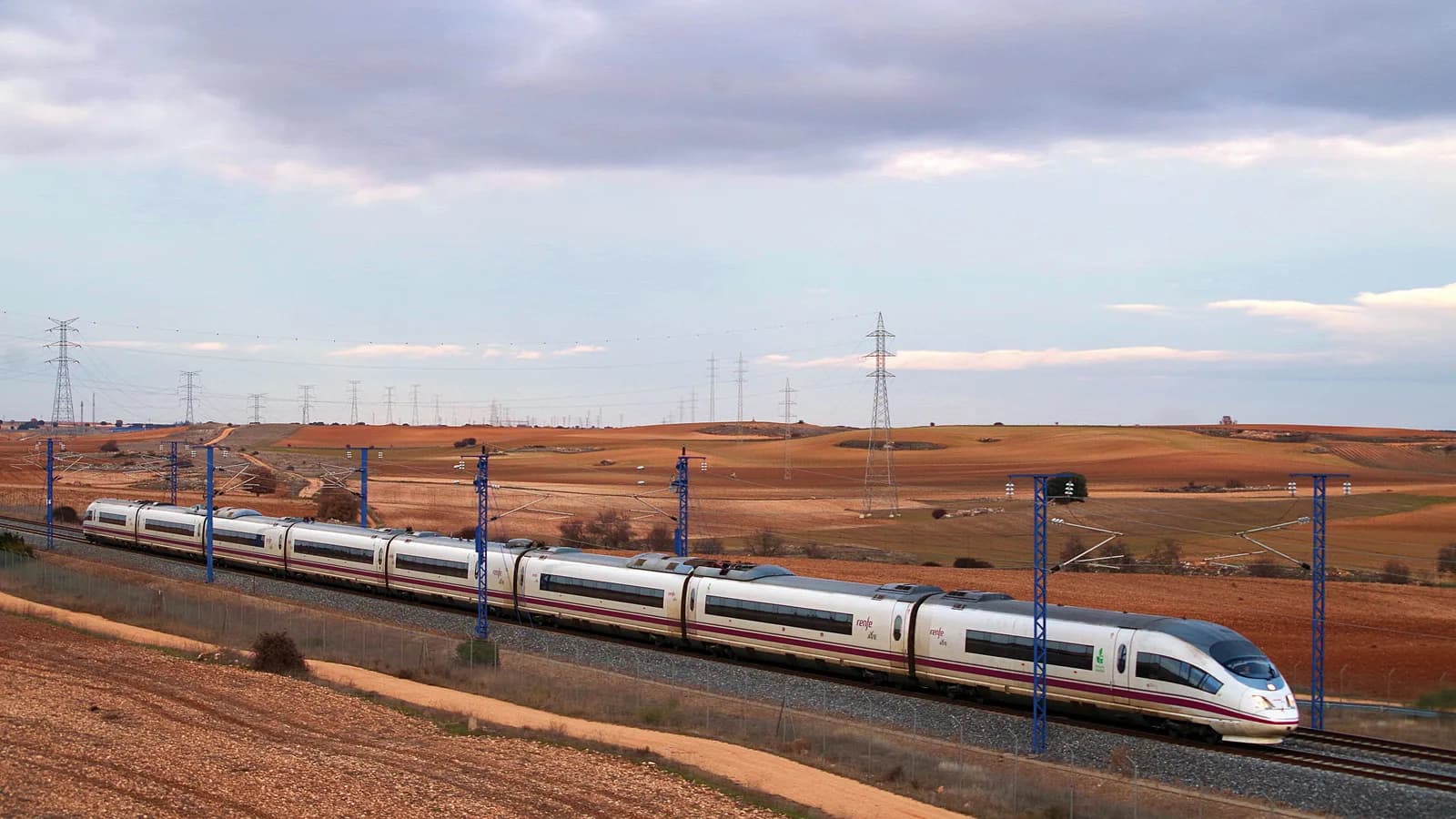
The Spain train crash took place on Wednesday 28 October 2026 on the high-speed line between Madrid and Seville, near Urda in Toledo province. Associated Press places the site on a flat stretch between Urda and Los Yébenes, where both trains were heading south. A Renfe AVE, the state operator’s high-speed service, struck the back of an Iryo train that was standing on the track. Iryo is a privately run operator.
The commission that investigates railway accidents in Spain, known as the CIAF, published a note on the first 24 hours on 29 October. According to that note, as reproduced by El Pespunte, the collision happened at 8:53 at kilometre point 118+800, on track 2, at the entrance to Urda station. The Iryo service was number 6076 and the Renfe one was AVE 2080. The note estimates the speed at impact at between 160 and 200 kilometres an hour and says the exact figure can only come from the onboard recorders.
Passenger numbers differ by source and by date. A spokesperson for the Castilla-La Mancha regional government told journalists on 28 October that 397 people were on the Renfe train and 147 on the Iryo train, as Al Jazeera and AP reported. The CIAF note later lists 379 passengers and 7 crew on the AVE and 147 passengers and 5 crew on the Iryo, 538 people in all. Al Jazeera adds that two carriages derailed.
The latest official toll and the injured as of 30 October
The toll rose during the first day. The Local Spain, following the regional government’s updates on 28 October, listed 10, then 32, then 64, then 68 dead. AP, writing the same day, quoted the regional government for at least 68. A figure of 69 appeared on 29 October, and it is the number used by the official bodies at the time of writing.
The latest official toll is 69. It comes from the CIAF’s first-24-hours note of 29 October, which also speaks of more than 200 injured and describes both figures as provisional. According to El Español’s live coverage, the regional president gave 69 at 10:47 on 29 October and the transport minister’s office gave the same at 17:09. The CIAF case file showed 74 at 17:31 and was corrected to 69 at 18:34. El Diario de Madrid, on the morning of 30 October, ties the step from 68 to 69 to one hospitalised person who died.
On the injured, El Diario de Madrid reports that about 110 people were admitted, around 60 had been discharged and about 50 remained in hospital, with 15 in the most serious group, four of them improving. It also says five victims had been identified and that the Guardia Civil had received 64 missing-person reports from families. These are press reports of changing counts, so a later number from an official body replaces any of them.
What the investigation commission says about the cause so far
The CIAF’s note says that no definitive causes have been established and that every hypothesis about the possible causes stays open. The commission also says it will not offer explanations beyond verified data and that its work aims to improve safety, not to assign blame. A background article from Ara describes the CIAF as an independent body created in December 2007 and attached to the Ministry of Transport.
The note describes the sequence of events in cautious terms. A failure of the LZB train-protection system began at 8:31, which left the trains running under a lateral-signal block procedure, with the control centre and the drivers relying on telephone exchanges. The commission writes that a chain of failures and instructions led to the collision and that the barriers needed to prevent it did not act. It adds that the LZB failures themselves will be examined.
Ara explains the commission’s procedure in stages: a preliminary report first, then a final technical report, and the CIAF note says the final report is expected within a year in principle. The note also says investigators had not yet interviewed the drivers or the traffic managers involved. The black-box recorders of both trains were recovered and are held by the Guardia Civil, and El Diario de Madrid says the data will be extracted on dates not yet given.
The minister’s account and the questions it has raised
Transport Minister Óscar Puente gave his own timeline on 28 October, as AP reported it. A safety system on a 63-kilometre section failed at about 8:30 because of a computer malfunction, and all trains in that section stopped. The central command then told the Renfe train to continue without speed restrictions even though a stop signal was active. Puente called the order inexplicable, said the drivers were not to blame and added that he was not attributing responsibility to anyone and was only stating facts.
Other accounts differ in emphasis. Nueva Radio reported on 30 October that the Guardia Civil had questioned a control-centre worker named by the minister and the rest of that shift, without saying whether they were heard as witnesses or as suspects. It also reported that the investigating judge in Orgaz ordered the seizure of the black boxes. El Español’s live blog records that the opposition leader Alberto Núñez Feijóo criticised the minister for pointing at an operator before the investigation ended, and that rail unions condemned the leak of control-centre audio. These are positions, not findings.
The line, its signalling and what the questions are about
Al Jazeera, citing Puente, says the LZB control system failed at about 8:30. Xataka writes that LZB is used on the Andalusian corridor and that the line was being upgraded to the European ERTMS level 2 system, which according to its linked coverage was meant to replace LZB fully in 2026. Xataka also says it is not yet clear whether the LZB failure was the direct cause.
AP supplies the wider setting: Spain has about 3,900 kilometres of high-speed track for 49 million residents, and Iryo began operating in 2022 after the network opened to private competition. AP quotes a spokesperson for a train workers’ union who asked whether liberalisation had been matched by enough maintenance, and AP notes that this was not confirmed as a factor. Before 2026, AP adds, Spain had recorded no fatal crashes on its dedicated high-speed lines since they opened in 1992.
The January crash at Adamuz and why the two are compared
On 18 January 2026 an Iryo train derailed near Adamuz in Córdoba province and an oncoming Renfe train hit the derailed carriages. The Local Spain gives 46 dead and 292 injured, and AP calls it the deadliest crash in Spain since 2013. Both accidents involved Renfe and Iryo trains on the same Madrid–Andalusia line, which is why coverage keeps linking them.
The causes are treated as separate. Prime Minister Pedro Sánchez said on 28 October that two train accidents in one year were unacceptable but that their causes appeared unrelated, as Al Jazeera reported. For Adamuz, Euronews reported on 8 April that a Guardia Civil report to the court placed a rail break at 9:46 on the evening of 17 January and ruled out sabotage, terrorism and driver negligence, with the CIAF’s final report still pending at that date.
Official mourning, visits and the response of the authorities
Sánchez spoke from the site and said all of Spain was grieving. Al Jazeera reports that he declared three days of official mourning, from 29 to 31 October. Spain’s football federation postponed all 24 Copa del Rey matches scheduled for 28 October, AP reports. European Commission President Ursula von der Leyen said Europe mourned with Spain, and Al Jazeera adds that French President Emmanuel Macron sent condolences.
King Felipe VI went to the site, according to AP. On 29 October the King and Queen Letizia visited the University Hospital of Toledo and then met families of the missing, El Español records. On the response itself, Al Jazeera counted more than 200 members of the Military Emergencies Unit on 28 October, and El Diario de Madrid cites the Interior Ministry for more than 910 personnel deployed.
Travel on the line, help for families and what comes next
Adif confirmed on 28 October that traffic on the affected corridor remained suspended, according to Diari de Tarragona, which also reports that Renfe stopped selling high-speed tickets between Madrid and Andalusia until 13 December. The same article says sales could restart earlier if Adif authorises it and that the date is not a confirmation that the line stays closed until then. Renfe’s own site on 30 October says the assistance plan for victims of railway accidents and their families is active, gives 900 10 10 20 as the family helpline and links an alternative transport plan for Friday 30 October.
Pages checked for this story give no refund terms, so passengers should read them on the operators’ own sites. El Español reports a warning from the integrated data centre about fake text messages about victim identification, and that the Guardia Civil only informs families in person. Next to watch: the black-box data extraction, the questioning of control-centre staff, any restart date from Adif, and the CIAF’s preliminary and final reports.
Practical checklist
- Treat 69 dead and more than 200 injured as provisional figures from the CIAF and check for a later official number.
- Read the CIAF and Adif pages for the investigation and service status before trusting social media posts.
- If you hold a ticket on the Madrid–Andalusia line, read the refund and change terms on your operator’s own site.
- Families should ignore text messages about identification, because the Guardia Civil only informs families in person.
- Keep claims apart: an official figure, a minister’s account and a press report are three different kinds of statement.
Questions and answers
When and where did the Spain train crash happen?
It happened on Wednesday 28 October 2026 at 8:53, according to the CIAF, near Urda in Toledo province on the Madrid–Seville high-speed line. A Renfe AVE struck the rear of a stopped Iryo train.
What is the latest official death toll of the Urda collision?
The CIAF’s note of 29 October gives 69 dead and more than 200 injured, both provisional. The commission corrected a figure of 74 to 69 that afternoon, and press reports on 30 October still use 69.
Has the cause of the Urda accident been established?
Not by the investigators. The CIAF says no definitive cause is established and all hypotheses remain open. The transport minister has described an order from the control centre as inexplicable, but he says he is not assigning blame.
Is there a link between the Urda crash and the Adamuz accident in January?
They share the line and the two operators, Renfe and Iryo. Prime Minister Sánchez said on 28 October that the causes of the two accidents appeared unrelated, and each has its own investigation.
Are trains running between Madrid and Andalusia after the collision?
Adif confirmed the corridor suspended on 28 October. Renfe stopped selling Madrid–Andalusia high-speed tickets until 13 December, and sales may resume earlier if Adif authorises it. Check the operators for current status.