
Answer in brief
The latest WHO briefing shifts attention from the case total to the time it takes a patient to reach supportive care, and the systems needed to provide it.
The news is about the route to care
At a 29 September UN Geneva briefing, WHO clinician Janet Diaz described a response in which patients still die before reaching treatment. Earlier recognition, rapid referral and prompt supportive care can improve a patient's chance of survival, she said. This is a different question from simply counting beds or reporting a national case total: a person must be able to identify symptoms, travel safely and enter a functioning facility in time. Insecurity, long distances and constrained services make each step difficult. The briefing did not offer a new national outcome rate attributable to oxygen or any single intervention.
Read the case totals with their dates
WHO's 25 September outbreak bulletin reported 7,890 confirmed cases and 3,799 deaths in the Democratic Republic of the Congo as of 23 September, across 63 health zones in seven provinces. AP subsequently reported that Congolese health-ministry data released on 27 September counted 8,067 confirmed cases and 3,901 deaths through 26 September. The later figure does not invalidate the earlier one; surveillance reports have different cutoffs and may be revised. WHO also cautioned that the national curve concealed increases in some provinces even as others showed improvement.
What medical oxygen can and cannot do
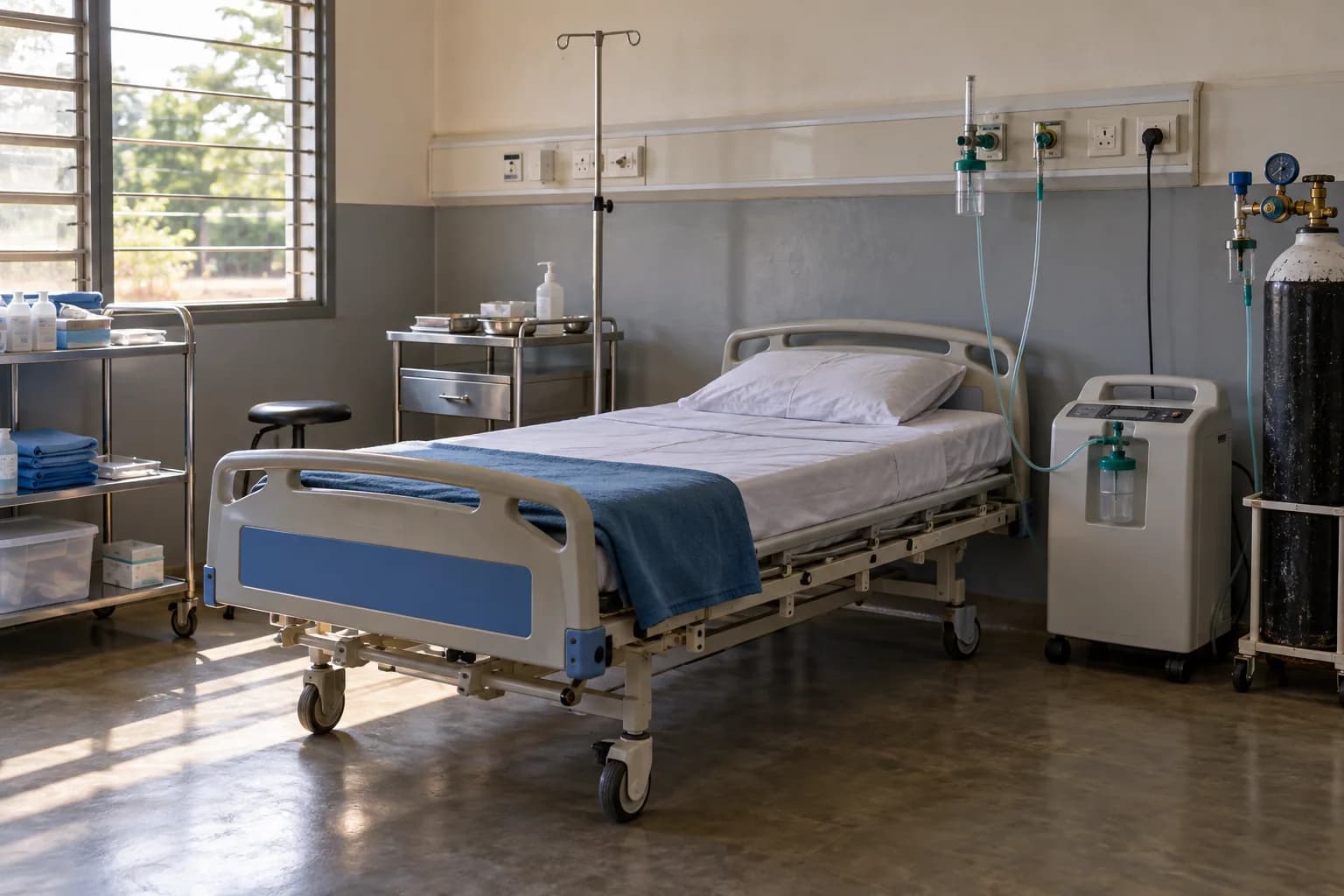
WHO described oxygen as an essential part of supportive care for severely ill patients, alongside trained staff, electricity, water and working clinical systems. In Bunia, existing generation capacity, cylinder distribution and concentrators helped expand access; elsewhere, the agency said equipment had to be paired with dependable power. During the briefing WHO did not provide a percentage of Ebola patients receiving oxygen or a quantified effect on the outbreak's fatality rate. A claim that oxygen alone has changed national mortality would therefore go beyond the evidence presented.
The response still has a delivery problem
WHO said treatment capacity had expanded to more than 1,600 beds in 50 centres across the seven affected provinces, with further growth planned. Yet more beds are useful only if the workforce, referral transport and essential supplies reach them. The agency says there is no licensed vaccine or specific treatment for Bundibugyo Ebola, while candidate approaches are being studied. For the public, the practical signal to watch after 29 September is whether fewer people die outside care and whether new outbreaks in distant health zones are detected and referred promptly—not whether one large national number rises more slowly for a day.
Questions and answers
Which Ebola virus is causing this outbreak?
WHO identifies the Bundibugyo species. It says there is no licensed vaccine or specific treatment for this species; supportive care and trials of candidates are part of the response.
Why do the WHO and AP case totals differ?
WHO's 25 September bulletin reports data through 23 September. AP cited Congolese ministry data through 26 September. They are different dated snapshots and should not be described as a contradiction.