
Answer in brief
Check pan compatibility, electrical requirements and ventilation before switching. Induction removes gas combustion at the hob, but food still releases moisture and particles. Compare the whole installation and the cooking methods you use, rather than assuming a universal saving.
How can I check which pans work on induction?
Before replacing gas with induction, check your pans, the electrical connection and the kitchen’s ventilation. Gas heats cookware with a flame; induction uses an electromagnetic field to heat compatible cookware. DOE suggests a flat base that attracts a magnet as an initial compatibility check. Use it to start an inventory, then consult the pan and hob manufacturers’ requirements. The switch changes equipment and cooking habits, not just the appearance of the worktop.
Test the base of each saucepan, frying pan and large stockpot rather than assuming an entire brand or material category works. Some stainless-steel cookware is compatible; other pieces are not. A favourite aluminium pan may have a suitable magnetic base even though its body is aluminium. Conversely, a magnetic side is not the part that needs to couple with the hob. Record the diameter and condition of the base, then compare those with the appliance instructions. This can reveal whether the upgrade requires replacing one specialist pan or most of the cupboard before you commit.
Include the cookware you use only occasionally in the inventory. A roasting pan, small coffee pot or unusually large preserving pot may be the piece that complicates the conversion, even if your everyday saucepan passes the magnet check. Ask about those specific uses before ordering a hob. Compare the appliance instructions with how each pan sits on the surface and which cooking zones can detect it. Keep confirmed compatible pieces separate from ones whose manufacturer information still needs checking.
How does heat control change from gas to induction?
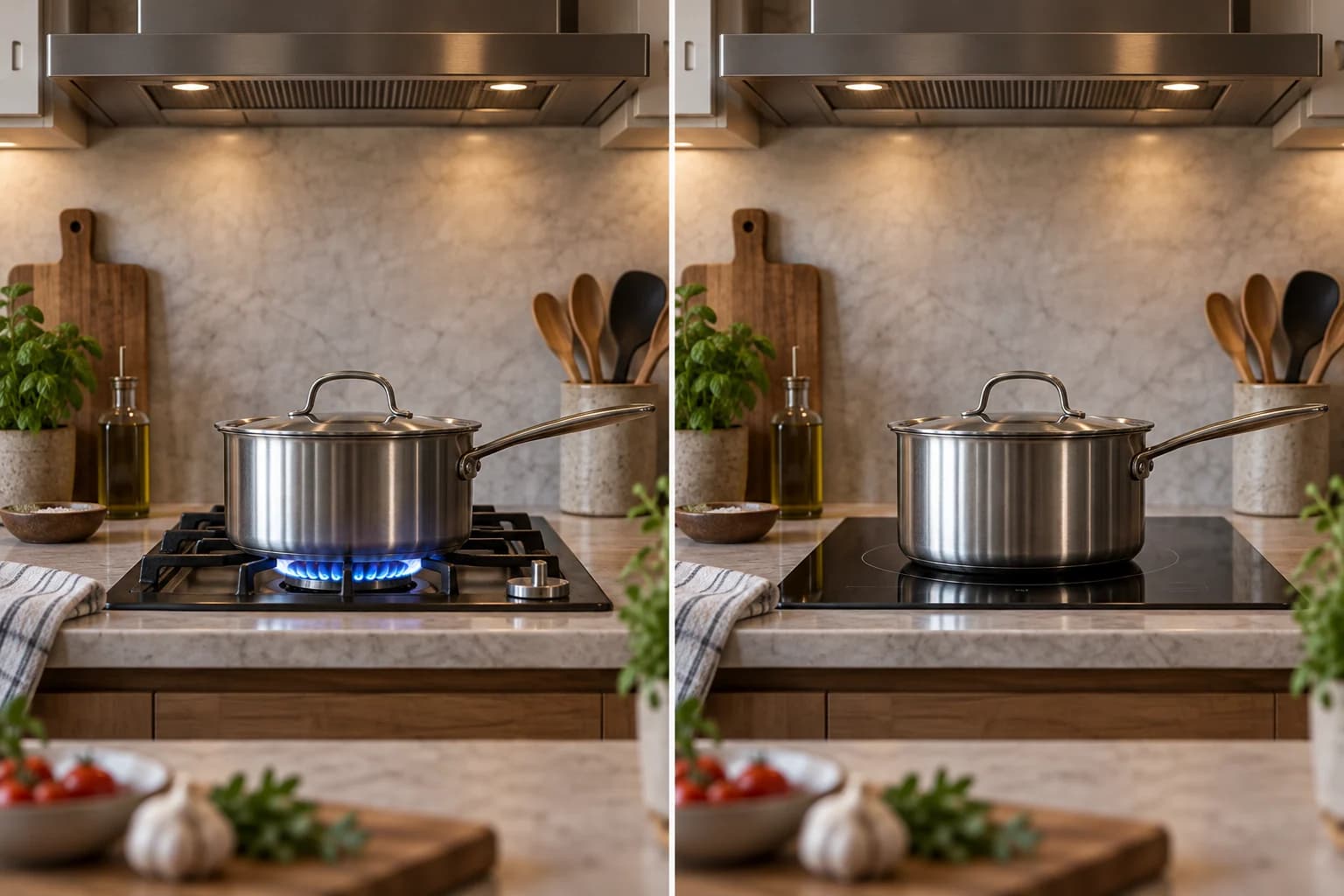
The visible flame gives gas cooks a continuous visual cue. Induction substitutes controls and pan behaviour for that cue. A setting numbered six on one hob is not a universal cooking temperature, and it need not correspond to the middle flame you used before. Begin with dishes you know well so you can judge what is happening in the food rather than translating every gas habit into the same numerical setting.
For a hypothetical first meal, use one compatible saucepan for a familiar soup and keep the same ingredients and quantity. Start conservatively, observe the simmer and adjust within the manufacturer's directions. This exercise teaches the controls; it is not a timed performance test. Pan mass, dimensions, contents and the specific hob influence the response. Avoid promising yourself that every dish will cook faster or need less attention. A recipe that depended on a flame touching food, or on lifting a wok repeatedly away from the burner, may need a different method or suitable specialist equipment.
Does an induction hob still need a cooker hood?
Induction removes the hob's gas-burning process, but cooking still releases moisture, odours and particles. Frying food in oil is still frying food in oil when the pan sits on an induction zone. Department of Energy kitchen-exhaust guidance identifies both cooking emissions and the additional combustion byproducts associated with gas. Its guidance favours exhaust that takes air outdoors. The fuel change therefore does not justify removing the hood from the upgrade plan.
Distinguish a hood that exhausts outdoors from one that recirculates through filters. They perform different jobs, and filter maintenance still matters. Ask the installer where the duct actually terminates and whether the proposed system suits the appliance, layout and local requirements. Do not use a dramatic before-and-after air-quality image as proof of a real reduction in your home. Our comparison has no measurements from your kitchen. It explains two different emission sources, so you can specify ventilation for cooking while accounting for removal of gas combustion at the hob.
What installation work should the quote include?
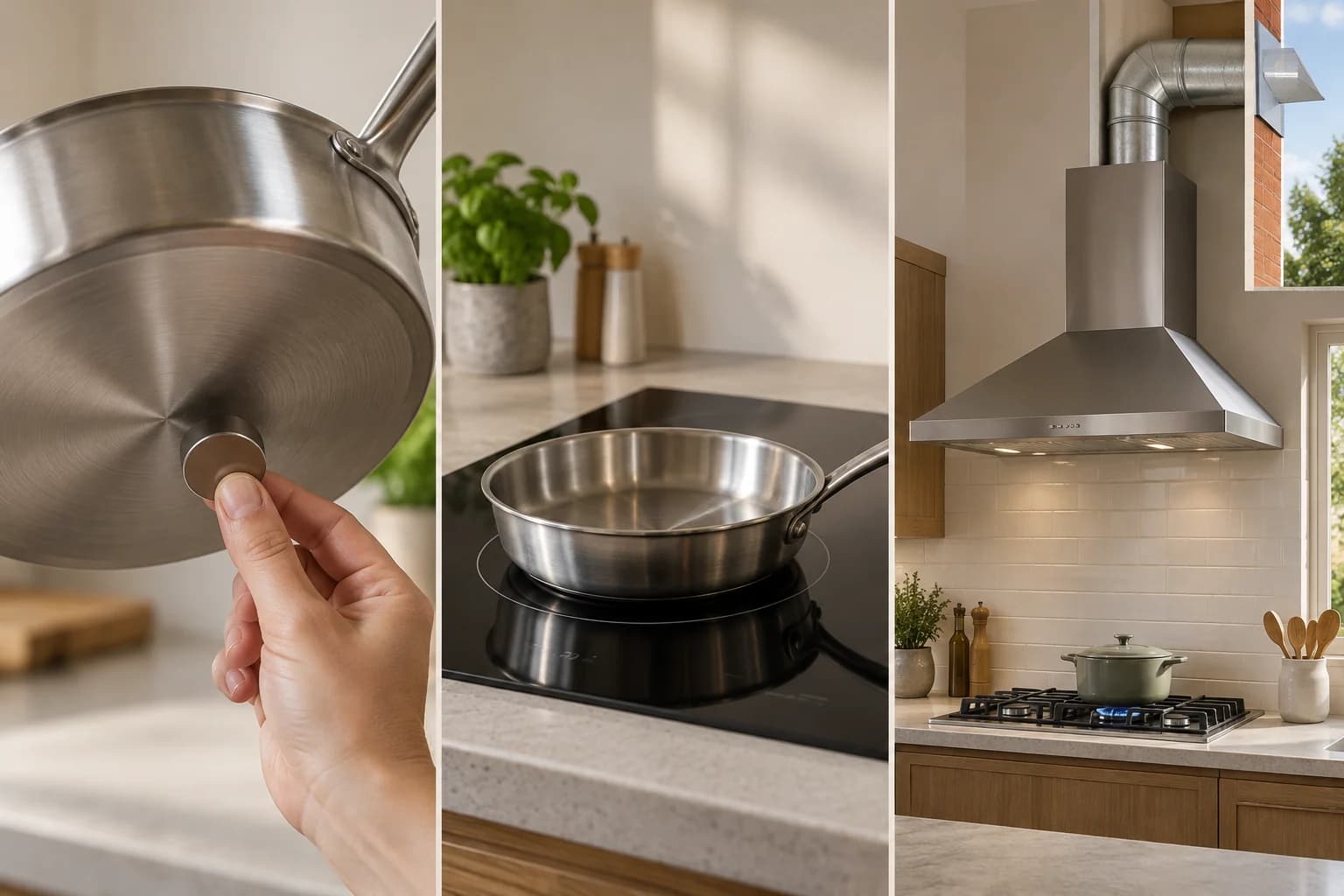
A conversion quote should identify more than the purchase price of the cooktop. Ask about the electrical supply, circuit requirements, installation clearances, countertop opening, ventilation and any work needed to retire or isolate the gas connection. Requirements depend on the appliance and property. A plug-in portable induction unit and a full-sized built-in hob are different installation cases; neither should be assumed to fit the other one's supply arrangements.
The table below is a checklist for a conversation with the installer, rather than a claim about what every house requires. Ask which parts of the quoted work are included and which depend on a site inspection. If you rent, establish what the property owner permits before planning permanent alterations. If a gas oven or another gas appliance remains, changing the hob does not remove every gas-related task or charge. Treat the project boundary explicitly: you may be replacing only the cooking surface, not changing the entire kitchen's energy supply.
| Area | Gas arrangement | Induction arrangement |
|---|---|---|
| Cookware | Flame heats a broad range of pans | Verify magnetic flat bases and size requirements |
| Control cue | Visible flame indicates the setting | Learn controls and observe the food |
| Combustion | Gas burns at the hob | No gas combustion at the hob |
| Cooking emissions | Food releases moisture and particles | Food releases moisture and particles |
| Extraction | Assess hood and discharge route | Retain extraction and maintenance |
| Installation | Gas connection and appliance requirements | Electrical supply and appliance requirements |
| Project cost | Existing equipment and gas arrangements | Quote installation and pan replacements |
Will induction reduce my cooking costs?
Induction's method of heating cookware can use energy efficiently, but appliance efficiency is not the same as your annual bill. Electricity and gas tariffs, how often you cook, standing charges and the equipment you retire all affect the household calculation. Do not turn a published efficiency comparison into a universal percentage reduction in your costs. Nor should a historical equipment price or incentive quoted in an older article become a current offer without separate verification.
Build your comparison around a complete installed quote and the pans you actually need. Keep optional renovations separate so they do not disguise the cost of the cooking conversion itself. If you want a rough running-cost scenario, state the assumed consumption and current local tariff, then label the result as an estimate. This guide provides no such household estimate and no measured boiling-time ranking. A reader with a small pan replacement requirement and a suitable existing electrical supply has a different project from one who needs electrical work and entirely new cookware.
How should I clean and handle an induction hob?
A smooth induction surface presents a different cleaning task from gas grates and burners. Follow the hob's instructions for cleaning materials, spills and moving cookware across the surface. Compatibility does not give a pan permission to be dragged over glass, and a surface that is not heated by a flame can still be hot from contact with a hot pan. Keep residual-heat indications and the appliance's operating directions in the everyday routine.
Likewise, pan detection and automatic controls are features to understand rather than a reason to stop paying attention. Check how your particular hob responds when a pan is lifted, when liquid reaches the controls or when multiple zones are used. Shared power arrangements and available functions vary by model. Teach everyone who cooks how to turn the unit off and identify a hot area. Avoid describing induction as risk-free: the pan, food and liquids still become hot, and normal kitchen supervision remains necessary even though there is no gas flame.
What would make the switch worthwhile for my kitchen?
For a household considering the change, identify the strongest constraint first. It might be combustion at the hob, difficulty cleaning burners, cookware compatibility, available electrical supply or a preference for a particular cooking technique. Then assess the complete conversion against that constraint. A portable trial can help you learn whether the controls suit your cooking, but only within the portable appliance's instructions and without treating one unit as a performance proxy for every built-in hob.
Before ordering, collect three concrete answers: which existing pans are confirmed compatible, what installation work the selected appliance needs, and how the kitchen will extract cooking emissions. Add the return and warranty terms if you are buying equipment to try. Once installed, rehearse a familiar meal and check the ventilation routine at the same time. The useful result is a kitchen arrangement you can operate consistently. This comparison does not name a universally superior fuel; it makes the equipment, cooking method and ventilation changes visible enough to decide whether this particular conversion fits your home.
At handover, ask the installer to demonstrate the controls, explain relevant power settings and identify the maintenance instructions for both hob and extractor. Keep the appliance model information with the warranty and installation documents. If several people cook in the kitchen, walk through a normal meal together rather than leaving them to infer the controls from an unfamiliar display. After a little use, review whether the layout gives you room to move hot pans and reach the hood controls. That is a practical check of your kitchen arrangement, not an efficiency test.
Questions and answers
How do I know if my pans work on induction?
Check each pan’s base rather than relying on the material name or brand. DOE guidance suggests a flat base that attracts a magnet as an initial check. Then read the cookware and hob instructions, including size restrictions. A magnetic base helps you sort existing pans but does not establish every compatibility condition for the selected appliance.
Do I still need a cooker hood with induction?
Switching to induction does not remove the moisture, smells or particles produced by cooking food. Keep suitable ventilation in the plan. Establish whether the hood extracts outdoors or recirculates through filters, and follow its maintenance instructions. The arrangement must fit the kitchen, appliance and applicable installation requirements; this guide does not measure your indoor air.
Is induction always cheaper to run than gas?
No universal household saving follows from the change. Tariffs, cooking habits, equipment performance, standing charges and remaining gas appliances all affect costs. Compare the installed price, electrical work and necessary pan replacements. Treat a calculation using stated assumptions as an estimate, rather than a measured result for your home.
Should I try a portable induction hob before replacing gas?
It can help you learn the controls with compatible cookware if you follow its supply, positioning and operating instructions. It cannot establish the performance of every built-in model or prove that a permanent installation is suitable. Use the trial to explore cooking habits and a site assessment to plan the full conversion.