
Answer in brief
A provisional Antarctic peak and a measured Arctic low tell different stories. The coming confirmation should respect uncertainty in daily sea-ice extent.
Two poles, two seasonal turning points
NSIDC reported on September 23 that Arctic sea ice likely bottomed out at 4.60 million square kilometres on September 12. That ties 2008, 2010 and 2025 for tenth lowest annual minimum in the satellite record. At the other pole, its analysis said Antarctic ice most likely reached 17.59 million square kilometres on September 14, potentially the third lowest winter maximum. Crucially, the Antarctic date and ranking were provisional as October approached.
Why Antarctic confirmation can wait
Sea ice extent near a seasonal turning point can rise, fall and rise again. NSIDC explicitly cautioned that large Antarctic fluctuations may postpone confident identification of the maximum, which often occurs in late September or early October. NASA likewise said a 2026 Antarctic maximum announcement would follow confirmation that seasonal growth had ended. A low daily value or a visually striking map is not by itself the final annual statistic.
A rank is a narrow description
For the Arctic, NSIDC used a five-day average and noted the 2026 minimum remained 1.62 million square kilometres below the 1981–2010 average minimum. It also reports that the 20 lowest minima in the nearly 48-year satellite record occurred in the last 20 years. That long record is stronger evidence of change than whether one year places tenth or eleventh. The Antarctic system has larger year-to-year variation, so the two hemispheres should not be merged into a single global ranking.
What October observations can settle
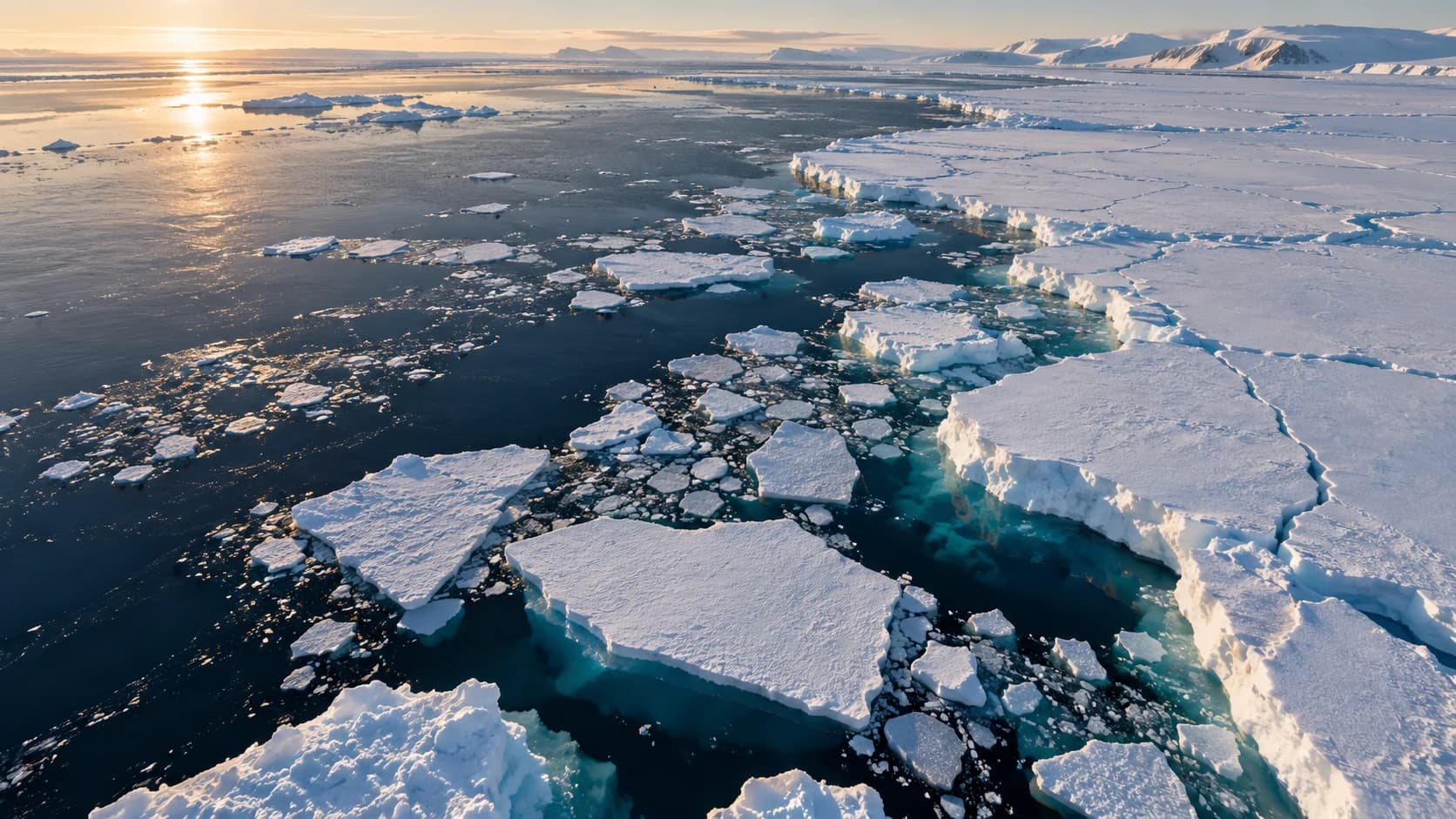
The useful update will state the Antarctic peak date, extent, comparison period and whether later data revised the provisional assessment. Methods matter: “extent” counts ocean grid cells that pass an ice-concentration threshold and is not the same as ice thickness or volume. A single season also cannot establish local ecosystem effects without field evidence. The cover is a constructed polar scene rather than remote-sensing data.
Questions and answers
Is the Antarctic 2026 maximum final?
No. NSIDC described the September 14 peak as likely and warned that changes near the seasonal maximum can delay confident identification.
Does one sea-ice rank explain the whole climate?
No. A single season varies with weather; multi-decade records, regional patterns and measurement methods provide the necessary context.