
Answer in brief
CBR reported on 7 November 2026 that the film led Netflix's U.S. movie chart. The AMOC is real and very likely to weaken this century, according to the Met Office. The IPCC has medium confidence in no abrupt collapse before 2100, though some studies dispute how safe that is.
Why the 2004 film is No. 1 on Netflix this week
CBR reported on 7 November 2026 that, per FlixPatrol data dated 6 November, The Day After Tomorrow still holds the top spot on Netflix's U.S. movie chart.
The film was released on 28 May 2004 and directed by Roland Emmerich. CBR describes its plot as a NOAA paleoclimatologist warning of a climate disaster that plunges the Northern Hemisphere into a new ice age. The ocean system behind that story is real, and it has a name: the AMOC.
The Met Office on what the AMOC is and what is measured
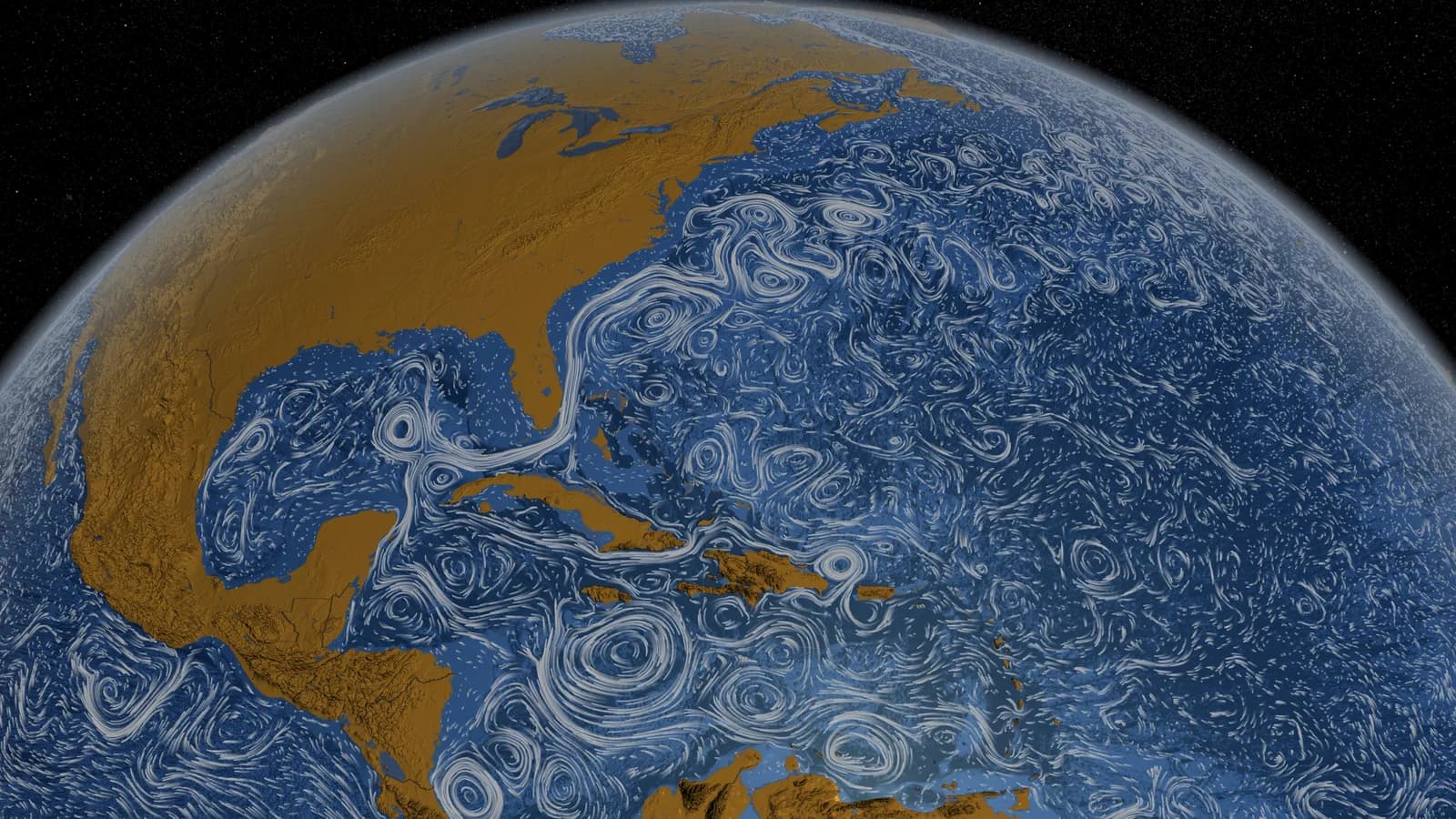
The Met Office calls the Atlantic Meridional Overturning Circulation a large system of ocean currents that carries warm water from the tropics northwards. NOAA says research shows it has been weakening over the past century, while whether it could stop entirely remains uncertain.
Direct measurement is recent. The Met Office says oceanographers have measured the AMOC continuously since 2004, and that it is too early to say for sure whether there are long-term trends. Carbon Brief reports that the RAPID array at 26.5°N found average strength of 15–17 Sv in 2011–2020, down from 18–19 Sv in 2004–08, and that the record is still too short to separate climate change from natural variability.
What the IPCC and the Met Office say about collapse
The Met Office states that the AMOC is very likely to weaken over the 21st century as greenhouse gases increase. It quotes the IPCC Sixth Assessment Report: there is medium confidence that there will not be an abrupt collapse before 2100. For gradual weakening the Met Office says the overall effect is still a warming.
In February 2025 a Met Office and University of Exeter study in Nature, led by Jonathan Baker, found the AMOC unlikely to collapse over the next 75 years. The timescales in these sources are decades, not the days of the film.
Where studies disagree on an AMOC tipping point
A 2024 Science Advances paper by René van Westen, Michael Kliphuis and Henk Dijkstra produced an AMOC collapse in a climate model and proposed an early-warning indicator. The authors wrote that reanalysis products suggest the present-day AMOC is on route to tipping, but gave no date because those records are too short. Carbon Brief also describes a 2023 Nature Communications paper projecting a possible collapse between 2037 and 2109, most likely around mid-century.
Critics urge caution. Carbon Brief quotes Stefan Rahmstorf of the Potsdam Institute saying early-warning signals are not fully reliable because there are no 100 years of accurate AMOC data. It also notes a debate over how scientists define collapse, since the 2025 Nature study counted a total shutdown, not a strong weakening.
What happens next for AMOC research and attribution
Carbon Brief cites a 2020 study suggesting scientists may not confidently attribute the trend to human causes until at least 2033. Nobody can yet say whether or when a collapse would happen, and the sources above do not agree on how likely it is.
Questions and answers
Is the Netflix ranking of The Day After Tomorrow official?
The figure comes from FlixPatrol data dated 6 November 2026, as reported by CBR on 7 November. It is a third-party tracker of Netflix's U.S. chart, and rankings change daily.
Could the Atlantic current stop within days, as in the film?
None of the sources here describes that. The Met Office speaks of gradual weakening over the 21st century, and the studies discussed here work on timescales of decades, not days.
Is the AMOC weakening now, according to the data?
NOAA says research shows weakening over the past century. The Met Office says direct data since 2004 are too short to be sure of a long-term trend, and Carbon Brief reports the same limit.