
Answer in brief
FAO’s 5 October 2026 feature reports more than 4,000 Cambodian farmers receiving PEARL advisories through Chamka and social media. Bulletins link rainfall forecasts with farming decisions such as irrigation timing. PEARL is an existing project under implementation; reported reach and testimony do not prove independently measured reductions in crop losses.
How are farmers using PEARL drought advice in 2026?
PEARL delivers drought advisories through Chamka and social media, linking rainfall forecasts with practical farming decisions. FAO’s 5 October feature describes Cambodian farmers using drought advisories through PEARL, an existing initiative implemented with the government and financed by the Green Climate Fund. GCF’s official portfolio identifies PEARL as FP199 and lists it as under implementation. This is therefore a current account of use, not a newly launched October project. FAO reports more than 4,000 farmers benefiting from the advisories. That number refers to recipients described in the feature; it should not be substituted for every planned beneficiary or an independently audited impact total.
How does a rainfall forecast inform a farm decision?
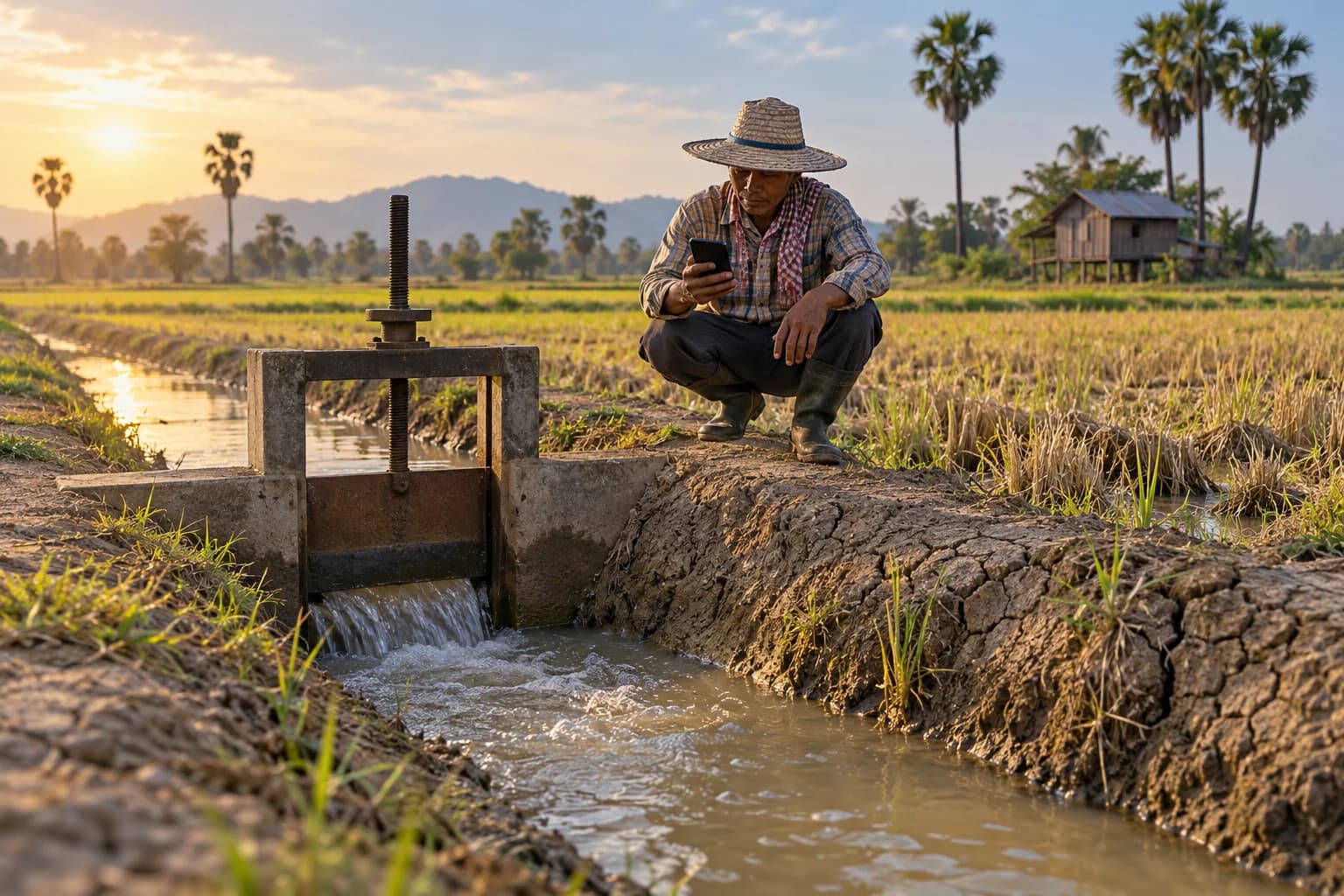
The feature says bulletins from the Cambodia Agrometeorological Service combine rainfall forecasts with practical guidance, distributed through social media and the locally available Chamka application. The important connection is between information and a decision: whether to irrigate now, hold off or prepare to retain water. A weather forecast alone does not establish which action is appropriate for every field. Crop stage, water access and local instructions still shape use. The article explains the advisory chain rather than providing a new universal irrigation rule derived from one farmer’s example.
What do field dikes and cropping calendars change?
FAO describes field dikes for storing water, cover crops for retaining soil moisture and adjusted cropping calendars among the project’s practical approaches. These are different interventions with different purposes. A forecast can help time an action, while physical infrastructure determines what is possible once the farmer decides. As a reading framework, separate the bulletin, the recommended action and the resources required to carry it out. The feature offers examples of that connection, but does not establish the right water height, crop calendar or construction method for a reader’s farm.
Why can harvest timing matter during drought?
The feature includes a farmer’s account of using expected rainfall to plan harvest timing, alongside decisions about irrigation and water storage. Such testimony explains a plausible use of information: harvested paddy and standing crops can face different management problems. It does not measure a causal reduction in losses across all advisory recipients. No controlled comparison, common baseline or nationwide yield result is verified here. The example is valuable as a description of decision-making, provided its personal nature stays visible rather than becoming a numerical claim about programme performance.
Do recipient numbers prove that losses were avoided?
To evaluate the programme beyond this feature, distinguish delivery, receipt, understanding, action and eventual crop outcomes. More than 4,000 recipients describes reach; it does not tell us how often bulletins were read or how many decisions changed. An impact assessment would need its own design and results. The practical lesson of the report is that climate information can be paired with actions farmers can consider, while uncertainty remains. This dated article documents FAO’s implementation account and the project’s financing identity without promising certain forecasts, guaranteed yields or prevented losses nationwide.
Questions and answers
Was PEARL newly launched in October 2026?
PEARL was already under implementation when FAO published its 5 October 2026 feature. GCF identifies the programme as project FP199. The October story reports how farmers use advisories, rather than announcing a new launch. Its recipient count describes the reach reported in that feature, not every planned beneficiary or a completed independent assessment of impact.
How do Chamka and social media deliver drought advice?
Chamka and social media deliver bulletins combining rainfall forecasts with practical farming advice. The value is the connection between a forecast and a decision such as irrigation or harvest timing. The feature does not establish that the application itself guarantees accurate weather, a universal action or a particular crop result.
Do more than 4,000 advisory recipients prove reduced crop losses?
No. FAO’s figure describes reported advisory reach, while farmer testimony illustrates use. Neither substitutes for an independently measured comparison of outcomes. Assessing avoided losses would require baseline conditions, a defined comparison and results over time. The feature does not verify nationwide prevention, a quantified yield increase or certainty that every recipient changed a decision.