
Answer in brief
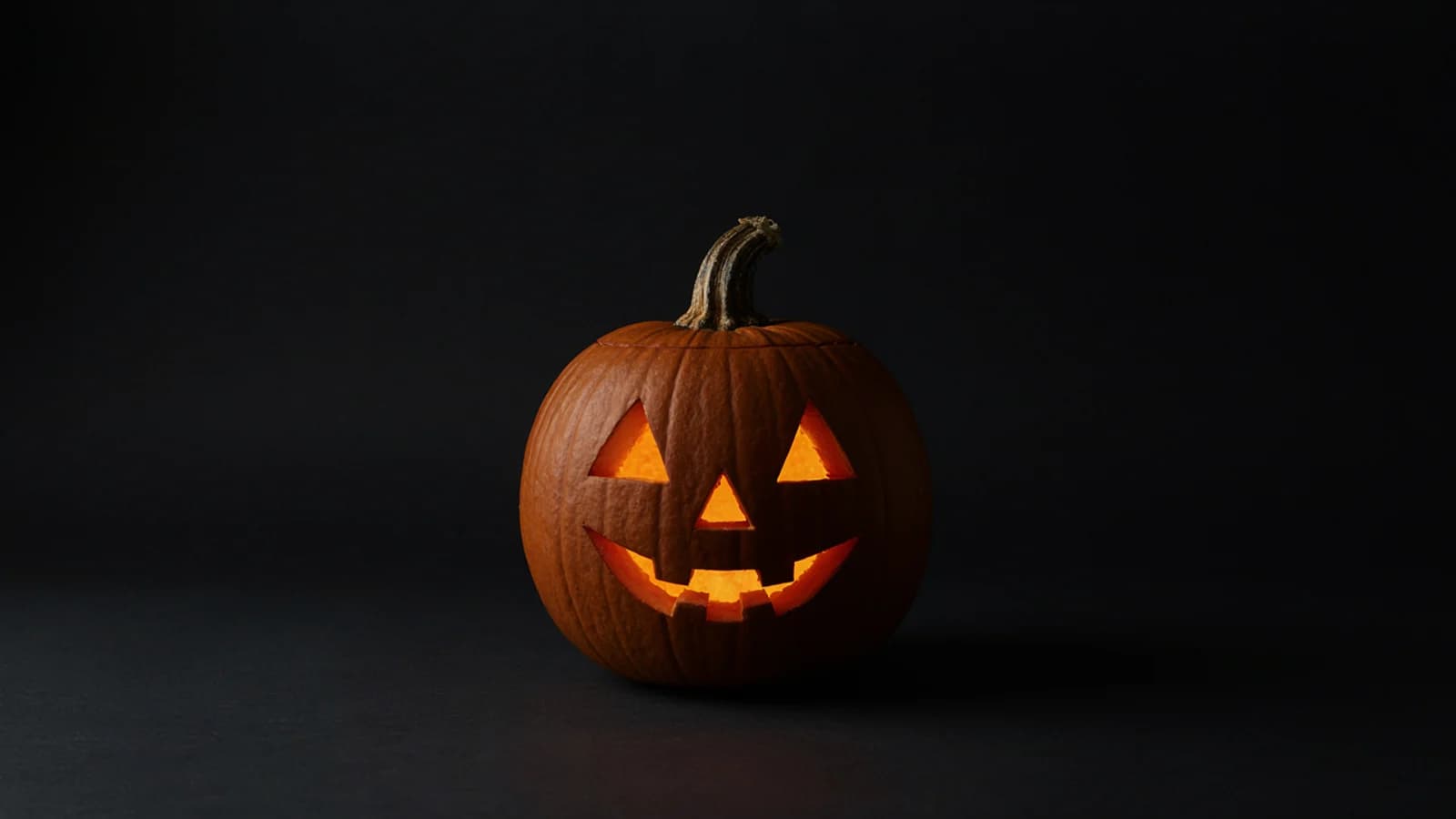
Halloween falls on Saturday, 31 October 2026, the eve of All Saints’ Day on 1 November. It is not on the US federal holiday list published by OPM and not among the non-working holidays in article 112 of Russia’s Labour Code, so in both countries it is an ordinary weekend evening. The custom grew from the Gaelic festival of Samhain and the Christian feasts of All Saints and All Souls.
Halloween 2026 falls on Saturday, 31 October
Halloween 2026 falls on Saturday, 31 October. The date never moves, because Halloween is the evening before All Saints’ Day on 1 November, which is why its older name is All Hallows’ Eve. It is not a public holiday in the United States or in Russia, so this year it is simply a weekend evening in both. Where 1 November is a holiday, as in France, the day off comes after Halloween.
The US Office of Personnel Management, which publishes the official list of federal holidays, names eleven of them for 2026, and Halloween is not among them. Because federal pay and leave follow the OPM list, the last day of October is an ordinary Saturday for federal employees.
In Russia, article 112 of the Labour Code lists the non-working holidays; 31 October is not one of them, and the nearest is National Unity Day on 4 November. The 2026 production calendar of the ConsultantPlus legal database, based on Government Decree No. 1466 of 24 September 2025, shows 31 October and 1 November as regular days off. Tuesday, 3 November, is one hour shorter, and Wednesday, 4 November, is a holiday. As of 18 October 2026, no transfer of days off touches that week.
From Samhain to All Hallows’ Eve: how the holiday began
Wikipedia’s article on the holiday traces the word: Halloween comes from the Lowland Scots form of All Hallows’ Eve and opens Allhallowtide, the days on which Western Christians remember the dead. The older layer is Gaelic. Samhain, a quarter day of the medieval Gaelic calendar, was celebrated on 31 October and 1 November. It marked the end of the harvest and the start of the darker half of the year.
The Library of Congress adds a scholar’s caution. Its Folklife Today blog, launched on 30 October 2013, summarised the folklorist Jack Santino, who traced Halloween to the Celtic festival of Samhain in Ireland. The same post warns that a popular detail is shakier. The idea that Samhain opened the Celtic new year, it says, arose only in the late nineteenth century.
The Christian calendar added the second layer. According to Wikipedia, the Frankish Empire adopted 1 November for All Saints’ Day in 835, and All Souls’ Day, fixed on 2 November, became widespread in the twelfth century. The Library of Congress post calls the result a three-day festival in traditional Catholic culture. Seen that way, Halloween is the first evening of a short season of remembrance rather than a stand-alone party.
Turnip lanterns, guising and the first trick-or-treaters
The jack-o’-lantern began as a turnip. Wikipedia notes that in Ireland, Scotland and northern England turnips or mangel wurzels were hollowed out as lanterns, and that immigrants to North America switched to the native pumpkin; American pumpkin carving is recorded by 1837. Costumes descend from guising, when children in disguise went door to door for food or coins in Scotland and Ireland. Another source is souling, when the poor collected soul cakes in return for prayers for the dead.
The phrase itself is young. Wikipedia dates the earliest known printed use of trick or treat to 1917, in a newspaper in Sault Ste. Marie, Ontario, and says the practice became widespread in North America only in the 1930s. The Library of Congress post describes the ritual plainly: children in costumes go door to door asking for treats, and neighbours decorate their houses with spooky scenes.
What the NRF survey expects Americans to spend on Halloween 2026
The National Retail Federation published its annual Halloween survey on 22 September 2026. It expects spending on Halloween 2026 to reach $13.5 billion, holding the level of last year’s record $13.1 billion, or $115.14 per person against $114.45 in 2025. In all, 74% of Americans plan to celebrate, against 73% a year earlier. Costumes lead at $4.4 billion, ahead of decorations at $4.3 billion and candy at $4.1 billion, and 96% of respondents plan to buy sweets.
Spider-Man tops the children’s list with 4.6 million young fans; adults prefer witches, chosen by 4.8 million, and vampires, chosen by 4.2 million, while the favourite pet costume is a pumpkin. The survey was run by Prosper Insights & Analytics among 7,889 consumers on 1–9 September, with a margin of error of 1.1 percentage points. These are plans, not receipts, and the real total will be known only after 31 October.
Día de Muertos, Toussaint and Todos los Santos on 1 and 2 November
In Mexico the same days belong to another tradition. UNESCO inscribed the Indigenous festivity dedicated to the dead on its Representative List of the Intangible Cultural Heritage of Humanity in 2008, after first proclaiming it in 2003. Its description places the festivities at the end of October and the beginning of November. Families guide souls home with petals, candles and offerings and set out their favourite dishes. UNESCO notes that the festival blends pre-Hispanic rites with Catholic feasts.
Service-Public, the French administration’s official site, lists Toussaint among the legal public holidays; in 2026 it falls on Sunday, 1 November. The page, verified on 1 January 2026, adds that only 1 May is a compulsory day off for every employee, so other holidays depend on collective agreements or the employer. In Louisiana, the Library of Congress post notes, La Toussaint is the day for visiting ancestors in the cemetery.
In Spain, a labour resolution of 17 October 2025, published in the Official State Gazette (BOE) on 28 October 2025, makes Monday, 2 November, a holiday in nine regions, among them Andalusia, Madrid and the Canary Islands. It is the day after All Saints’ Day, which falls on a Sunday. Wikipedia notes that priests in small Spanish villages toll church bells to remind people of the dead. It also says the commercial side of the American holiday has reached Brazil, Colombia, Ecuador and Chile.
Halloween in Russia: no official status and a cautious public
In Russia the holiday has no official status, and the polls that measured it describe a minority pastime. VTsIOM ran a nationwide survey on 18–19 October 2014 among 1,600 people. Of them, 7% said they celebrated Halloween, rising to 24% among 18–24-year-olds and 18% in Moscow and St Petersburg. Asked about foreign holidays in general, 80% called celebrating them a personal matter, while 8% favoured a ban.
VTsIOM’s review of 30 October 2017 found that only 3% of those who had heard of Halloween planned to celebrate, and 61% of those who did not saw it as belonging to another culture. Gogol’s Viy, named by 11%, topped its list of frightening characters. In its review of 31 October 2018, 13% of under-24s marked Halloween against 2% of people aged 60 and over. These figures are eight to twelve years old, and a fresh survey may show a different picture.
Costume, candy and road safety on the evening of 31 October
Official US safety advice is short and practical. The FDA’s consumer update on costumes and candy, current as of 19 October 2023, recommends costumes labelled flame resistant, reflective tape and hems short enough not to trip on. It prefers make-up and hats to masks that block vision and asks for a patch test of face paint 24 to 48 hours ahead. It also warns that decorative contact lenses sold without a prescription are illegal and can lead to permanent vision loss.
The FDA’s food safety page for parents, current as of 5 March 2024, gives a short routine. Feed children before they go out, inspect the haul at home and accept nothing that is not commercially wrapped. Look for torn wrappers or pinholes and remove gum, peanuts, hard sweets and small toys from the bags of very young children. At parties, serve pasteurised juice or cider, since unpasteurised drinks can carry Salmonella.
The road is the greater risk. A CDC report covering 1975 to 1996 found that pedestrian deaths among children aged 5 to 14 rose fourfold between 4 p.m. and 10 p.m. on 31 October compared with other evenings. Its advice is to carry a flashlight, cross at corners, keep school-age children supervised and drive slowly. The CPSC adds that the federal Flammable Fabrics Act requires costumes sold at retail to be flame resistant, and suggests battery-operated lights instead of candles in jack-o’-lanterns.
Clock changes and the church calendar in the week of Halloween 2026
The clocks move twice in Halloween week. The European Commission’s page on summer time says that under Directive 2000/84/EC the EU returns to standard time on the last Sunday of October, 25 October in 2026, and GOV.UK gives the same date for Britain. NIST states that US daylight saving time ends at 2 a.m. local time on 1 November 2026, except in places such as Hawaii and most of Arizona. Russia keeps one time all year: Wikipedia’s article on time in Russia says summer time has not been used there since 2011.
Some things remain open as of 18 October 2026. The Commission proposed ending seasonal clock changes, but its page says the Council has not finalised its position, so the switch goes ahead. The local picture also differs: Toussaint falls on a Sunday in France, nine Spanish regions rest on Monday, 2 November, and Russia’s next holiday is National Unity Day on Wednesday, 4 November.
Practical checklist
- Put Saturday, 31 October 2026 in the calendar and check whether 1 or 2 November is a day off where you live.
- Choose costumes labelled flame resistant and add reflective tape to costumes and treat bags.
- Patch-test face paint a day or two ahead and skip coloured contact lenses sold without a prescription.
- Check every treat at home and take small sweets, nuts and toys out of a young child’s bag.
- Reset clocks on 25 October in Europe or on 1 November in the US before booking calls or flights that week.
Questions and answers
What day of the week is Halloween 2026?
Saturday. Halloween is always on 31 October, and in 2026 that date falls at the end of the week, so trick-or-treating and parties land on a weekend evening. All Saints’ Day follows on Sunday, 1 November, and All Souls’ Day on Monday, 2 November.
Is Halloween a federal holiday in the United States?
No. The 2026 list of federal holidays published by the US Office of Personnel Management has eleven dates, and 31 October is not one of them. People celebrate widely, but it is not an official day off for federal employees, and in 2026 it is a Saturday anyway.
Is 31 October 2026 a day off in Russia?
Only because it is a Saturday. Halloween is not among the non-working holidays in article 112 of the Labour Code. The official 2026 calendar has a short pre-holiday working day on 3 November and a day off on Wednesday, 4 November, for National Unity Day.
Why is Halloween celebrated on 31 October and not another day?
Because it is the eve of All Saints’ Day. Wikipedia dates the adoption of 1 November for that feast in the Frankish Empire to 835, and the evening before it became All Hallows’ Eve. The same night also matches Samhain, the Gaelic festival that closed the harvest.
When do the clocks go back around Halloween 2026?
In the EU and the UK on Sunday, 25 October 2026, and in most of the United States at 2 a.m. on Sunday, 1 November 2026, according to the European Commission, GOV.UK and NIST. Russia keeps the same time all year, so its time difference with those countries shifts on those dates.