
Answer in brief
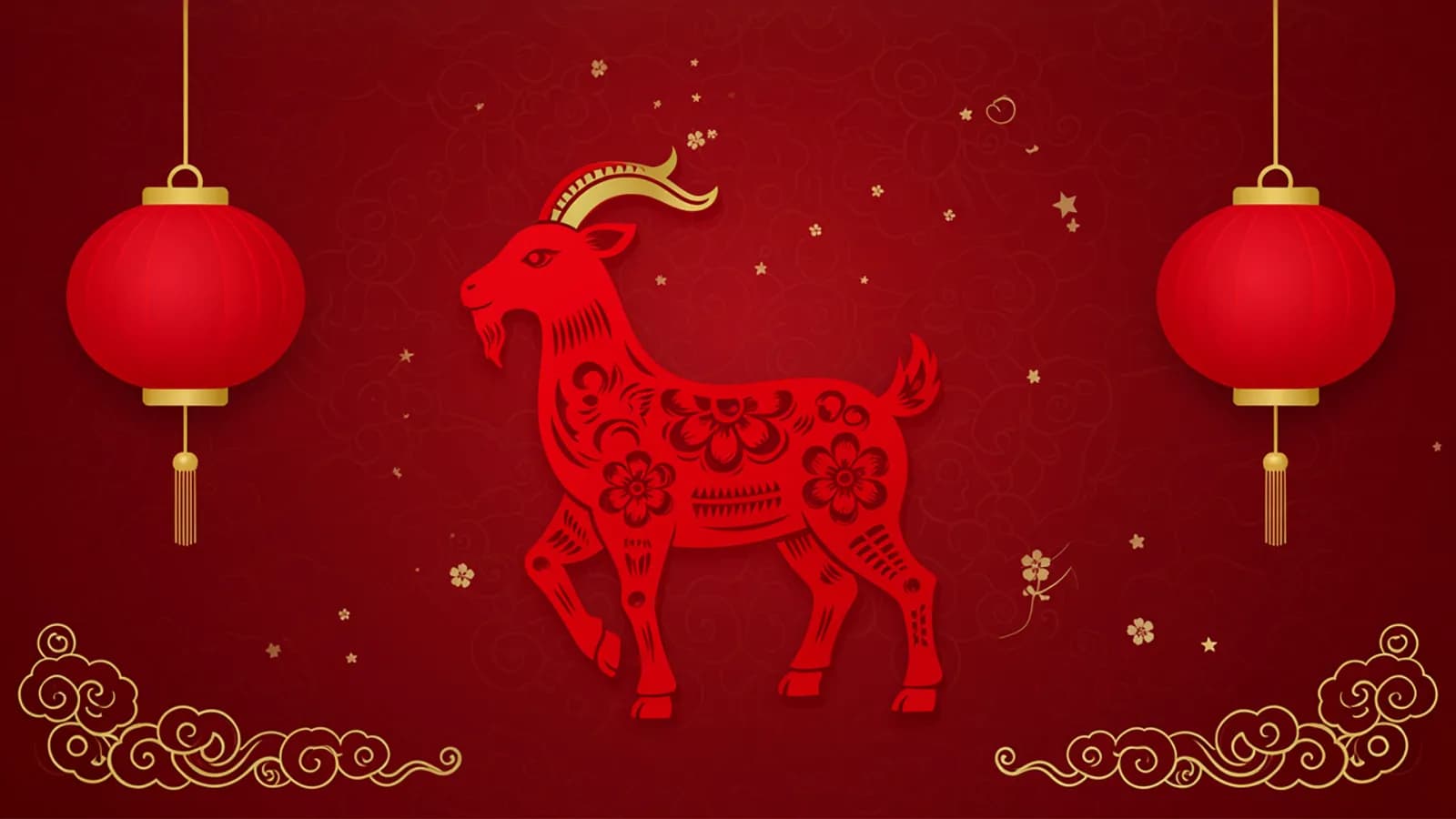
In the Chinese calendar 2027 is the year 丁未, Ding-wei, the Fire Goat. The Hong Kong Observatory table puts its first day on Saturday, 6 February 2027, and the Monkey year begins on 26 January 2028. The Chinese word for the animal covers both goat and sheep, so both names are correct. The colours and traits linked to it are tradition, not a forecast.
2027 is a Fire Goat year in the Chinese calendar
People who search for the year of the goat 2027 want a short answer, and the short answer has an official source. The Hong Kong Observatory, which publishes conversion tables between the Gregorian and the Chinese calendar, heads its table for 2027 with the words Ding-wei, year of the Goat. Ding-wei, written 丁未, is the name of the year in the traditional count of sixty. Its first character carries the element, Fire, and its second carries the animal.
The English Wikipedia table of the sexagenary cycle lists 丁未 as term 44 of 60 and calls it the Yin Fire Goat. Yin here is not a mood or a warning; it marks the quieter half of each element pair. This story treats the system as a calendar and a culture: dates you can check, words you can translate, customs you can see.
The Goat year runs from 6 February 2027 to 25 January 2028
According to the Hong Kong Observatory table, the first day of the first lunar month of 2027 falls on Saturday, 6 February. That is the Lunar New Year, also called the Spring Festival, and it is the day the Goat takes over from the Horse. The Observatory’s table for 2026 is headed Bing-wu, year of the Horse, and that year began on 17 February 2026. The 2028 table opens the Monkey year on Wednesday, 26 January 2028, so the Goat year ends on 25 January.
The festive season lasts longer than a day. Wikipedia’s article on Chinese New Year describes celebrations that run from New Year’s Eve to the Lantern Festival on the fifteenth day of the first month. In the 2027 table the last day of the old year, the Eve, is Friday, 5 February, and the fifteenth day of the new year is Saturday, 20 February. Those two dates frame the festive season of 2027 from its first evening to its last.
Why the Chinese year does not begin on 1 January
The Chinese calendar is lunisolar: its months follow the moon, while its years are kept in step with the sun. Russian Wikipedia’s article on the Chinese calendar explains that the year begins with the second new moon after the winter solstice, and that between 1645 and 2644 this new moon falls no earlier than 21 January and no later than 21 February. The English article on the festival gives 21 January to 20 February, which is why the date moves every year.
A second boundary confuses many birthdays. Wikipedia’s sexagenary cycle article notes that in China the cyclic year normally changes at the Lunar New Year, but in astrology the year starts with the solar term Lichun, which comes near 4 February. The Observatory table marks that term, Spring Commences, on Thursday, 4 February 2027. In 2027 the two boundaries sit two days apart, so only people born on 4 or 5 February get two different answers.
The practical rule follows from the dates. A child born between 1 January and 5 February 2027 belongs to the Horse year under the Lunar New Year rule, not to the Goat. The same shift applies to every Goat year: the Wikipedia article on the sign lists the 2015 Goat year as running from 19 February 2015 to 7 February 2016, so someone born in January 2016 is a Goat although the calendar on the wall already showed the new year.
How stems and branches build the 60-year cycle
The name of each year combines two counters. Wikipedia’s article on the sexagenary cycle describes ten Heavenly Stems and twelve Earthly Branches, always used as pairs of one stem and one branch. The first pair is jiazi, 甲子, and the count goes on until both series end together at guihai, 癸亥, after which it begins again. Only half the theoretical pairs are used; the article explains this by matching stems and branches according to yin and yang. The result is sixty names.
The branches carry the twelve animals, and 未, the eighth branch, is the Goat. The stems carry the five elements, two stems for each element, one yang and one yin. In the article’s table 丙 is yang Fire and 丁 is yin Fire. That is why an element covers two years in a row: 2026 is 丙午, the Bing-wu year of the Horse with yang Fire, and 2027 is 丁未, the Goat with yin Fire.
The same pair returns once every sixty years. The English Wikipedia article on the Goat sign lists the previous Fire Goat year as 9 February 1967 to 29 January 1968, which places the next one in 2087. According to the sexagenary cycle article, the present cycle began in 1984 with a jiazi year, and the next cycle will begin in 2044.
Goat, sheep or ram: one Chinese word and several translations
The animal has no single translation, and that is not a mistake by translators. Wikipedia’s article on the sign explains that its Chinese name, 羊, yáng, covers both goats and sheep, so English sources call the sign the Goat, the Sheep or the Ram. The Hong Kong Observatory chose Goat for its 2027 table. Calendars printed in other places often choose Sheep, and both describe the same twelve months.
Neighbouring cultures settle the question in their own ways. According to the same article, the Vietnamese sign, mùi, is clearly a goat, while Japanese, Korean and Filipino traditions generally render it as a sheep or a ram. Russian has both words in use. The Russian Wikipedia article on the Chinese calendar lists the animal as ovtsa, the sheep, while Russian headlines and searches also speak of the year of the koza, the goat. Both point to the year 丁未.
Red and other colours of the Fire Goat as tradition
The colour of the year comes from its element. The five-element table in the same Russian article pairs Wood with green, Fire with red, Earth with yellow, Metal with white and Water with black or blue. That is where the phrase Red Fire Goat in Russian media comes from: red is the colour of Fire, and Fire is the element of the stem 丁 that opens the name of 2027.
Astrological lore adds more symbols, and they are best read as folklore. The English Wikipedia article on the sign lists green, red and purple as lucky colours for the Goat, 2, 3, 4, 7 and 9 as lucky numbers, 6 and 8 as numbers to avoid, and the carnation and primrose as its flowers. The same article says that in Chinese astrology people born in Goat years are described as peace-loving, kind and popular, and that the sheep is generally seen as an auspicious animal.
Lists like these describe a tradition and nothing more. They say nothing about any real person born between February 2027 and January 2028 and predict no events. Fashion colour forecasts for 2027 are a separate subject, not derived from the zodiac.
How the Spring Festival is celebrated in China and beyond
In 2024 UNESCO inscribed the Spring Festival, the social practices of the Chinese people in celebration of the traditional New Year, on its Representative List of the Intangible Cultural Heritage of Humanity. UNESCO describes the run-up as cleaning, stocking up and cooking, and the Eve as a family meal followed by staying up late to welcome the year. During the festival people wear new clothes, make offerings to heaven, earth and ancestors, and greet elders, relatives, friends and neighbours.
Wikipedia’s article on the festival adds the visible signs. Windows and doors are decorated with red paper-cuts and couplets, married relatives give money in red envelopes mostly to children, and firecrackers were traditionally lit to ward off evil spirits. Red owes its place to the legend of Nian, a beast that ate villagers at night and feared the colour red and loud noise.
The days off are set by law. A State Council decision, published by Xinhua on 12 November 2024, amended China’s national holiday rules from 1 January 2025: the Spring Festival holiday became four days, the Eve and the first three days of the year. The exact dates follow in a separate notice each year. Outside mainland China, Wikipedia’s table lists the festival as a public holiday in places such as Hong Kong, Macau, Taiwan, Singapore, Malaysia, South Korea and Vietnam.
Goat year dates confirmed and announcements still to come
As of 15 October 2026, the calendar dates above are fixed in published tables. Readers in Russia also have a signed document. Government Decree No. 1187 of 17 September 2026, announced on the Russian government’s website, moves the days off for 2 and 3 January 2027, which fall on a weekend, to Friday 5 November and Friday 31 December 2027, so the New Year break lasts from 31 December 2026 to 10 January 2027. The Lunar New Year is not a public holiday in Russia, and 6 February 2027 is a Saturday.
Mainland China’s holiday arrangement for 2027 has not been published yet. For comparison, the General Office of the State Council issued the 2026 arrangement on 4 November 2025, and it gave nine days off, 15 to 23 February 2026, with make-up working days on 14 and 28 February. The 2027 break will be known only when its notice appears; any calendar listing it today is an estimate.
If you plan a trip to China or deliveries from Chinese suppliers in early February 2027, keep those dates flexible until the official notice is out. For a birthday in January or early February, check the exact day against the Observatory table rather than the year number. Horoscopes and lucky colours belong to the festival mood; firm dates come only from published tables and decrees.
Practical checklist
- Mark 6 February 2027 as the Lunar New Year and 20 February as the Lantern Festival in your calendar.
- For a birthday in January or early February, check the exact date in the Hong Kong Observatory table.
- Wait for the State Council notice before fixing travel or deliveries in China around the festival.
- Use Goat or Sheep as you prefer in greetings: both translate the same Chinese character, 羊.
- Plan the Russian New Year break as 31 December 2026 to 10 January 2027 under Decree No. 1187.
Questions and answers
Which animal and element does 2027 have in the Chinese zodiac?
The animal is the Goat, also translated as Sheep or Ram, and the element is Fire. The year’s cyclical name is Ding-wei, 丁未, which the Hong Kong Observatory uses in the heading of its 2027 conversion table.
On what date does the Fire Goat year begin and end?
It begins on Saturday, 6 February 2027, the first day of the first lunar month, and lasts until 25 January 2028. The next day, 26 January 2028, opens the year of the Monkey according to the Observatory’s 2028 table.
Is a baby born in January 2027 a Goat or a Horse?
Under the usual Lunar New Year rule, a baby born between 1 January and 5 February 2027 belongs to the Horse year that began on 17 February 2026. Astrologers who start the year at Lichun use 4 February 2027 as the boundary instead.
Why do Russian sources speak of a red Fire Goat?
In the five-element scheme Fire is associated with red, and the stem 丁 that opens the name of 2027 belongs to Fire. The adjective comes from that pairing; it is a naming habit, not a prediction about the year.
How many days off will China have for the 2027 Spring Festival?
The law guarantees four holiday days, the Eve and the first three days, since a State Council decision effective from 1 January 2025. The full 2027 schedule with shifted weekends had not been published by 15 October 2026.