
Answer in brief
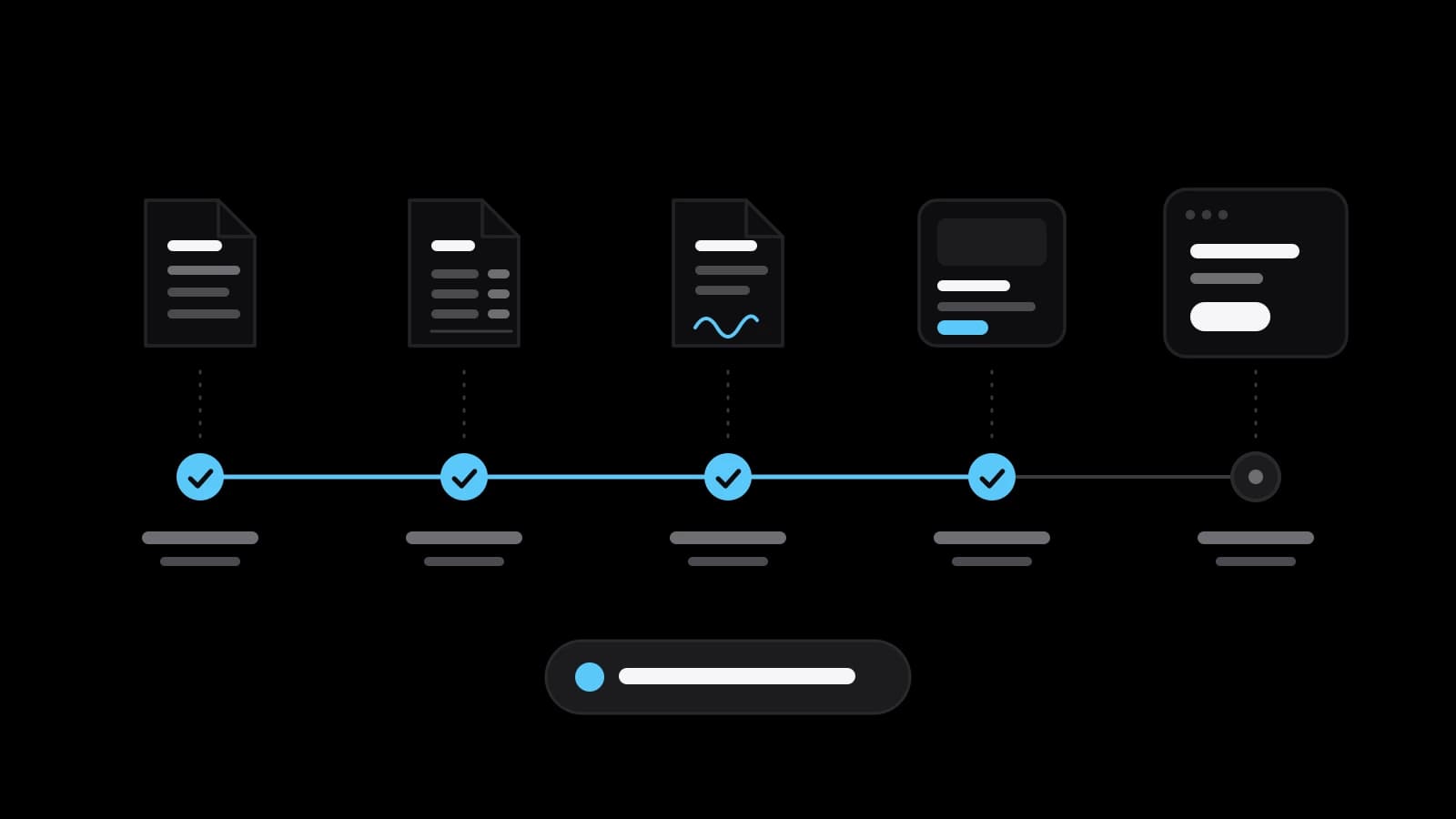
Decide first what the site is for and which single action it should produce. Then choose the kind of contractor, send the same one-page brief to several of them and compare written estimates. Sign a contract that names the stages, the revisions and who holds the rights to the design and the code, keep the domain and the hosting in your own name, accept the work against the brief and agree on support for the first month.
Before you look for anyone: the purpose, one action, a budget range and a date
People who ask how to get a website built usually start with the wrong question: who should build it. The first decisions belong to the owner and cost nothing. Australia’s government site for business, business.gov.au, puts defining the goals of the site first among its steps, ahead of the domain, the hosting and the design. In practice the goal fits in one sentence: who comes, from where, and what single thing they should do.
Two more things complete the frame. One is a budget range you can really spend, with a reserve for texts and photographs. The other is a date with a reason behind it, such as a season or an advertising campaign. A contractor who hears only that the site should be good, quick and inexpensive has to guess. One who hears the purpose, the action, the range and the date can say plainly what fits.
Who builds websites: a freelancer, a studio, an agency or a builder with a hired hand
There are four usual kinds of contractor. A freelancer is one person who designs or codes, which suits a small, clear task. A studio is a small team under one contract, for a site where design, code and content must be coordinated. An agency is a larger company for which the site is one part of a marketing job. The fourth is a website builder, a subscription platform on which a hired specialist assembles a simple site.
A post on the blog of the U.S. Small Business Administration compares the two ends of that range. A site built by a developer follows your specification, but afterwards the hosting, the upkeep and the protection against break-ins are your business’s responsibility. On a builder the platform handles hosting, security and software fixes, while customisation is limited and the site cannot be moved elsewhere. The post dates from 2018, so ignore its prices; the trade-off stands.
The brief: one page that makes the estimates comparable
A brief is a single page that every candidate receives in the same form. Without it, three contractors price three different sites, and their numbers cannot be compared. The page says what the business does, what the site is for, which pages it needs, what already exists and what has to be made. For the list of pages, business.gov.au suggests starting from your goals, the tasks customers will want to do and the information they need.
A brief is not a technical specification. A first-time client does not have to pick a content management system or name technologies: describe the result and let each contractor propose the method. Their proposals show how they think. Send the same page to several candidates, ask for a written estimate by a set day, and say openly that you are comparing offers.
Reading an estimate: scope, stages, exclusions, revisions and dates
An estimate is a document, not a number at the bottom. It should state the scope: the pages, the functions and who supplies the texts and pictures. It should list the stages, the exclusions, the rounds of revisions and the dates. The Small Business Development Corporation, a government agency in Western Australia, is specific on revisions: make sure it is clear how many rounds of changes are included, what further changes cost, and what counts as a change.
The same agency draws a line that first-time clients often miss: fixing bugs, such as broken links or pages that display badly on a phone, should not be charged as extras. Compare estimates line by line rather than by the total. A lower total sometimes simply means a shorter list, without the texts or the forms. If support after the launch is promised, its cost should be set out just as clearly, as an hourly rate or a monthly fee.
The contract: stages, acceptance and who owns the design and the code
A contract turns the estimate into obligations: the stages, what counts as accepted at the end of each, and the payments tied to them. The Western Australian agency advises against paying for a new site in full upfront: a deposit, then payments as the project reaches agreed milestones. It also asks for clear terms on how the agreement ends, including how access, logins and passwords will be handed over. Each stage should end with something you can open and approve in writing.
Who owns the result depends on the law and on the contract, and the default differs by country. In the United Kingdom, Intellectual Property Office guidance on GOV.UK says the first legal owner of a commissioned copyright work is its creator, not the commissioner, unless agreed otherwise in writing. In Russia, article 1296 of the Civil Code, as published by ConsultantPlus, gives the customer the exclusive right to a computer program, a database or another work created under a contract whose subject was the creation of that work, unless the contract provides otherwise. That article does not apply when the contractor is the author in person: under article 1288 the contract may transfer the exclusive right or grant only a right of use within set limits. Article 1234 adds that a contract transferring an exclusive right must be in writing, and that as a rule the right passes when it is concluded, unless the parties agree otherwise.
The practical lesson is the same in both countries: do not rely on the default. The contract should say in plain words who holds the rights to the design, the texts and the code, and from what moment. Ask separately about parts made by others, such as fonts and stock images. This story reports what the sources say and is not legal advice. Before you sign, have the contract read by a lawyer who knows the law of your country.
The domain and the hosting stay in the client’s name
The domain is the address of the site, and it cannot be made again if it is lost. ICANN, the body that accredits domain registrars, explains that you do not own a domain name outright: registering it is more like leasing it from the registry operator, in one-year increments. Whoever holds the rights to the registration is called the registrant. ICANN also describes the trap for a first-time client: a developer who registered the name for you may have used their own contact details and may be listed as the registrant of record, even though you paid. Its advice is to check with the registrar.
ICANN’s list of registrants’ rights and responsibilities attaches both to whoever is on record: the right to information on how to manage, transfer, renew and restore the name, the duty to keep contact details accurate, and sole responsibility for its use. These documents cover registrars accredited by ICANN; country-code domains have their own operators, so ask the same question there. Hosting follows the same logic, and ICANN notes that you are not required to buy it where you registered the name. The Western Australian agency says ownership and control should sit with you when the site is launched.
The work itself: checkpoints, feedback in one list, acceptance before the launch
A project that is going well moves through checkpoints you can see: the structure, the design of the key pages, the build, the content, the testing. At each one you look at a real thing and either approve it or list the changes. Feedback works when one person on your side collects every comment into a single list for each round. Describe the problem, such as a phone number that is hard to find on a small screen, and leave the solution to the builders.
Acceptance comes before the launch, not after it. In its step on testing and launching, business.gov.au tells owners to check that customers can find their way around the site and buy, to look for broken links, to test in different browsers and on different devices, and to review the content for accuracy. Add one check of your own: send every form yourself and see where the request arrives. After a written acceptance, the contract decides: a bug is fixed, a new wish is a change.
After the launch: the first month, and what to prepare before the first call
The launch starts the measuring. Google’s SEO Starter Guide on Search Central says that you usually do not need to do anything except publish the site for Google to find it, and that a search for site: followed by your domain shows whether you are in the index. It is frank about time: some changes take effect in a few hours, others take several months. A quiet first week in search is therefore not a defect. The Australian portal ends its steps with maintaining and measuring: keep the information current and read the analytics.
Before the first call to a studio, put the answers on one sheet: the purpose in one sentence, the single action, the budget range and the date, the pages you think you need, and whose name is on the domain. Whether to do it yourself is an honest question. The SBA post observes that builders are often the choice of start-ups getting their very first site, and a developer often the choice of businesses that already have one. VITON13 Studio is one of the places that does this work, with the scope, the timeline and the price fixed in writing before the start. Either way, the answer to how to get a website built begins with that sheet, not with the search for a contractor.
Practical checklist
- Write one sentence about who comes to the site and which single action they should take there.
- Send the same one-page brief to several contractors and ask for written estimates by one date.
- Check that each estimate names the stages, the exclusions and the number of revision rounds.
- Have a lawyer read the contract clause on who holds the rights to the design, texts and code.
- Ask your registrar who is listed as the registrant of your domain, and keep the logins yourself.
Questions and answers
Should the web developer register the domain name for me?
They can do the technical part, but the registration should be in your name and on your email. ICANN warns that a developer who registers a name with their own contact details may be listed as the registrant of record, and that you may then need proof of payment to show the registrar that the name is yours.
Do I automatically own a website I have paid for?
Not everywhere. UK government guidance says the creator of a commissioned work is the first copyright owner unless a written agreement says otherwise. Russia’s Civil Code gives the exclusive right to the customer when the contract was for creating the work and does not say otherwise, and applies a different article when the contractor is the author in person. Have the clause written into the contract and checked by a lawyer in your country.
What should a website estimate include besides the price?
The scope page by page, the stages and what you receive at each, a list of what is not included, the number of rounds of revisions and the dates, including the ones that depend on you. An estimate that shows only a total cannot be compared with another one.
Is a website builder enough for a first business site?
Often it is. A post on the U.S. Small Business Administration’s blog notes that builders are a common choice for a very first site, with hosting and security handled by the platform. The limits are customisation and portability: a site made on a builder generally cannot be moved to another platform, so growing out of it means rebuilding.
How soon will a newly launched website appear in Google?
Google’s starter guide says its crawlers usually find a published site without any submission, and that you can check with a site: search for your domain. It gives no fixed term and suggests waiting a few weeks before judging the effect of a change, so do not read much into the first days.